60mm Loft Insulation
60mm loft insulation sits within a practical intermediate thickness range. It is not a thin detailing layer, and it’s not a full-depth cold loft upgrade either. It’s a practical working thickness that is commonly specified within controlled build-ups, especially where space, structure, or headroom limits what you can install.
This depth provides a balance between thermal improvement and construction constraints such as headroom and build-up limits. It is common in refurbishments, loft conversions, and staged upgrades where insulation is layered.
What is 60mm thick loft insulation?
Loft insulation 60mm thick refers to insulation boards or mineral wool manufactured to a fixed 60mm depth. That depth, together with the material’s thermal conductivity, determines the level of thermal resistance the material can deliver.
Performance depends on material type:
- PIR (λ ≈ 0.022 W/mK)
- Rock mineral wool (λ ≈ 0.035 to 0.040 W/mK)
Because PIR rigid insulation has lower thermal conductivity, 60mm PIR provides a higher thermal resistance per millimetre than mineral wool at the same depth, making it well suited for improving thermal performance where space is tight and high performance per millimetre matters.
The 60mm loft insulation thickness does not meet current recommended targets on its own in a cold loft floor. Current guidance typically recommends approximately 270mm of mineral wool at the loft floor level in existing homes. So, insulation loft 60mm is normally used as part of a layered system.
60mm thick loft insulation contributes meaningful thermal resistance within floors, roofs, and walls when specified properly, and it does this without creating excessive build-up.
What is 60mm loft insulation thickness used for?
Loft insulation 60mm thick works best on:
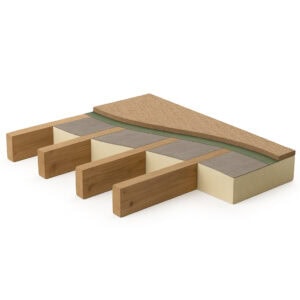
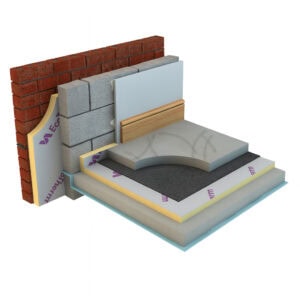
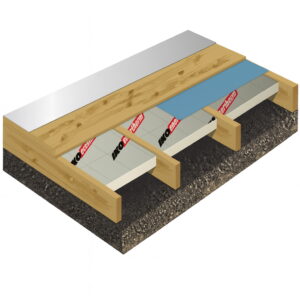
Floors (between joists)
In loft conversions, joist depth often dictates insulation depth. If you have 100mm joists and need space for services, installing 60mm PIR between suitably sized joists allows for:
- Excellent thermal performance
- Room for wiring/plumbing
- Space for additional insulation layers
Often, another insulated layer is added below or above to reduce timber cold bridging.
A thick 60mm Celotex loft insulation layer is practical here because it improves thermal insulation without raising finished floor levels too much.
Roofs (warm roof construction)
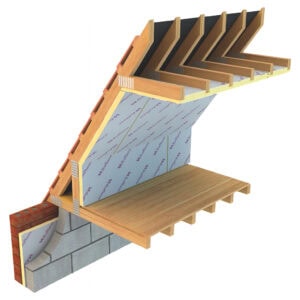
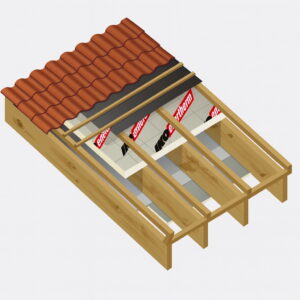
In warm roof build-ups, 60mm PIR insulation board may be installed:
- Above rafters, or
- Above rafters combined with insulation between rafters
On its own, it will not achieve the typical U-value in a compliant pitched roof buildup. But combined with deeper insulation between rafters, it forms part of a compliant structure.
In hybrid or internally insulated pitched roof systems, 60mm PIR insulation board may be installed below rafters as a continuous layer to reduce cold bridging.
Pitched Roof (cold loft floor level)
At the joist level in a traditional cold loft, a pitched 60mm wool loft insulation is usually the first layer between joists. Additional layers are then laid crosswise above to reach the compliant depth.
On its own, 60mm thickness loft insulation at the loft floor level is insufficient for current standards, but it is commonly used in staged upgrades.
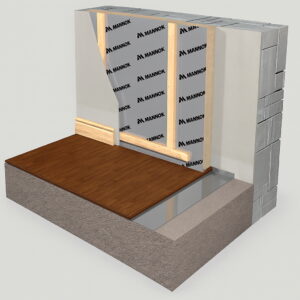
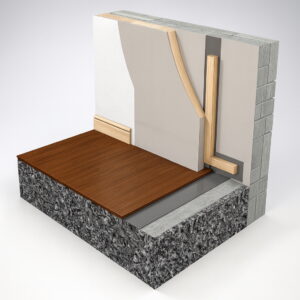
Walls (stud and framing systems)
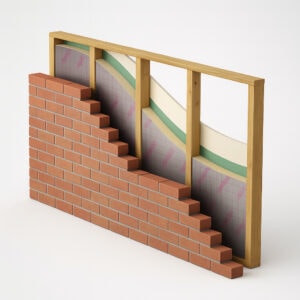
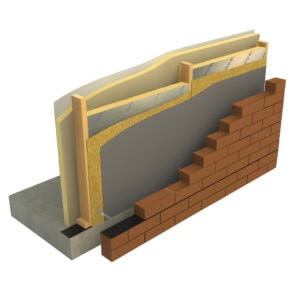
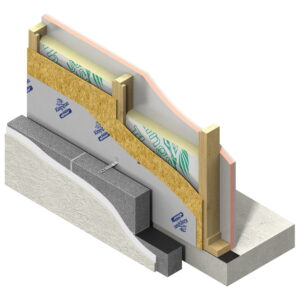
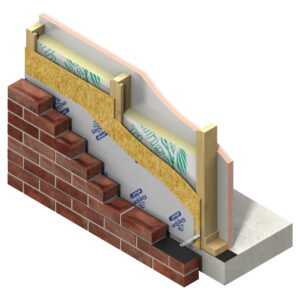
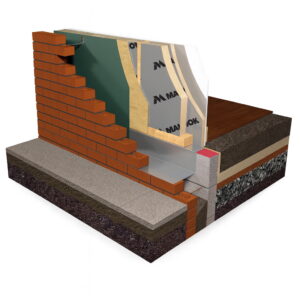
For timber or metal stud walls, 60mm PIR fits comfortably within 75mm–100mm studs, leaving room for service voids or additional insulation.
Mineral wool like Rockwool loft insulation 60mm improves both thermal and acoustic control. It is often selected where fire resistance and sound control are a priority.
Framing Walls
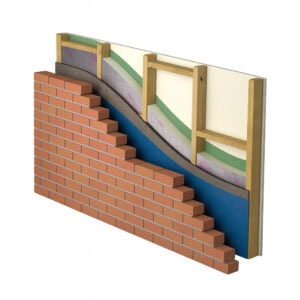
In timber framing, a 60mm rigid board can be used internally as a continuous insulated lining. This reduces cold bridging across studs and improves overall wall insulation performance.
It is common in retrofit upgrades where external insulation is not possible.
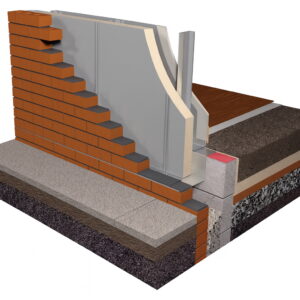
Internal Masonry Wall
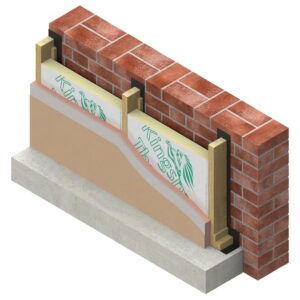
For solid brick homes, 60mm PIR bonded to plasterboard provides a meaningful reduction in heat loss without drastically reducing room size.
This is especially useful in older UK housing stock with uninsulated masonry.
Types of 60mm Loft Insulation
We stock two main categories:
PIR Insulation (rigid boards)
2400mm x 1200mm x 60mm rigid polyisocyanurate boards offer:
- Low thermal conductivity of 0.022 W/mK)
- High compressive strength
- Good moisture resistance
- Lightweight and easy to cut
Best suited for floors, roofs, framing walls, and internal linings where performance per millimetre is critical.
Mineral wool insulation (rolls or slabs)
Manufactured from volcanic rock fibres, mineral wool insulation products provide:
- Non-combustible classification (where stated euroclass A1)
- Strong acoustic performance
- Vapour permeability
- Flexible friction fit
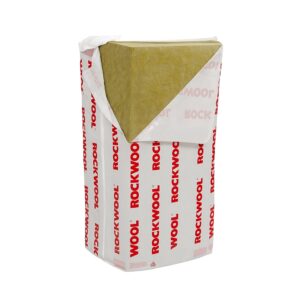
Rockwool loft insulation 60mm is well suited between joists or studs where fire resistance and sound control are important.
Benefits of upgrading to 60mm loft insulation in UK homes
Upgrading to 60mm insulation improves thermal resistance compared to shallow legacy insulation. In loft conversions, it helps stabilise room temperatures and reduces reliance on heating systems.
While deeper insulation is required for full compliance at the loft floor level, upgrading in stages using thick 60mm PIR insulation for the loft is often the most realistic route in retrofit properties.
We supply 60mm loft insulation at competitive pricing with fast nationwide delivery. Speak to our team for trade discounts, a fast quote, and reliable delivery to your site.
FAQ
How to fix 60mm loft insulation?
Between joists or studs:
- Friction fit the insulation snugly. No gaps.
Below rafters or on walls:
- Mechanically fix with insulation fixings or battens.
- Tape joints where required to limit air leakage.
Over floors:
- Lay boards tightly together, then cover with structural decking without compressing the insulation.
How to cut 60mm loft insulation?
For PIR:
- Measure accurately.
- Mark with a straight edge.
- Score deeply with a sharp insulation knife.
- Snap over a firm edge.
For mineral wool:
- Use a long-blade insulation knife.
- Cut against the timber for a straight guide.
- Oversize slightly (5–10mm) for a tight friction fit.
Always wear gloves, eye protection, and a dust mask.
Where to buy 60mm loft insulation in the UK?
You can purchase 60mm thick loft insulation online from Insulation Wholesale. We stock PIR boards and mineral wool in 60mm depth, ready for dispatch from UK stock. We make sourcing easy through low wholesale pricing, pallet deals, and a fast nationwide delivery service.
Showing all 9 results
-
60mm Celotex GA4060 PIR Insulation Board 2400mm x 1200mm (8′ x 4′) 2.88m2
60mm Celotex GA4060 is a polyisocyanurate (PIR) insulation core with composite aluminium foil facings on both sides. Celotex is a multi-purpose insulation board suitable for use in pitched roofs, ceilings, floors and walls.
£24.93£29.92 Ex VATInc VAT£8.66£10.39 Per M2 Add to cart -


60mm Ecotherm Eco-Versal PIR Insulation Board 2400mm x 1200mm (8′ x 4′) 2.88m2
60mm Ecotherm Eco-Versal is a polyisocyanurate (PIR) insulation core with composite aluminium foil facings on both sides. Ecotherm Eco-Versal is a multi-purpose insulation board suitable for use in pitched roofs, ceilings, floors and walls.
£22.35£26.82 Ex VATInc VAT£7.76£9.31 Per M2 Add to cart -
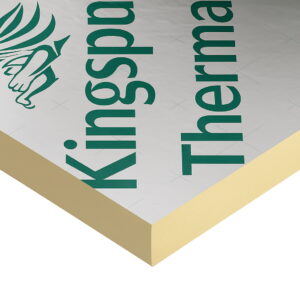
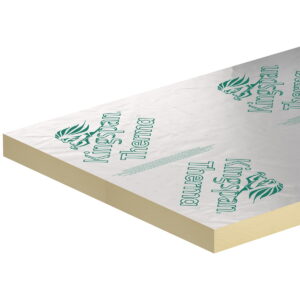
60mm Kingspan Therma TP10 / TF70 / TW55 PIR Insulation Board 2400mm x 1200mm (8′ x 4′) Pack of 5 (14.40m2)
All three models 60mm Kingspan Therma PIR Insulation Board:
- 60mm Thermapitch TP10
- 60mm Thermafloor TF70
- 60mm Thermawall TW55
share the same high-performance PIR core and low-emissivity foil facings, offering excellent thermal efficiency and easy installation. Although labeled differently, these boards share identical technical specifications.
£185.32£222.38 Ex VATInc VAT£12.87£15.44 Per M2 Add to cart -
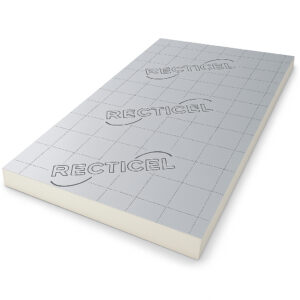
60mm Recticel Eurothane GP PIR Insulation Board 2400mm x 1200mm (8′ x 4′) 2.88m2
60mm Recticel Eurothane GP is a polyisocyanurate (PIR) insulation core with composite aluminium foil facings on both sides. Recticel is a multi-purpose insulation board suitable for use in pitched roofs, ceilings, floors and walls.
£22.35£26.82 Ex VATInc VAT£7.76£9.31 Per M2 Add to cart -
60mm Ecotherm Eco-Bond PIR Insulation Board 1200mm x 1200mm (4′ x 4′) Pack of 5 (7.20m2)
60mm Eco-Bond PIR insulation boards provide a lightweight, easy-to-install solution for new roofs or upgrading existing ones. Ideal for use with fully adhered single-ply waterproofing on concrete, metal, and timber decks.
POA Get a quote -
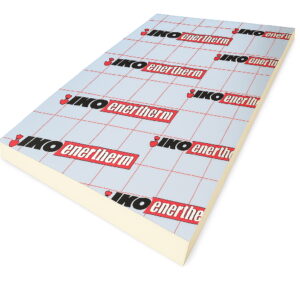
60mm IKO Enertherm ALU PIR Insulation Board 2400mm x 1200mm (8′ x 4′) 2.88m2
60mm IKO Enertherm ALU PIR (polyisocyanurate) insulation is a top-quality insulation board featuring a rigid PIR foam core and reflective aluminium foil facings. It delivers outstanding thermal performance and moisture resistance, making it suitable for various installations and an ideal choice for different energy-efficient projects.
POA Get a quote -
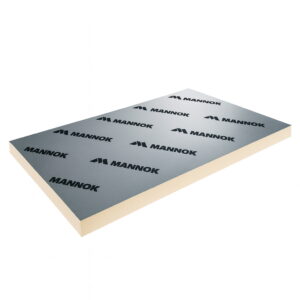
60mm Mannok PIR Insulation Board 2400mm x 1200mm (8′ x 4′) 2.88m2
60mm Mannok PIR Insulation Board is an excellent choice for anyone looking for a high-performance insulation solution that provides superior thermal efficiency. It is ideal for use in any construction project, such as commercial and residential, in wall applications as well as roofing and flooring applications.
POA Get a quote -
60mm Rockwool Flexi Slab Acoustic Insulation 1200mm x 600mm 103.68m2 Pallet
60mm Rockwool Flexi has been designed as a multi-use, dual-purpose acoustic and thermal mineral wool insulation with a unique flexible edge along one side. It is suitable for use all over the home, in pitched roof rafters, framed external walls, internal partitions, intermediate floors, separating walls and floors, and timber suspended ground floors.
POA Get a quote -
60mm Rockwool RWA45 Acoustic Insulation Slab 1200 x 600mm 92.16m2 Pallet
60mm Rockwool RWA45 has been developed for thermal, acoustic and fire performance in a range of construction types. It is suitable for applications on partition walls, ceilings, floors and roofs.
POA Get a quote