Our specialist stores
Our specialist stores


Loft Insulation By Thickness Acoustic Flexi
Loft insulation thickness allows you to choose the appropriate depth for the job.
Many older UK homes already have 75mm–100mm of insulation installed. Current UK and Wales guidance on loft insulation thickness usually recommends 270mm of mineral wool in a cold loft to meet regulatory targets.
That figure is based on the target U-value required for your specific project under Approved Document L. Loft insulation thick enough for today’s performance levels balances thickness, material type, and proper installation.
When choosing loft insulation thickness, think about:
- Joist height
- Airflow at the eaves
- Existing insulation
- Storage plans
- Target U-value under current regulations to ensure your roof insulation is effective.
What is loft insulation by thickness?
Loft insulation by thickness refers to insulation products categorised and sold by depth – usually mineral wool rolls, rigid boards, or multi-layer systems.
Let’s focus on mineral wool roll, as that’s the most common for cold lofts.
It’s made from molten glass or stone spun into fibres. Those fibres trap millions of tiny air pockets. Air does not move much inside those pockets, so heat transfer slows. That’s how insulation works – by resisting heat flow and effectively reducing energy bills.
Performance depends on:
- Thermal conductivity (lambda value, W/mK)
- Installed thickness
- Installation quality (no gaps, no compression)
So when someone says they need “loft insulation thick enough for regulatory compliance,” they mean thick enough, with the right lambda, to achieve the required U-value.
Thickness categories make it easier for builders to:
- Match existing joist height
- Add a cross-layer
- Upgrade older insulation
- Price jobs accurately
What are the different loft insulation thicknesses available?
15mm–40mm insulation listed under loft insulation by thickness are usually rigid PIR boards or specialist thermal boards. These thinner products are precision tools used where space is tight, detailing is important, or you’re improving performance without rebuilding the roof, especially with mineral wool insulation.
15mm loft insulation
15mm is a detail layer that improves surface temperature and reduces condensation risk in hard-to-insulate areas. It is used for:
- Insulating loft hatches
- Backing boards behind cold water tanks
- Thermal lining to small service cupboards within loft spaces
- Reducing cold bridging around steel beams (goalposts, ridge steel ends)
In refurbishment projects, thin boards are sometimes laid over existing insulation before raised loft legs are installed to add performance without lifting the finished floor height too much.
25mm loft insulation
25mm PIR will not meet current minimum loft insulation thickness standards on its own in a cold loft. But paired with additional PIR insulation layers, it enhances overall performance.
It improves thermal resistance, especially when used as a cross-layer of insulation to reduce thermal bridging through timber joists. Its main applications include:
- Upgrading shallow existing insulation where you cannot add 170mm or more
- Lining rafters in small warm loft conversions
30mm loft insulation
30mm gives stronger thermal resistance while still keeping height under control. It’s common in upgrade jobs where increasing full loft insulation thickness is not possible due to eaves clearance or ventilation limits.
Usually used for:
- Insulating party wall junctions within loft voids
- Thermal lining to sloping ceilings in older properties
- Hybrid systems combining rigid board + mineral wool – Not for DIY projects. This option should only be used when specified.
40mm loft insulation
40mm makes a difference without interfering with head height or airflow, allowing you to effectively insulate your loft. In warm loft designs, subject to condensation risk assessment, 40mm PIR under rafters can help achieve target U-values without excessively increasing rafter depth when combined with thicker insulation between rafters. It has to be a combined build-up.
Typical uses include:
- Warm roof build-ups at rafter level
- Continuous insulation under rafters to reduce cold bridging
- Thermal improvement of dormer cheeks
50mm–140mm
Mineral Wool insulation (Cold Loft Floors)
50–140mm of mineral wool on its own would not meet current UK upgrade targets under Approved Document L.
140mm mineral wool (λ 0.035 W/mK) = ~0.24 W/m²K.
The current recommended upgrade level for loft floors is typically around 0.16 W/m²K.
Because of this, 50–140mm is normally used as:
- A first layer between joists
- A top-up to older insulation
- Part of a multi-layer build-up with an additional cross-layer
It is not usually sufficient as a standalone upgrade thickness.
PIR insulation (Rigid Board Insulation)
With PIR insulation (λ typically between 0.022–0.026 W/mK), performance per millimetre is significantly higher.
At 140mm thickness, PIR can achieve a much lower U-value than mineral wool at the same depth. In loft conversions or warm roof systems, this thickness may form part of a compliant roof build-up, depending on the overall design and detailing.
PIR at 50–140mm is typically used in:
- Loft conversions
- Between or below rafters
- Warm roof constructions
Instead of loose-laid floor insulation.
150mm–180mm loft insulation
This creates a solid base layer. On its own, it’s still below current regulatory targets, but it fills the joist depth before adding a cross-layer. Often fitted between 150mm–170mm joists.
200mm Loft insulation
200mm of mineral wool significantly improves performance but falls below the typical 0.16 W/m²K upgrade target unless combined with an additional layer. It is used in refurbishment work where:
- Joist depth limits height
- Partial upgrades are being done to reduce energy bills by enhancing insulation performance.
- Budget constraints apply
Benefits of loft insulation thicknesses
Different thickness options are available to meet the thermal requirements of varying loft designs.
- Older properties may only have 75mm installed.
- Refurbishment work often means building up gradually with additional layers of insulation.
- New builds aim straight for regulatory targets.
Regulated or assessed projects require improved SAP scores. Others focus purely on lowering heating demand. Having a range of thicknesses means:
- You can meet the minimum loft insulation thickness requirement without overloading joists.
- You can top up poor existing layers instead of stripping everything out.
- You can adapt around pipes, tanks, and services.
- You can upgrade older houses without altering the roof structure by adding a layer of mineral wool insulation – applicable only to mineral wool insulation.
- In short, no wasted material and no guesswork.
At Insulation Wholesale, you can purchase Loft Insulation By Thickness at low wholesale prices with fast delivery for most of items within 2-5 days. Competitive rates guaranteed.
FAQ
Where can I buy loft insulation with specific thickness options?
You can buy loft insulation by thickness online from Insulation Wholesale. We stock a full range of loft insulation thickness options for trade and DIY. Our prices are competitive, plus we offer pallet deals, fast quote turnaround, and fast nationwide delivery to your site.
How does loft insulation thickness affect home heating bills?
Because heat escapes through poorly insulated roof spaces, increasing loft insulation thickness reduces heat transfer. Less heat loss means:
- Fewer boiler cycles
- Radiators run for shorter periods
- Internal temperature stays stable longer
All that translates to lower fuel consumption. The thicker (within reason and properly installed), the better the thermal resistance, up to the point where regulatory targets are met.
Best loft insulation products by thickness for energy efficiency?
For cold lofts:
- 270mm mineral wool (cross-layered) is cost-effective and widely used.
- 300mm mineral wool further improves performance.
- High-performance mineral wool with lower lambda values delivers better results at lower thicknesses.
- Rigid PIR boards are used in warm roof designs where insulation sits at rafter level instead.
The best option depends on roof type, target U-value, and available height.
What thickness should my loft insulation be?
Start by measuring what is already there to determine how much insulation you need to add. If you’ve got 100mm of Knauf insulation installed, you are below modern expectations. Topping up to around 270mm is usually advised for a cold loft.
If you are working on a regulated project, check the required U-value first. That determines the correct loft insulation depth.
Loft Insulation By Thickness Range
-
-
20mm Loft Insulation (3)
-
25mm Loft Insulation (8)
-
30mm Loft Insulation (7)
-
40mm Loft Insulation (7)
-
50mm Loft Insulation (10)
-
60mm Loft Insulation (9)
-
70mm Loft Insulation (8)
-
75mm Loft Insulation (7)
-
80mm Loft Insulation (7)
-
90mm Loft Insulation (9)
-
100mm Loft Insulation (14)
-
110mm Loft Insulation (6)
-
120mm Loft Insulation (8)
-
125mm Loft Insulation (4)
-
130mm Loft Insulation (6)
-
140mm Loft Insulation (10)
-
150mm Loft Insulation (13)
-
165mm Loft Insulation (1)
-
180mm Loft Insulation (1)
-
200mm Loft Insulation (5)
-
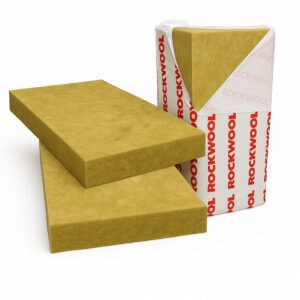

100mm Rockwool Flexi Slab Acoustic Insulation 1200mm x 600mm 4.32m2 Pack
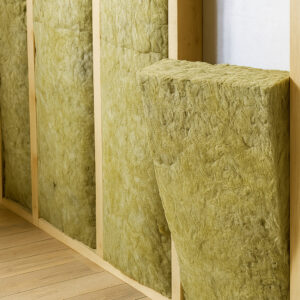
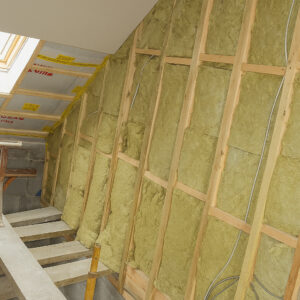
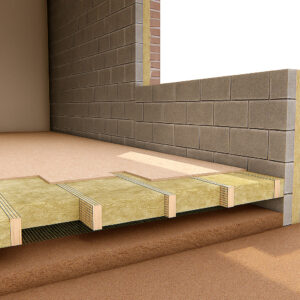
100mm Rockwool Flexi has been designed as a multi-use, dual-purpose acoustic and thermal mineral wool insulation with a unique flexible edge along one side. It is suitable for use all over the home, in pitched roof rafters, framed external walls, internal partitions, intermediate floors, separating walls and floors, and timber suspended ground floors.
£43.36£52.03 Ex VATInc VAT£10.04£12.05 Per m2 Add to cart -
140mm Rockwool Flexi Slab Acoustic Insulation 1200mm x 600mm 2.88m2 Pack
140mm Rockwool Flexi has been designed as a multi-use, dual-purpose acoustic and thermal mineral wool insulation with a unique flexible edge along one side. It is suitable for use all over the home, in pitched roof rafters, framed external walls, internal partitions, intermediate floors, separating walls and floors, and timber suspended ground floors.
£42.01£50.41 Ex VATInc VAT£14.59£17.51 Per m2 Add to cart -
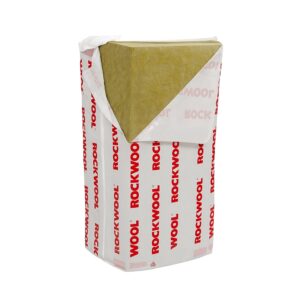
180mm Rockwool Flexi Slab Acoustic Insulation 1200mm x 600mm 25.92m2 Pallet
180mm Rockwool Flexi has been designed as a multi-use, dual-purpose acoustic and thermal mineral wool insulation with a unique flexible edge along one side. It is suitable for use all over the home, in pitched roof rafters, framed external walls, internal partitions, intermediate floors, separating walls and floors, and timber suspended ground floors.
POA Get a quote -
50mm Rockwool Flexi Slab Acoustic Insulation 1200mm x 600mm 8.64m2 Pack
50mm Rockwool Flexi has been designed as a multi-use, dual-purpose acoustic and thermal mineral wool insulation with a unique flexible edge along one side. It is suitable for use all over the home, in pitched roof rafters, framed external walls, internal partitions, intermediate floors, separating walls and floors, and timber suspended ground floors.
POA Get a quote -
60mm Rockwool Flexi Slab Acoustic Insulation 1200mm x 600mm 103.68m2 Pallet
60mm Rockwool Flexi has been designed as a multi-use, dual-purpose acoustic and thermal mineral wool insulation with a unique flexible edge along one side. It is suitable for use all over the home, in pitched roof rafters, framed external walls, internal partitions, intermediate floors, separating walls and floors, and timber suspended ground floors.
POA Get a quote -
70mm Rockwool Flexi Slab Acoustic Insulation 1200mm x 600mm 92.16m2 Pallet
70mm Rockwool Flexi has been designed as a multi-use, dual-purpose acoustic and thermal mineral wool insulation with a unique flexible edge along one side. It is suitable for use all over the home, in pitched roof rafters, framed external walls, internal partitions, intermediate floors, separating walls and floors, and timber suspended ground floors.
POA Get a quote -
90mm Rockwool Flexi Slab Acoustic Insulation 1200mm x 600mm 86.40m2 Pallet
90mm Rockwool Flexi has been designed as a multi-use, dual-purpose acoustic and thermal mineral wool insulation with a unique flexible edge along one side. It is suitable for use all over the home, in pitched roof rafters, framed external walls, internal partitions, intermediate floors, separating walls and floors, and timber suspended ground floors.
POA Get a quote