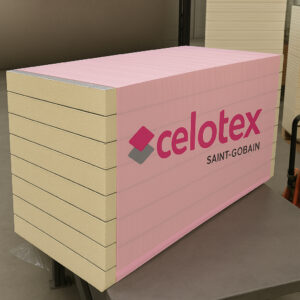
Cavity Wall Insulation
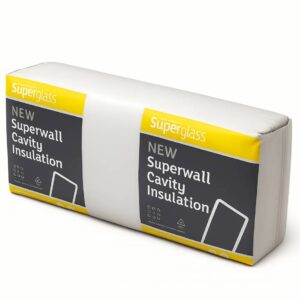
Insulation Wholesale stocks a wide range of cavity wall insulation products, such as mineral wool cavity batts and foam cavity insulation boards, to meet the ever-changing and increasing demands of builders and homeowners. We work closely with industry-leading manufacturers and brands such as Superglass Superwall 32/36, URSA 32/35, Knauf Dritherm 32/37, Ecotherm and Kingspan Kooltherm cavity boards to offer our customers a myriad of premium cavity insulation products at very affordable cavity wall insulation cost.
What is cavity wall insulation?
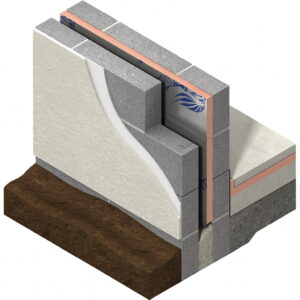
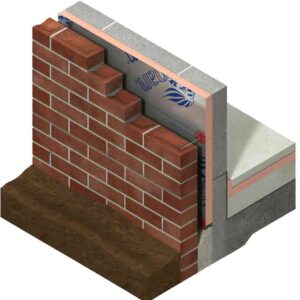
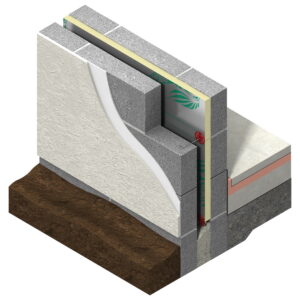
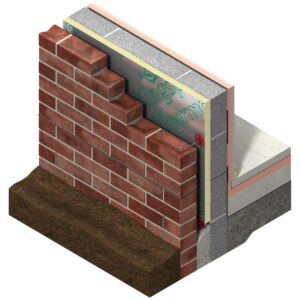
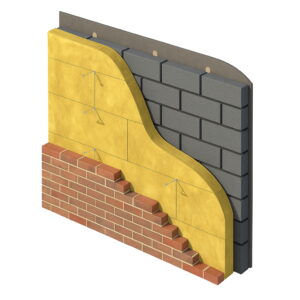
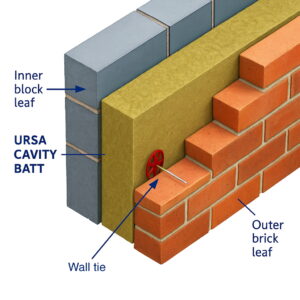
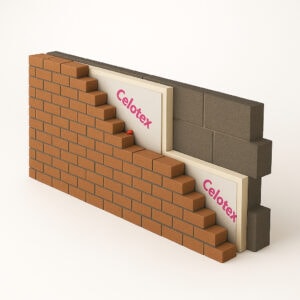
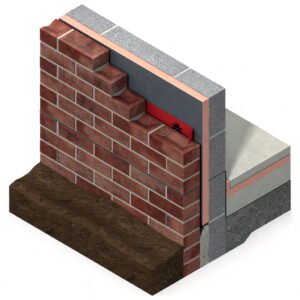
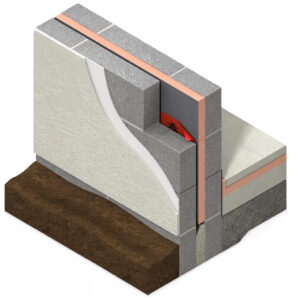
Cavity wall insulation is done by inserting cavity batt or cavity board insulation between the brick and block works that create a cavity wall, either during the construction phase or as a retrofit measure. The cavity is made up of two parts, with a hollow space between them. These walls are normally constructed using masonry materials, such as brick or cinder blocks. The masonry material absorbs water and can draw rainwater or humidity into the wall.
As opposed to solid walls, cavity walls provide better thermal insulation. The space separating the two walls minimizes heat transfer into the building from the outside. Cavity walls also prevent moisture from outer space from entering the building.
Cavity batts vs cavity foam boards
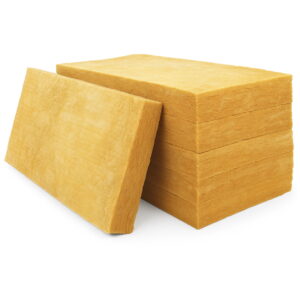
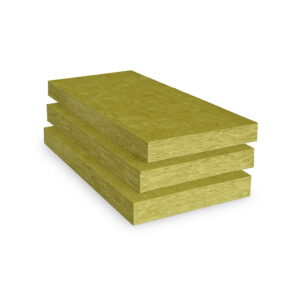
Mineral wool insulation, often known as cavity batts, is one of the most extensively used materials for external wall insulation, especially considering the array of installation choices between studs’ flexibility. It is pre-cut to various joist lengths, glides easily between joists, and can be safely stored. Mineral wool cavity slabs offer thermal conductivity between 0.032 W/mK – 0.037 W/mK.
The finest thermal cavity wall insulation of 0.022 W/mK is provided by foam, but installation is difficult, requires special attention, and some foams are known to disintegrate over time.
Advantages of Insulating a Cavity Wall using Cavity batts and boards
Apart from making your home feel much warmer and more comfortable, wall insulation has other benefits. Here is why cavity insulation is worth it.
It is one of the cheapest energy saving measures for homeowners
Apart from being easy to install compared to other types of insulation, cavity wall insulation brings significant energy savings. You can choose to DIY and if you don’t want to, hiring a professional contractor is an option as cavity wall insulation cost is low.
Energy bills reduction
It is estimated that homeowners can save up to £200 + per year on heating bills if they have cavity wall insulation in their homes. This implies that the return on investments is realized within two years.
Keeps your home warmer
This is undoubtedly the primary reason homeowners opt to insulate their walls. Insulated walls prevent the loss of heat to the outside during the winter. Keeping your home warmer in the winter has both comfort and health advantage, and that cannot be underestimated.
Reduction in carbon footprint
If you rely on electricity or gas for heating and cooling your home to generate that energy, fossil fuels are burnt, negatively impacting the environment. If most of this energy is lost through the uninsulated walls, it implies you must burn more fuels to meet your energy needs. This increases your carbon footprint. However, with insulated walls, you can reduce it by making sure no heat goes to waste.
Mould prevention
Condensation is the prime cause of mould growth and can be prevented by using cavity batts/board installation. The insulation material blocks moisture from penetrating your home through the walls. Since the outer walls are porous, they can absorb water. However, with cavity insulation, the material traps water in between, and it will run down the ground or above the windows rather than reaching the inner walls. As such, there will be no mould build-up since there is little or no moisture.
Easy and quick to install
Though some experts argue cavity insulation is delicate and should be done by an expert if you understand the basics, you can accomplish it quickly and hassle-free.
It is less invasive to the inhabitants since you work on the external walls.
If you can answer ‘yes’ to these questions, then cavity wall insulation is right for your house.
FAQ
Where to buy cavity wall insulation?
You can purchase cavity wall insulation online at Insulation Wholesale. We supply an extensive range of partial and full fill cavity wall insulation products for both trade and DIY use. Order online to get a fast quote and volume discounts on pallet quantities, with fast delivery across the UK.
How much does cavity wall insulation cost?
You may pay £15–£30 per square metre of insulation, which varies depending on the region, building type, and insulation material.
For an average three-bedroom semi-detached house, you could spend around £700–£1,500 for professional installation. If your property has an unusual wall structure, it may require extra labour, which could raise the overall cost.
Avoid unusually low quotes, as poor installation could lead to cold bridging or damp, which may cost more to fix later.
How does cavity wall insulation work?
Insulation for cavity walls is usually made from polystyrene beads, mineral wool or foam. The material is installed in the cavity between the two wall layers to create a barrier that slows down heat transfer.
Professional installers often perform a post-installation check using thermal imaging to ensure full coverage.
How does cavity wall insulation reduce heat loss?
When a cavity wall is uninsulated, air moves freely between the wall’s layers. The rate of heat transfer is high as warm air passes through unhindered. Once you fill this space with insulation, air movement is restricted, and heat transfer by radiation and convection is significantly reduced.
The insulation traps still air, which acts as a thermal barrier and locks heat inside. So the building stays warmer for longer and requires less energy for heating.
Can cavity wall insulation be removed?
Yes, it can be removed. Removal is typically done when the:
- Original insulation was incorrectly installed.
- Wrong insulant was used.
- Insulation has settled or degraded over time.
- Property suffers from water ingress or dampness.
You need a vacuum extraction system to draw out the insulation through tiny holes drilled in the outer wall. Because of the complexity of the process, it should only be carried out by a professional to avoid damaging the brickwork.
What does cavity wall insulation look like?
- Mineral wool insulation is soft, fluffy, and fibrous, and it can appear white or yellowish.
- Polystyrene beads look like small white balls, similar to foam pellets.
- Foam insulation expands into a pale yellow or cream semi-solid layer once injected.
The insulation is concealed within the cavity and can be confirmed via inspection holes or a borescope survey.
What cavity wall insulation is best?
The best cavity wall insulation depends on the type of property, local weather conditions and budget. Each material offers unique benefits, so choose the one that suits your home’s structure and level of exposure to the elements.
Generally, you’ll be choosing from mineral wool, polystyrene and foam options.
Mineral wool delivers excellent thermal efficiency, sound insulation and fire resistance. But it can retain moisture, so it’s not ideal for walls exposed to heavy rain without proper weatherproofing.
Polystyrene bead insulation combines excellent thermal performance and water resistance, so it is perfect for walls exposed to moisture. The beads flow easily around pipes and corners, nicely filling all spaces.
Though more expensive, foam insulation combines superior thermal performance and strength. It expands to fill small gaps and irregular cavities, making it ideal for narrow and hard-to-fill wall cavities.
Foam insulation should only be installed by certified professionals due to its chemical expansion properties.
Showing 1–32 of 57 results
-
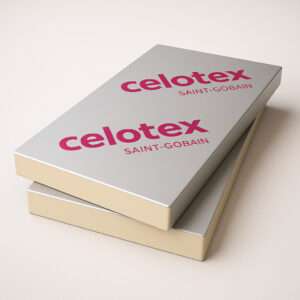

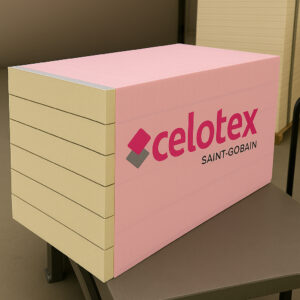
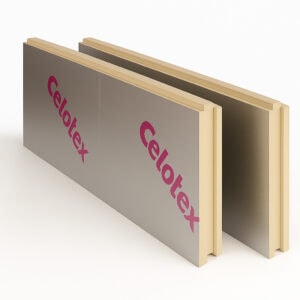
100mm Celotex CW4100 Cavity Wall Insulation Board 1200mm x 450mm 3.24m2 Pack of 6 (3.24m2)
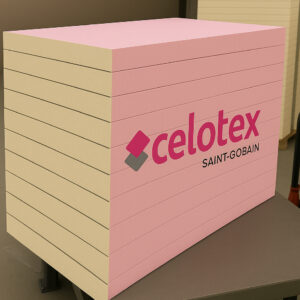
100mm Celotex CW4100 Cavity Wall Insulation Board is an easy to install polyisocyanurate (PIR) insulation board with excellent thermal performance, featuring a low emissivity foil facing.
£48.37£58.04 Ex VATInc VAT£14.93£17.92 Per M2 Add to cart -

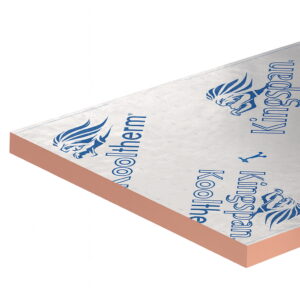
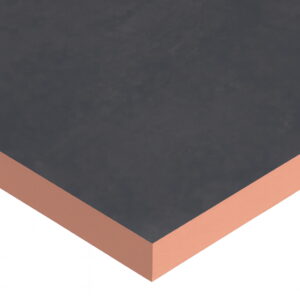
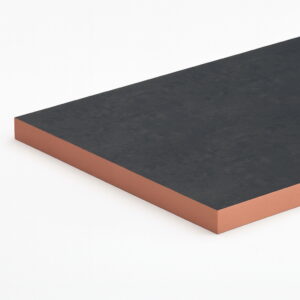
100mm Kingspan Kooltherm K108 Cavity Board Insulation 1200mm x 450mm Pack of 5 (2.70m2)
100mm Kingspan Kooltherm K108 partial fill cavity wall board is a premium performance lower lambda insulation with a rigid thermoset fibre-free phenolic core. It is faced on both sides with a low emissivity composite foil facing and is used in partially filled cavity walls.
£100.77£120.92 Ex VATInc VAT£37.32£44.78 Per M2 Add to cart -
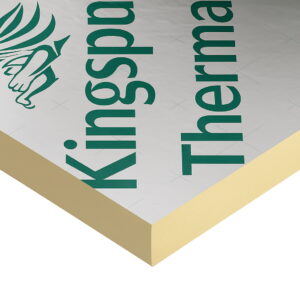
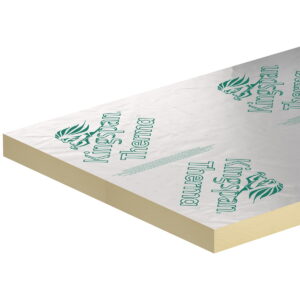
100mm Kingspan Thermawall TW50 PIR Insulation Board 1200mm x 450mm Pack of 5 (2.70m2)
100mm Kingspan Thermawall TW50 is a high performance insulation with thermal conductivity of 0.022 W/mK. Therma is a range of PIR insulation available in a range of thicknesses.£51.91£62.29 Ex VATInc VAT£19.23£23.08 Per M2 Add to cart -
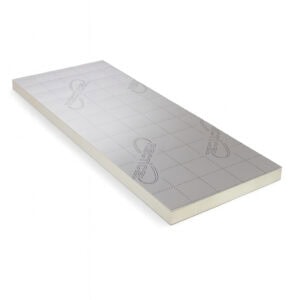
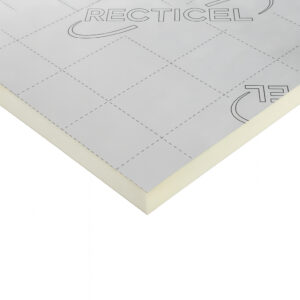
100mm Recticel Eurowall Partial Cavity Wall Insulation Board 1200mm x 450mm Pack of 10 (5.40m2)
100mm Recticel Eurowall Partial Cavity is an advanced thermal insulation panel tailored for use in cavity wall systems, delivering exceptional energy efficiency and robust performance.
£93.63£112.36 Ex VATInc VAT£17.34£20.81 Per M2 Add to cart -
100mm Superglass Superwall 32 Cavity Wall Slab 3.28m2 Pack
100mm Superglass Superwall 32 is a British Board of Agrément (BBA) approved, non-combustible and water repellent glass mineral wool insulation cavity wall batt. The flexible batt is supplied at 455mm wide to allow easy installation between standard vertical wall tie spacings and minimum on-site cutting and waste.
£34.38£41.26 Ex VATInc VAT£10.48£12.58 Per m2 Add to cart -
100mm Superglass Superwall 36 Cavity Wall Slab 4.37m2 Pack
100mm Superglass Superwall 36 is non-combustible and water repellent glass mineral wool insulation cavity wall batt. The flexible batt is supplied at 455mm wide to allow easy installation between standard vertical wall tie spacings and minimum on-site cutting and waste.
£24.21£29.05 Ex VATInc VAT£5.54£6.65 Per m2 Add to cart -
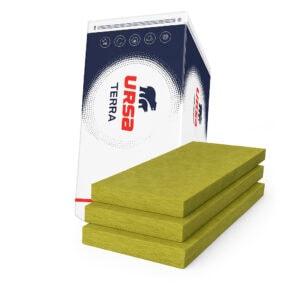
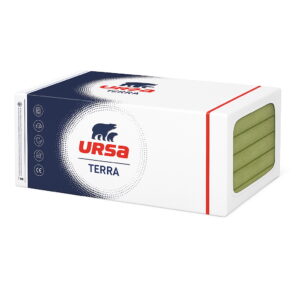
100mm URSA 32 Cavity Wall Insulation Slab 3.07m2 Pack
100mm URSA Cavity Batt is a lightweight, semi-rigid glass mineral wool slab treated with silicon-based water repellent. It is suitable for use in both fully and partially filled masonry cavity walls up to 25m high.
£28.97£34.76 Ex VATInc VAT£9.44£11.33 Per m2 Add to cart -
100mm URSA 35 Cavity Wall Insulation Slab 3.69m2 Pack
100mm URSA Cavity Batt is a lightweight, semi-rigid glass mineral wool slab treated with silicon-based water repellent. It is suitable for use in both fully and partially filled masonry cavity walls up to 25m high.
£24.43£29.32 Ex VATInc VAT£6.62£7.94 Per m2 Add to cart -
115mm Celotex Thermaclass Cavity Wall 21 Insulation Board 1190mm x 450mm Pack of 5 (2.67m2)
115mm Celotex Thermaclass Cavity Wall 21 is a PIR T&G insulation board designed for full-fill cavity wall applications. Low-emissivity foil facing provides versatility during installation, allowing for a 10mm residual cavity.
£104.35£125.22 Ex VATInc VAT£39.08£46.90 Per M2 Add to cart -
115mm Kingspan Kooltherm K106 Cavity Board Insulation 1200mm x 450mm Pack of 4 (2.16m2)
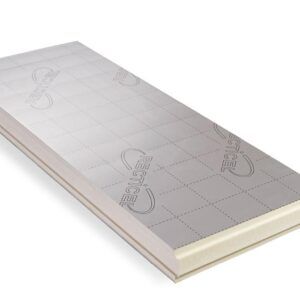
115mm Kingspan Kooltherm K106 Cavity Board is a premium performance insulation with a fibre-free rigid thermoset phenolic core with a thermal conductivity of just 0.019 W/mK across all thicknesses.
£100.25£120.30 Ex VATInc VAT£46.41£55.69 Per M2 Add to cart -
115mm Recticel Eurowall Full Fill Cavity Wall Insulation Board 1200mm x 460mm Pack of 8 (4.41m2)
115mm Recticel Eurowall Full Fill boards snap together with interlocking edges, forming a continuous thermal barrier that optimises performance of cavity wall insulation.
£103.42£124.10 Ex VATInc VAT£23.45£28.14 Per M2 Add to cart -
125mm Superglass Superwall 32 Cavity Wall Slab 2.18m2 Pack
125mm Superglass Superwall 32 is a British Board of Agrément (BBA) approved, non-combustible and water repellent glass mineral wool insulation cavity wall batt. The flexible batt is supplied at 455mm wide to allow easy installation between standard vertical wall tie spacings and minimum on-site cutting and waste.
£28.73£34.48 Ex VATInc VAT£13.18£15.82 Per m2 Add to cart -
125mm Superglass Superwall 36 Cavity Wall Slab 3.28m2 Pack
125mm Superglass Superwall 36 is non-combustible and water repellent glass mineral wool insulation cavity wall batt. The flexible batt is supplied at 455mm wide to allow easy installation between standard vertical wall tie spacings and minimum on-site cutting and waste.
£24.93£29.92 Ex VATInc VAT£7.60£9.12 Per m2 Add to cart -
125mm URSA 32 Cavity Wall Insulation Slab 2.46m2 Pack
125mm URSA Cavity Batt is a lightweight, semi-rigid glass mineral wool slab treated with silicon-based water repellent. It is suitable for use in both fully and partially filled masonry cavity walls up to 25m high.
£33.68£40.42 Ex VATInc VAT£13.69£16.43 Per m2 Add to cart -
125mm URSA 35 Cavity Wall Insulation Slab 3.07m2 Pack
125mm URSA Cavity Batt is a lightweight, semi-rigid glass mineral wool slab treated with silicon-based water repellent. It is suitable for use in both fully and partially filled masonry cavity walls up to 25m high.
£24.33£29.20 Ex VATInc VAT£7.93£9.52 Per m2 Add to cart -
140mm Recticel Eurowall Full Fill Cavity Wall Insulation Board 1200mm x 460mm Pack of 8 (4.41m2)
140mm Recticel Eurowall Full Fill boards snap together with interlocking edges, forming a continuous thermal barrier that optimises performance of cavity wall insulation.
£130.97£157.16 Ex VATInc VAT£29.70£35.64 Per M2 Add to cart -
150mm Superglass Superwall 32 Cavity Wall Slab 2.18m2 Pack
150mm Superglass Superwall 32 is non-combustible and water repellent glass mineral wool insulation cavity wall batt. The flexible batt is supplied at 455mm wide to allow easy installation between standard vertical wall tie spacings and minimum on-site cutting and waste.
£33.63£40.36 Ex VATInc VAT£15.43£18.52 Per m2 Add to cart -
150mm Superglass Superwall 36 Cavity Wall Slab 3.28m2 Pack
150mm Superglass Superwall 36 is non-combustible and water repellent glass mineral wool insulation cavity wall batt. The flexible batt is supplied at 455mm wide to allow easy installation between standard vertical wall tie spacings and minimum on-site cutting and waste.
£30.33£36.40 Ex VATInc VAT£9.25£11.10 Per m2 Add to cart -
150mm URSA 35 Cavity Wall Insulation Slab 2.46m2 Pack
150mm URSA Cavity Batt is a lightweight, semi-rigid glass mineral wool slab treated with silicon-based water repellent. It is suitable for use in both fully and partially filled masonry cavity walls up to 25m high.
£32.02£38.42 Ex VATInc VAT£13.02£15.62 Per m2 Add to cart -
40mm Kingspan Thermawall TW50 PIR Insulation Board 1200mm x 450mm Pack of 12 (6.48m2)
40mm Kingspan Thermawall TW50 is a high performance insulation with thermal conductivity of 0.022 W/mK. Therma is a range of PIR insulation available in a range of thicknesses.£65.72£78.86 Ex VATInc VAT£10.14£12.17 Per M2 Add to cart -
50mm Celotex CW4050 Cavity Wall Insulation Board 1200mm x 450mm 5.94m2 Pack of 11 (5.94m2)
50mm Celotex CW4050 Cavity Wall Insulation Board is an easy to install polyisocyanurate (PIR) insulation board with excellent thermal performance, featuring a low emissivity foil facing.
£51.61£61.93 Ex VATInc VAT£8.69£10.43 Per M2 Add to cart -
50mm Kingspan Kooltherm K108 Cavity Board Insulation 1200mm x 450mm Pack of 10 (5.40m2)
50mm Kingspan Kooltherm K108 partial fill cavity wall board is a premium performance lower lambda insulation with a rigid thermoset fibre-free phenolic core. It is faced on both sides with a low emissivity composite foil facing and is used in partially filled cavity walls.
£102.00£122.40 Ex VATInc VAT£18.89£22.67 Per M2 Add to cart -
50mm Kingspan Thermawall TW50 PIR Insulation Board 1200mm x 450mm Pack of 10 (5.40m2)
50mm Kingspan Thermawall TW50 is a high performance insulation with thermal conductivity of 0.022 W/mK. Therma is a range of PIR insulation available in a range of thicknesses.Non-refundable.£56.93£68.32 Ex VATInc VAT£10.54£12.65 Per M2 Add to cart -
50mm Recticel Eurowall Partial Cavity Wall Insulation Board 1200mm x 450mm Pack of 20 (10.80m2)
50mm Recticel Eurowall Partial Cavity is an advanced thermal insulation panel tailored for use in cavity wall systems, delivering exceptional energy efficiency and robust performance.
£107.34£128.81 Ex VATInc VAT£9.94£11.93 Per M2 Add to cart -
60mm Celotex CW4060 Cavity Wall Insulation Board 1200mm x 450mm 5.4m2 Pack of 10
60mm Celotex CW4060 Cavity Wall Insulation Board is an easy to install polyisocyanurate (PIR) insulation board with excellent thermal performance, featuring a low emissivity foil facing.
£54.22£65.06 Ex VATInc VAT£10.04£12.05 Per M2 Add to cart -
60mm Kingspan Kooltherm K108 Cavity Board Insulation 1200mm x 450mm Pack of 8 (4.32m2)
60mm Kingspan Kooltherm K108 partial fill cavity wall board is a premium performance lower lambda insulation with a rigid thermoset fibre-free phenolic core. It is faced on both sides with a low emissivity composite foil facing and is used in partially filled cavity walls.
£97.86£117.43 Ex VATInc VAT£22.65£27.18 Per M2 Add to cart -
60mm Kingspan Thermawall TW50 PIR Insulation Board 1200mm x 450mm Pack of 8 (4.32m2)
60mm Kingspan Thermawall TW50 is a high performance insulation with thermal conductivity of 0.022 W/mK. Therma is a range of PIR insulation available in a range of thicknesses.£55.46£66.55 Ex VATInc VAT£12.84£15.41 Per M2 Add to cart -
60mm Recticel Eurowall Partial Cavity Wall Insulation Board 1200mm x 450mm Pack of 16 (8.64m2)
60mm Recticel Eurowall offers rigid great performance insulation boards designed for partial cavity walls. They lock in warmth and boost energy efficiency with ease.
£112.50£135.00 Ex VATInc VAT£13.02£15.62 Per M2 Add to cart -
70mm Kingspan Thermawall TW50 PIR Insulation Board 1200mm x 450mm Pack of 6 (3.24m2)
70mm Kingspan Thermawall TW50 is a high performance insulation with thermal conductivity of 0.022 W/mK. Therma is a range of PIR insulation available in a range of thicknesses.£48.10£57.72 Ex VATInc VAT£14.85£17.82 Per M2 Add to cart -
70mm Recticel Eurowall Partial Cavity Wall Insulation Board 1200mm x 450mm Pack of 14 (7.56m2)
70mm Recticel Eurowall Partial Cavity is an advanced thermal insulation panel tailored for use in cavity wall systems, delivering exceptional energy efficiency and robust performance.
£106.80£128.16 Ex VATInc VAT£14.13£16.96 Per M2 Add to cart -
75mm Celotex CW4075 Cavity Wall Insulation Board 1200mm x 450mm 4.32m2 Pack of 8 (4.32m2)
75mm Celotex CW4075 Cavity Wall Insulation Board is an easy to install polyisocyanurate (PIR) insulation board with excellent thermal performance, featuring a low emissivity foil facing.
£50.00£60.00 Ex VATInc VAT£11.57£13.88 Per M2 Add to cart -
75mm Kingspan Kooltherm K108 Cavity Board Insulation 1200mm x 450mm Pack of 6 (3.24m2)
75mm Kingspan Kooltherm K108 partial fill cavity wall board is a premium performance lower lambda insulation with a rigid thermoset fibre-free phenolic core. It is faced on both sides with a low emissivity composite foil facing and is used in partially filled cavity walls.
£91.06£109.27 Ex VATInc VAT£28.10£33.72 Per M2 Add to cart