Our specialist stores
Our specialist stores


140mm Insulation K15
140mm insulation is a deep insulation thickness used to deliver high thermal performance when strong heat control is needed, rather than a minor thermal improvement. At 140mm, insulation effectively slows heat flow, resulting in more stable indoor temperatures throughout the seasons.
This thickness is typically specified where thermal performance is prioritised over space constraints.
What is 140mm insulation thickness?
140mm insulation thickness describes the depth of the insulation layer after installation – 140 millimetres from the internal (warm) side to the external (cold) side. This depth is often specified because it enables reliable thermal control without stacking multiple layers.
At 140mm thick insulation, heat transfer is slowed enough that indoor temperature changes are more gradual. Warm air stays inside longer during cold weather, and summer heat takes longer to enter the building.
Because 140mm depth takes up more space than lighter options, it is typically incorporated at the design stage.
What is 140mm thick insulation used for?
140mm insulation thickness is usually installed in:
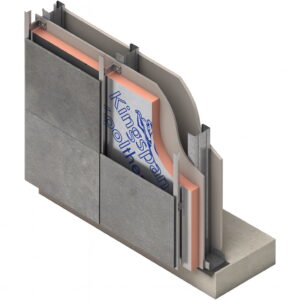
- External walls, including cavity walls and timber or steel frame builds.
- Warm roofs and flat roofs, where depth helps prevent cold spots.
- Floors over unheated spaces, such as garages or voids.
- High-performance refurbishment projects that apply modern standards to older buildings.
Thick 140mm insulation is less common in tight retrofits but commonly specified in new-build construction and extensions designed for energy efficiency.
Types of 140mm insulation
Here’s how the main 140mm insulation options compare:
Glass wool insulation
This is made by spinning molten glass into fibres. At 140mm, it traps a large volume of still air, limiting heat transfer.
- Flexible enough to friction-fit between studs or joists.
- Good at reducing noise as well as heat loss.
- Non-combustible (Euroclass A1 or A2, depending on product)
- Requires careful installation to avoid gaps or excessive compression, which can reduce performance.
Rock Mineral Wool insulation
Produced from volcanic rock, this material is denser than glass wool.
- Strong fire resistance. Typically classified as Euroclass A1 for fire performance
- Holds its shape well at full depth
- Performs reliably in walls, floors, and roofs
- Also helps with sound control
PIR insulation boards
PIR is a rigid foam panel with low heat transfer.
- Delivers high thermal performance for its size
- Keeps its shape and thickness over time
- Foil facings can assist with vapour control and installation detailing
- Requires accurate cutting and tight jointing to maintain performance
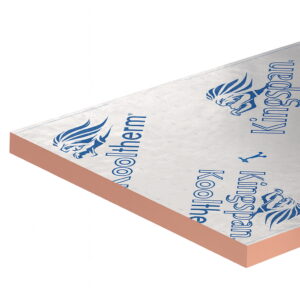
Phenolic Foam
This is a high-performance board similar to PIR but with lower thermal conductivity.
- Excellent thermal efficiency.
- More brittle, so careful handling is needed.
- Common in projects with tight energy targets.
Some manufacturers produce wood fibre and specialist foam products at this depth. But these are less common and usually chosen for specific design reasons rather than general trade use.
At Insulation Wholesale, you can purchase 140mm Insulation at low wholesale prices with fast delivery for most of items within 2-5 days. Competitive rates guaranteed.
FAQ
Where to buy 140mm thick insulation?
You can buy 140mm thick insulation online from Insulation Wholesale. We stock multiple materials at this depth, including phenolic foam, PIR, and mineral wool. We supply clear product options, reliable availability, and pricing that works for real projects – whether you are ordering a few boards or a full load. If you need help choosing the right material for your build-up, our team can help.
How to cut 140mm insulation?
- Mineral wool: Use a long insulation knife or saw. Cut a little oversized so it fills the space properly.
- Rigid boards (PIR or phenolic): Score with a sharp blade, then snap over a straight edge.
Always cut on a flat surface for stability. This helps achieve cleaner, more accurate cuts.
How to fix 140mm insulation?
Fixing depends on the product and location:
- Between studs or joists: Friction-fit mineral wool so that it fills the space without sagging.
- Rigid boards on walls or roofs: Fix mechanically using appropriate insulation fixings, then seal all joints.
- Floors: Support insulation fully so it does not drop or bow over time.
- Some systems also require adhesive bonding or taping. Check manufacturer guidance.
Insulation must remain in full contact with the surface it protects. Any air gap becomes a weak point that compromises performance.