Our specialist stores
Our specialist stores


40mm Insulation K15
40mm insulation is a thin insulation layer used to improve thermal control in areas with limited space. It is often specified to address specific thermal detailing requirements rather than to meet whole-element U-value requirements on its own. It fine-tunes heat performance, reduces cold surfaces, and supports a wider build-up.
What is 40mm insulation thickness?
40mm insulation thickness means the material measures exactly 40 millimetres from the warm side to the cold side. The dimension matters because heat loss calculations depend on thickness and thermal conductivity, not just material type.
At this depth, insulation slows heat movement but does not stop it entirely. The actual performance depends heavily on the material’s thermal conductivity (lambda value). High-performance foam materials deliver greater resistance at 40mm than fibrous products.
This size is commonly used where adding more depth would interfere with fixings, floor heights, or detailing.
What is 40mm thick insulation used for?
40mm thick insulation is usually added to improve comfort and efficiency. In most cases, it does not meet UK Building Regulations on its own.
Typical applications include:
- Internal wall upgrades that aim to keep space loss minimal.
- Floors where height build-up is tightly controlled.
- Roof refurbishments where rafters cannot be deepened.
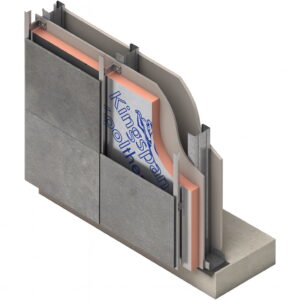
- Thermal breaks around steel, concrete, or structural junctions.
In many builds, thick 40mm insulation works as a supporting layer alongside thicker insulation elsewhere.
Types of insulation 40mm thick
There are several insulation types available at insulation 40mm thickness:
Rigid foam boards
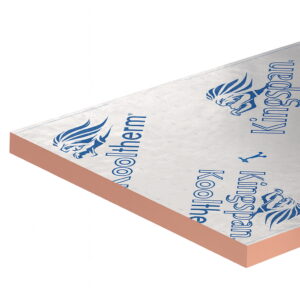
- PIR Insulation: High thermal efficiency for its depth. Often chosen when maximum performance is needed in minimum space. Joints should be fully sealed to minimise air leakage.
- Phenolic Insulation: Offers slightly better thermal performance than PIR. More brittle, so best handled carefully.
- EPS Insulation: Lower performance but stable, lightweight, and cost-effective. Common under floors.
- XPS Insulation: Stronger and more moisture-resistant than EPS. Often used where compression or damp exposure is a concern.
EPS/XPS offers limited thermal benefits at 40mm thickness unless paired with thicker layers.
Mineral wool
- Glass mineral wool: Flexible and easy to fit. Thermal performance at this thickness is modest. Mainly used for sound control, not thermal protection.
- Rock mineral wool: Denser than glass wool. Offers better acoustic and fire performance.
Advanced products
- VIP (Vacuum Insulated Panels): Extremely high performance at very thin depths. Used only where space is critical, as they cannot be cut.
Some aerogel products are available at similar thin dimensions, though they are specialised and costly.
Need bulk insulation quantities or help choosing the right material? Get a fast quote from our team and secure the right 40mm solution for your build.
At Insulation Wholesale, you can purchase 40mm Insulation at low wholesale prices with fast delivery for most of items within 2-5 days. Competitive rates guaranteed.
FAQ
Where to buy 40mm insulation?
You can buy insulation 40mm thick online from Insulation Wholesale. We stock a wide range of materials, so you can choose based on performance, space, and budget. We offer reliable lead times and support both trade and one-off projects. Our ordering process is straightforward, and we handle all bulk quantities properly.
How to fix 40mm insulation?
The fixing method depends on the material and surface:
- Rigid boards are usually bonded with adhesive, mechanically fixed, or both.
- Floors often rely on compression and perimeter restraint.
- Timber frames may use friction fit or fixings through battens.
The key rule is to ensure full contact with the surface or space. Gaps reduce performance more at thin depths than at thick ones.
How to cut 40mm insulation?
- Foam boards: Cut with a fine-tooth saw or insulation knife.
- Mineral wool: Cut a little oversized (so it friction-fits) with a long-blade knife.
- VIP panels: Do not cut – order exact sizes.
Measure accurately because a poor cut wastes more performance at 40mm than at larger thicknesses.