Our specialist stores
Our specialist stores


Insulation Roll Spacesaver
Insulation roll is a type of building material commonly used to insulate structures. The primary goals of these rolls are temperature regulation and increased energy effectiveness.
Read more about Insulation Rolls.
Insulation Roll Range
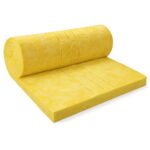
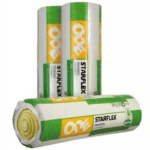
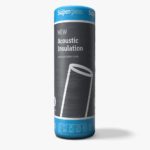
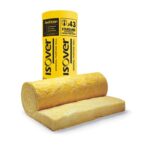
-
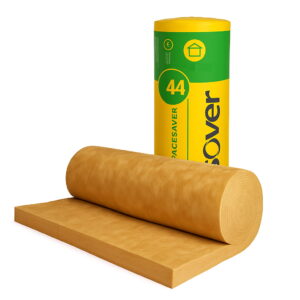

100mm Isover Spacesaver Insulation Loft Roll 14.13m2
100mm Isover Spacesaver Insulation Loft Roll is an efficient and easy-to-install solution for insulating loft spaces, designed to enhance energy efficiency and home comfort.
£32.79£39.35 Ex VATInc VAT£2.32£2.78 Per m2 Add to cart -
150mm Isover Spacesaver Insulation Loft Roll 9.34m2
150mm Isover Spacesaver Insulation Loft Roll is an efficient and easy-to-install solution for insulating loft spaces, designed to enhance energy efficiency and home comfort.
£32.28£38.74 Ex VATInc VAT£3.46£4.15 Per m2 Add to cart -
200mm Isover Spacesaver Insulation Loft Roll 6.03m2
200mm Isover Spacesaver Insulation Loft Roll is an efficient and easy-to-install solution for insulating loft spaces, designed to enhance energy efficiency and home comfort.
£30.26£36.31 Ex VATInc VAT£5.02£6.02 Per m2 Add to cart

What are Insulation rolls manufactured from?
Foil insulation rolls and natural fibres like fibreglass, mineral wool, and glass mineral wool can be used to make insulation rolls. Every material has distinct qualities and advantages of its own.
Fibreglass – a lightweight and versatile composite material, is made of tiny glass fibres enmeshed in a polymer matrix. It is recognised for its exceptional durability, heat and corrosion resistance.
Mineral Wool – is a substance that resists fire, absorbs sound, and is formed from spun mineral fibres, usually basalt or slag. It is frequently utilised in construction to increase energy efficiency, provide quieter, safer interior areas, and give superior thermal performance.
Foil insulation – A form of insulating material with a coating of foil or metallic film on one or both sides is known as foil insulation roll, often referred to as reflecting foil insulation. Aluminium is frequently used to create this reflective surface, which is also sometimes coupled with foam, bubble wrap, or fibreglass. Foil insulation’s primary purpose is to form a radiant barrier that deflects heat away from the source, which may assist in controlling temperature.
Types of Insulation Rolls
Rolls of acoustic insulation are made of materials intended to suppress or absorb sound in specific areas of a building structure such as floors, walls, and ceilings.
Acoustic Insulation Rolls
Acoustic Insulation Rolls are materials that play a role in reducing sound transmission within buildings. They are typically made of mineral wool or fibreglass. They are widely used in construction to absorb and minimise the impact of waves on walls, floors and ceilings. By installing these rolls you can significantly reduce noise both from sources and between areas, within a building ultimately creating a quieter and more comfortable indoor environment. The installation process is straightforward making it easier to achieve conditions.
Loft Insulation Roll
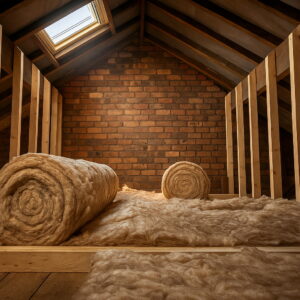
The thermal insulation material known as loft roll insulation is frequently utilised in residential structures. It usually comes in rolls or batts and is manufactured from of materials like mineral wool or fibreglass. Loft insulation roll is installed in a building’s attic or loft space to improve energy savings, maintain a comfortable temperature in the living areas and help retain heat. Limiting heat loss through the roof does this.
URSA Insulation Roll
URSA Insulation Roll is a high-performance insulation product thanks to its exceptional thermal and acoustic insulating properties. Reduces heat loss, boosting energy effectiveness, and reduces sound transmission are all accomplished by URSA Insulation Roll.
Knauf Insulation Roll
Knauf manufactures a specific kind of thermal insulation product known as Knauf Roll insulation. Typically, mineral wool or glass wool is used to make it, both of which are top-notch insulators. The ease of handling and installation of Knauf roll insulation makes it a popular option for enhancing the energy efficiency of homes and buildings.
Superglass Insulation Roll
In order to maintain consistent indoor temperatures and save heating and cooling expenses, Superglass Insulation Roll is frequently used to insulate walls, roofs, and floors. It is a safe and environmentally friendly option for insulation projects since it is fire-resistant and has no influence on the environment.
Main Characteristics of Insulation Rolls?
Some fundamental characteristics and features of insulating rolls include the following:
- Form: These flexible rolls are available in a range of thicknesses and widths to satisfy different insulating requirements. Insulation roll installation is not very challenging. They can be spread out and fitted between wall studs, floor joists, or ceiling joists. They are widely employed in attics, crawl spaces, and framed walls to create a thermal barrier.
- R-Value: This measure of a material’s resistance to the flow of heat is used to determine how effective insulation is. The R-value of the insulation determines how well it works thermally. Different insulating materials and thicknesses have different R-values.
- Fire Resistance: Certain insulation materials are designed to be either fire-retardant or fire-resistant, adding an extra degree of security.
- Energy Efficiency: Insulation rolls help to improve energy efficiency by reducing heat transmission. In colder climates, they help keep a building’s inside warm, while in hotter ones, they help keep it cool. Sound Insulation: Some insulation materials provide sound and heat insulation advantages. Sound reduction improves the comfort of the acoustics within building structures.
- Moisture Resistance: Some varieties of insulation roll are designed to tolerate moisture, preventing the growth of mould and mildew and maintaining their insulating properties when exposed to damp conditions.
- Environmental Issues: Some insulating options are more environmentally beneficial than others. For instance, natural fibre insulation is frequently used since it is sustainable and favourable to the environment. When selecting the appropriate insulation wrap type and thickness for your application, take into account elements such as the environment, regional building requirements, and your objectives for energy efficiency. A building may become more comfortable, increase its sustainability and energy efficiency, and drastically lower its heating expenses when insulation is put properly.
Where to use Insulation Rolls?
- Interior Walls and Ceilings: Fitted in between wall studs to lessen heat transmission through the walls, enhance energy efficiency, and adjust indoor temperatures.
- Roofs and Attics: Loft insulation wrap is frequently used in attics to stop heat loss through the roof and to keep the living area below at a suitable temperature. Between the attic and the rest of the home, they also provide a thermal barrier.
- Floors: To provide insulation between several floors of a structure. Rolls occasionally be inserted between floor joists or directly beneath the flooring. This is crucial for higher floors or very cool crawl areas.
How to install Insulation Rolls?
Installing acoustic rolls, also known as sound insulation rolls, can help reduce noise transmission between rooms or spaces in a building.
Here’s a step-by-step guide on how to install acoustic rolls and the tool you may require.
- Scissors or a utility knife
- Tape measureAdhesive or a stapler (optional)
- Protective gloves and eyewear.
Start out by taking safety precautions by wearing gloves and safety eyewear when installing.
Measure and Cut: Determine the area’s width and length before you begin installing the acoustic rolls. To cut the rolls to the appropriate size, use a utility knife or scissors. To appropriately suit the area, make accurate cuts.
Placement: Gently insert the cut acoustic rolls into the walls, floor joists, or ceiling spaces, depending on your installation location. Make sure the rolls fit snugly without gaps or compression. If there’s any excess material, trim it to fit properly. The rolls can be fastened to the framing with a staple gun or insulation-specific glue. However, this step may not necessarily be required if the rolls fit snugly.
Barriers: Carefully trim the insulation to fit around any obstacles you come across, including pipes, electrical lines, and other types of impediments. Make sure to have an uninterrupted layer of insulation without any sizable gaps.
Gaps: Be aware of any potential gaps at joints, edges, and corners. To establish a suitable sound seal, plug these spaces with tiny pieces of insulation or acoustic sealant.
Cleaning: After installation, remove any leftover debris and properly dispose of any extra insulation. Wash your hands before taking off your safety gear.
Once your acoustic installation is finished, you may evaluate its performance by keeping an eye on how quiet the rooms or areas are.
Conclusion
When installing acoustic rolls, always adhere to the manufacturer’s instructions and any applicable local construction laws or requirements.
Please don’t hesitate to contact our dedicated sales team on 0203 318 7316 or by email at [email protected] for any assistance with your purchase.
At Insulation Wholesale, you can purchase Insulation Roll at low wholesale prices with fast delivery for most of items within 2-5 days. Competitive rates guaranteed.