Pipe Insulation
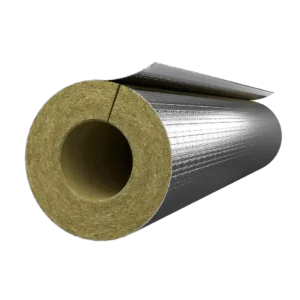
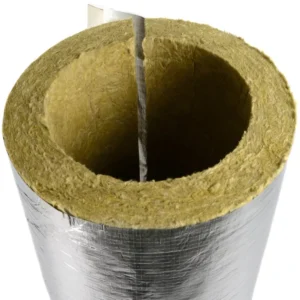
Pipe insulation – including the pipe insulation slab and pipe phenolic insulation – fully covers pipework, to limit heat loss, prevent freezing, and stop condensation forming on cold pipes.
What is insulation for pipes?
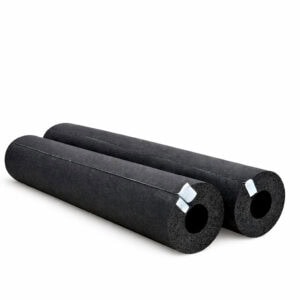
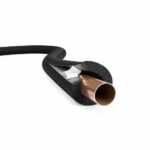
Pipe insulation is sometimes called pipe lagging. It refers to the rubber, foam, or rigid phenolic sections fitted over heating and water pipes.
The insulation maintains a steady temperature inside the pipe to stop hot water from cooling too quickly and to keep cold pipework from sweating.
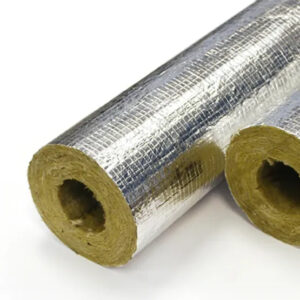
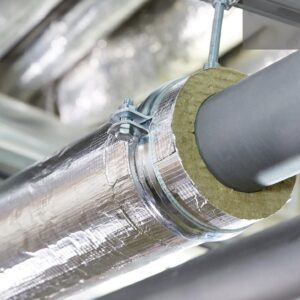
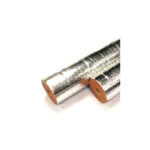
Foiled back pipe lagging can be installed for added protection on areas exposed to heat, mechanical impact and moisture.
What is pipe insulation used for?
Pipe insulation is used:
- In lofts
- Under floors
- Inside stud walls
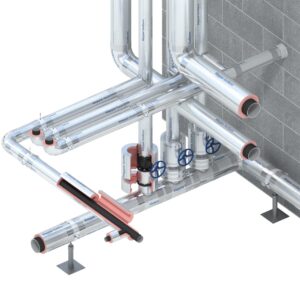
- In service voids and risers
- Around boilers and hot water cylinders
- In utility rooms, garages, and outbuildings
- Outdoors
It is also added:
- Behind kitchen units
- Behind shower mixers
- In suspended ceilings
- In basements and crawl spaces
Different types of pipe insulation
Here are the commonly available types of insulation for pipework:
Foam pipe insulation (Polyethylene)
Foam is mainly used for standard heating and domestic hot-water piping, household pipework, loft pipes that might freeze, and hot-water pipes that should not bleed heat into walls or floors. It also helps restrict heat loss along long runs of heating pipework.
Rubber insulation (flexible rubber tubes)
Some pipes get warm and make the air around them humid. Rubber insulation stops them from “sweating” and dripping everywhere. Rubber has a closed-cell structure with high vapour resistance.
Foil-faced pipe wrap
Not all pipes are straight. In messy corners or a valve cluster, sliding on a pre-shaped tube will not work – foil-faced wrap is the problem-solver.
It works similarly to ductwrap insulation in the sense that it wraps around irregular shapes, but pipe wrap is thinner and specifically designed for pipes. Simply wrap it around whatever shape you have and tape it shut.
Best for elbows, bends, and irregular shapes, areas where you cannot slide a full-length tube on, and boosting insulation on existing sleeves
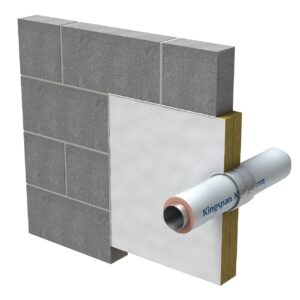
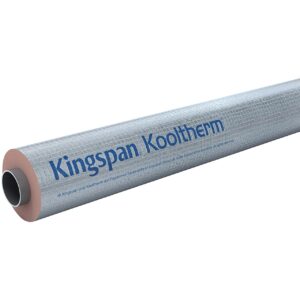
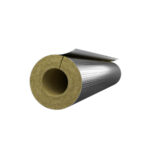
Phenolic pipe insulation (rigid, high-performance shells)
Phenolic pipe insulation is firm, structured, and more engineered than the others. Best for systems with significant heat loss or that attract a lot of condensation, such as primary heating circuits.
Used in commercial spaces, plant rooms, long pipe runs, and areas where condensation would cause significant problems, or anywhere energy efficiency is a top priority.
Phenolic insulation is known for very low thermal conductivity (around 0.021–0.025 W/mK), which is why it is used in high-spec systems.
UV-resistant and weatherproof outdoor insulation
A tougher, denser version of foam or rubber, designed to survive outside, where normal indoor insulation would fall apart. Outdoor-rated pipe insulation usually includes a UV-resistant outer jacket that keeps the material from degrading in sunlight.
Best for any pipe outside the house, heat pump flow/return pipes, and garden tap supplies.
Others
Other insulation types, like ductslab insulation, are used for ducts but show how slab-style insulation works in larger runs. Ductslab is not used on round pipes; only on square or rectangular ductwork (included here for comparison only)
Benefits of insulation for pipes
Adding pipe insulation while the building is still open and unfinished prevents issues from arising later in the build. Here’s why it is worth doing early:
- It stops heat loss before the walls close up. Hot water and heating pipes lose heat quickly when they are bare.
- It prevents freezing, minimising the likelihood of frozen pipes, split pipes, or leaks when temperatures rise.
- It prevents condensation and damp patches. That means no dripping, no damp marks on ceilings or walls, no mould forming in hidden places.
- It can reduce noise from the plumbing system as hot pipes expand and cold pipes contract.
- It protects pipes from physical damage as a result of being stepped on or bumped by tools and materials.
- It helps meet Part L requirements in unheated spaces – under floors, lofts, around boilers, near cylinders, and on long heating runs. Note that heating pipes only improve system efficiency when they run through unheated or cold areas.
FAQ
Where to buy pipe insulation?
For the widest selection, best prices, and easy ordering, purchase your pipe insulation online from Insulation Wholesale. We stock a full range of pipe insulation types for domestic and non-domestic use. Order in bulk for bigger projects, or get just the pieces you need for a small DIY job. We offer fast nationwide delivery directly to your door.
How to cut pipe insulation?
- Measure the run: Walk the length of the pipe with a tape measure and note the sections you will cover. This saves guessing once you start cutting.
- Cut each piece to size: Lay the insulation beside the pipe, mark your length, and slice through with a sharp utility knife.
How to wrap pipe insulation?
- Open the slit: Most tubes have a pre-cut opening. Gently pull it apart just enough to slide over the pipe – no need to stretch or bend it out of shape.
- Snap it around the pipe: Push the insulation on and let it settle naturally. A good fit will close itself without you having to pinch it tight.
- Seal the join: Use the built-in adhesive strip or foil tape to close the slit from end to end.
- Join the pieces: Butt each length neatly against the next so there are no gaps. If the corner pieces do not sit flush, trim them slightly until they meet cleanly.
- Secure the run: Add a bit of tape or a tie at long vertical drops or awkward bends. It keeps everything in place once the system warms up. Some pipe sleeves have a built-in self-seal strip, while others need foil tape to close the seam.
Will pipe insulation stop condensation?
Yes, as long as the insulation has adequate vapour resistance and is properly sealed. In bare pipes, warm air hits the cold pipe, forming droplets which then drip and cause damp patches.
What pipe insulation is best?
- For typical household plumbing (hot water + cold): Go with polyethylene foam. It is cheap, works well, and installs easily.
- If the pipes are cold and risk condensation (like AC lines or exposed cold water): Use nitrile rubber. It is flexible and highly resistant to moisture.
- To be super efficient (for energy saving or a very high-spec job): Use phenolic or polyurethane foam. It costs more, but the performance is top-tier.
- If you have irregular shapes or tight spaces: Combine a tube insulation with foil-wrapped insulation for bends, valves or sections where standard tubes do not fit.
Showing 1–32 of 108 results
-

13mm Thick 15mm Pipe Diameter AF / Armacell Armaflex EVO Self-Seal Pipe Insulation 2000mm
13mm Thick 15mm Armacell Armaflex EVO Self-Seal Pipe is a flexible, closed-cell insulation with strong water vapour resistance, low thermal conductivity, and built-in Microban antimicrobial protection.
£5.18£6.22 Ex VATInc VAT Add to cart -
13mm Thick 22mm Pipe Diameter AF / Armacell Armaflex EVO Self-Seal Pipe Insulation 2000mm
13mm Thick 22mm Armacell Armaflex EVO Self-Seal Pipe is a flexible, closed-cell insulation with strong water vapour resistance, low thermal conductivity, and built-in Microban antimicrobial protection.
£6.88£8.26 Ex VATInc VAT Add to cart -
13mm Thick 28mm Pipe Diameter AF / Armacell Armaflex EVO Self-Seal Pipe Insulation 2000mm
13mm Thick 28mm Armacell Armaflex EVO Self-Seal Pipe is a flexible, closed-cell insulation with strong water vapour resistance, low thermal conductivity, and built-in Microban antimicrobial protection.
£8.00£9.60 Ex VATInc VAT Add to cart -
13mm Thick 42mm Pipe Diameter AF / Armacell Armaflex EVO Self-Seal Pipe Insulation 2000mm
13mm Thick 42mm Armacell Armaflex EVO Self-Seal Pipe is a flexible, closed-cell insulation with strong water vapour resistance, low thermal conductivity, and built-in Microban antimicrobial protection.
£9.42£11.30 Ex VATInc VAT Add to cart -
13mm Thick 54mm Pipe Diameter AF / Armacell Armaflex EVO Self-Seal Pipe Insulation 2000mm
13mm Thick 54mm Armacell Armaflex EVO Self-Seal Pipe is a flexible, closed-cell insulation with strong water vapour resistance, low thermal conductivity, and built-in Microban antimicrobial protection.
£12.98£15.58 Ex VATInc VAT Add to cart -
13mm Thick 60mm Pipe Diameter AF / Armacell Armaflex EVO Self-Seal Pipe Insulation 2000mm
13mm Thick 60mm Armacell Armaflex EVO Self-Seal Pipe is a flexible, closed-cell insulation with strong water vapour resistance, low thermal conductivity, and built-in Microban antimicrobial protection.
£14.44£17.33 Ex VATInc VAT Add to cart -
13mm Thick 67mm Pipe Diameter AF / Armacell Armaflex EVO Self-Seal Pipe Insulation 2000mm
13mm Thick 67mm Armacell Armaflex EVO Self-Seal Pipe is a flexible, closed-cell insulation with strong water vapour resistance, low thermal conductivity, and built-in Microban antimicrobial protection.
£19.88£23.86 Ex VATInc VAT Add to cart -
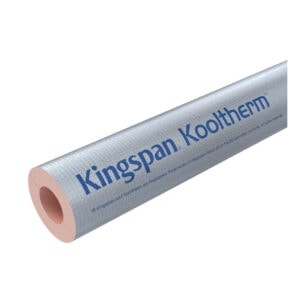
15mm Thick 15mm Pipe Diameter Kingspan Kooltherm Pipe Lagging 1000mm
15mm Thick 15mm Pipe Diameter Insulation is an efficient, fiber-free solution that wraps pipes in a sleek layer of high-performance thermal protection, redefining energy-saving insulation.
£4.40£5.28 Ex VATInc VAT Add to cart -
15mm Thick 22mm Pipe Diameter Kingspan Kooltherm Pipe Lagging 1000mm
15mm Thick 22mm Pipe Diameter Insulation is an efficient, fiber-free solution that wraps pipes in a sleek layer of high-performance thermal protection, redefining energy-saving insulation.
£4.62£5.54 Ex VATInc VAT Add to cart -
15mm Thick 28mm Pipe Diameter Kingspan Kooltherm Pipe Lagging 1000mm
15mm Thick 28mm Pipe Diameter Insulation is an efficient, fiber-free solution that wraps pipes in a sleek layer of high-performance thermal protection, redefining energy-saving insulation.
£5.31£6.37 Ex VATInc VAT Add to cart -
15mm Thick 35mm Pipe Diameter Kingspan Kooltherm Pipe Lagging 1000mm
15mm Thick 35mm Pipe Diameter Insulation is an efficient, fiber-free solution that wraps pipes in a sleek layer of high-performance thermal protection, redefining energy-saving insulation.
£5.78£6.94 Ex VATInc VAT Add to cart -
15mm Thick 42mm Pipe Diameter Kingspan Kooltherm Pipe Lagging 1000mm
15mm Thick 42mm Pipe Diameter Insulation is an efficient, fiber-free solution that wraps pipes in a sleek layer of high-performance thermal protection, redefining energy-saving insulation.
£6.71£8.05 Ex VATInc VAT Add to cart -
19mm Thick 15mm Pipe Diameter AF / Armacell Armaflex EVO Self-Seal Pipe Insulation 2000mm
19mm Thick 15mm Armacell Armaflex EVO Self-Seal Pipe is a flexible, closed-cell insulation with strong water vapour resistance, low thermal conductivity, and built-in Microban antimicrobial protection.
£8.08£9.70 Ex VATInc VAT Add to cart -
19mm Thick 22mm Pipe Diameter AF / Armacell Armaflex EVO Self-Seal Pipe Insulation 2000mm
19mm Thick 22mm Armacell Armaflex EVO Self-Seal Pipe is a flexible, closed-cell insulation with strong water vapour resistance, low thermal conductivity, and built-in Microban antimicrobial protection.
£10.00£12.00 Ex VATInc VAT Add to cart -
19mm Thick 28mm Pipe Diameter AF / Armacell Armaflex EVO Self-Seal Pipe Insulation 2000mm
19mm Thick 28mm Armacell Armaflex EVO Self-Seal Pipe is a flexible, closed-cell insulation with strong water vapour resistance, low thermal conductivity, and built-in Microban antimicrobial protection.
£13.31£15.97 Ex VATInc VAT Add to cart -
20mm Thick 15mm Pipe Diameter Kingspan Kooltherm Pipe Lagging 1000mm
20mm Thick 15mm Pipe Diameter Insulation is an efficient, fiber-free solution that wraps pipes in a sleek layer of high-performance thermal protection, redefining energy-saving insulation.
£5.19£6.23 Ex VATInc VAT Add to cart -
20mm Thick 17mm Pipe Diameter Rockwool Rocklap Aluminium Foil Faced Pipe Lagging 1000mm
Rockwool Rocklap Aluminium Foil Faced Pipe Lagging (length – 1000mm) is a premium thermal insulation material engineered to improve energy efficiency and minimise heat loss in pipe systems.
£4.93£5.92 Ex VATInc VAT Add to cart -
20mm Thick 21mm Pipe Diameter Rockwool Rocklap Aluminium Foil Faced Pipe Lagging 1000mm
20mm Thick 21mm Pipe Diameter Rockwool Rocklap Aluminium Foil Faced Pipe Lagging (length – 1000mm) is a premium thermal insulation material engineered to improve energy efficiency and minimise heat loss in pipe systems.
£5.11£6.13 Ex VATInc VAT Add to cart -
20mm Thick 22mm Pipe Diameter Kingspan Kooltherm Pipe Lagging 1000mm
20mm Thick 22mm Pipe Diameter Insulation is an efficient, fiber-free solution that wraps pipes in a sleek layer of high-performance thermal protection, redefining energy-saving insulation.
£5.55£6.66 Ex VATInc VAT Add to cart -
20mm Thick 27mm Pipe Diameter Rockwool Rocklap Aluminium Foil Faced Pipe Lagging 1000mm
20mm Thick 27mm Pipe Diameter Rockwool Rocklap Aluminium Foil Faced Pipe Lagging (length – 1000mm) is a premium thermal insulation material engineered to improve energy efficiency and minimise heat loss in pipe systems.
£5.46£6.55 Ex VATInc VAT Add to cart -
20mm Thick 28mm Pipe Diameter Kingspan Kooltherm Pipe Lagging 1000mm
20mm Thick 28mm Pipe Diameter Insulation is an efficient, fiber-free solution that wraps pipes in a sleek layer of high-performance thermal protection, redefining energy-saving insulation.
£6.13£7.36 Ex VATInc VAT Add to cart -
20mm Thick 34mm Pipe Diameter Rockwool Rocklap Aluminium Foil Faced Pipe Lagging 1000mm
20mm Thick 34mm Pipe Diameter Rockwool Rocklap Aluminium Foil Faced Pipe Lagging (length – 1000mm) is a premium thermal insulation material engineered to improve energy efficiency and minimise heat loss in pipe systems.
£5.90£7.08 Ex VATInc VAT Add to cart -
20mm Thick 35mm Pipe Diameter Kingspan Kooltherm Pipe Lagging 1000mm
20mm Thick 35mm Pipe Diameter Insulation is an efficient, fiber-free solution that wraps pipes in a sleek layer of high-performance thermal protection, redefining energy-saving insulation.
£7.16£8.59 Ex VATInc VAT Add to cart -
20mm Thick 42mm Pipe Diameter Kingspan Kooltherm Pipe Lagging 1000mm
20mm Thick 42mm Pipe Diameter Insulation is an efficient, fiber-free solution that wraps pipes in a sleek layer of high-performance thermal protection, redefining energy-saving insulation.
£7.95£9.54 Ex VATInc VAT Add to cart -
20mm Thick 42mm Pipe Diameter Rockwool Rocklap Aluminium Foil Faced Pipe Lagging 1000mm
20mm Thick 42mm Pipe Diameter Rockwool Rocklap Aluminium Foil Faced Pipe Lagging (length – 1000mm) is a premium thermal insulation material engineered to improve energy efficiency and minimise heat loss in pipe systems.
£6.71£8.05 Ex VATInc VAT Add to cart -
20mm Thick 48mm Pipe Diameter Kingspan Kooltherm Pipe Lagging 1000mm
20mm Thick 48mm Pipe Diameter Insulation is an efficient, fiber-free solution that wraps pipes in a sleek layer of high-performance thermal protection, redefining energy-saving insulation.
£8.73£10.48 Ex VATInc VAT Add to cart -
20mm Thick 48mm Pipe Diameter Rockwool Rocklap Aluminium Foil Faced Pipe Lagging 1000mm
20mm Thick 48mm Pipe Diameter Rockwool Rocklap Aluminium Foil Faced Pipe Lagging (length – 1000mm) is a premium thermal insulation material engineered to improve energy efficiency and minimise heat loss in pipe systems.
£6.10£7.32 Ex VATInc VAT Add to cart -
20mm Thick 54mm Pipe Diameter Kingspan Kooltherm Pipe Lagging 1000mm
20mm Thick 54mm Pipe Diameter Insulation is an efficient, fiber-free solution that wraps pipes in a sleek layer of high-performance thermal protection, redefining energy-saving insulation.
£10.12£12.14 Ex VATInc VAT Add to cart -
20mm Thick 54mm Pipe Diameter Rockwool Rocklap Aluminium Foil Faced Pipe Lagging 1000mm
20mm Thick 54mm Pipe Diameter Rockwool Rocklap Aluminium Foil Faced Pipe Lagging (length – 1000mm) is a premium thermal insulation material engineered to improve energy efficiency and minimise heat loss in pipe systems.
£7.53£9.04 Ex VATInc VAT Add to cart -
20mm Thick 60mm Pipe Diameter Kingspan Kooltherm Pipe Lagging 1000mm
20mm Thick 60mm Pipe Diameter Insulation is an efficient, fiber-free solution that wraps pipes in a sleek layer of high-performance thermal protection, redefining energy-saving insulation.
£11.29£13.55 Ex VATInc VAT Add to cart -
20mm Thick 60mm Pipe Diameter Rockwool Rocklap Aluminium Foil Faced Pipe Lagging 1000mm
20mm Thick 60mm Pipe Diameter Rockwool Rocklap Aluminium Foil Faced Pipe Lagging (length – 1000mm) is a premium thermal insulation material engineered to improve energy efficiency and minimise heat loss in pipe systems.
£7.95£9.54 Ex VATInc VAT Add to cart -
20mm Thick 67mm Pipe Diameter Kingspan Kooltherm Pipe Lagging 1000mm
20mm Thick 67mm Pipe Diameter Insulation is an efficient, fiber-free solution that wraps pipes in a sleek layer of high-performance thermal protection, redefining energy-saving insulation.
£11.40£13.68 Ex VATInc VAT Add to cart