Products in Floor Insulation Board
-
100mm Celotex GA4100 PIR Insulation Board 2400mm x 1200mm (8′ x 4′) 2.88m2
100mm Celotex GA4100 is a polyisocyanurate (PIR) insulation core with composite aluminium foil facings on both sides. Celotex is a multi-purpose insulation board suitable for use in pitched roofs, ceilings, floors and walls.
£36.82£44.18 Ex VATInc VAT£12.78£15.34 Per M2 Add to cart -

100mm Ecotherm Eco-Versal Rigid PIR Insulation Board 2400mm x 1200mm (8′ x 4′) 2.88m2
100mm Ecotherm Eco-Versal is a polyisocyanurate (PIR) insulation core with composite aluminium foil facings on both sides. Ecotherm Eco-Versal is a multi-purpose insulation board suitable for use in pitched roofs, ceilings, floors and walls.
£40.34£48.41 Ex VATInc VAT£14.01£16.81 Per M2 Add to cart -
100mm Expanded Polystyrene EPS100 Insulation Board 2400mm x 1200mm (8′ x 4′) Pack of 24 (69.12m2)
100mm EPS100, often known as Expanded Polystyrene, is a lightweight foam product produced from tiny polystyrene beads. Due to its high thermal value and simplicity of usage, it is commonly used as one of the most favoured insulation materials in construction.
£502.65£603.18 Ex VATInc VAT£7.27£8.72 Per M2 Add to cart -
100mm Expanded Polystyrene EPS150 Floor Insulation Board 2400mm x 1200mm (8′ x 4′) Pack of 6 (17.28m2)
100mm EPS150, often known as Expanded Polystyrene, is a lightweight foam product produced from tiny polystyrene beads. Due to its high thermal value and simplicity of usage, it is commonly used as one of the most favoured insulation materials in construction.
£192.51£231.01 Ex VATInc VAT£11.14£13.37 Per M2 Add to cart -
100mm Expanded Polystyrene EPS200 Floor Insulation Board 2400mm x 1200mm (8′ x 4′) Pack of 6 (17.28m2)
100mm EPS200, often known as Expanded Polystyrene, is a lightweight foam product produced from tiny polystyrene beads. Due to its high thermal value and simplicity of usage, it is commonly used as one of the most favoured insulation materials in construction.
£340.37£408.44 Ex VATInc VAT£19.70£23.64 Per M2 Add to cart -
100mm Expanded Polystyrene EPS250 Floor Insulation Board 2400mm x 1200mm (8′ x 4′) Pack of 6 (17.28m2)
100mm EPS250, often known as Expanded Polystyrene, is a lightweight foam product produced from tiny polystyrene beads. Due to its high thermal value and simplicity of usage, it is commonly used as one of the most favoured insulation materials in construction.
£374.89£449.87 Ex VATInc VAT£21.70£26.04 Per M2 Add to cart -
100mm Kingspan GreenGuard GG300 R Rigid Extruded Polystyrene Insulation Board 1250mm x 600mm Pack of 4 (3.00m2)
100mm Kingspan GreenGuard GG300 is a high performance rigid extruded polystyrene insulation. It is used to insulate inverted roofs, basements, car park decks, and heavy-duty commercial, industrial and cold store flooring offering a thermal conductivities as low as 0.033 W/mK.
£64.92£77.90 Ex VATInc VAT£21.64£25.97 Per M2 Add to cart -
100mm Kingspan Kooltherm K103 Insulation Floorboard 2400mm x 1200mm Pack of 3 (8.64m2)
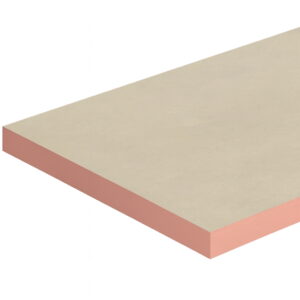
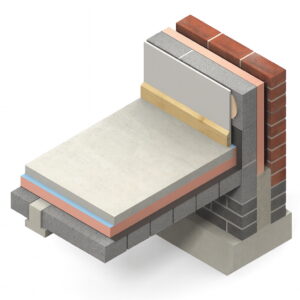
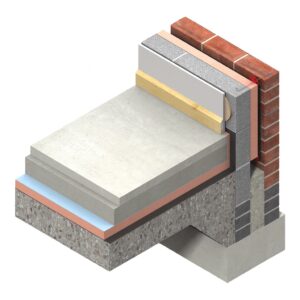
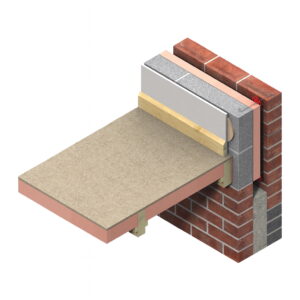
100mm Kooltherm K103 is a premium phenolic core floor insulation solution, designed to deliver exceptional performance with solid concrete or suspended timber floors.
£326.98£392.38 Ex VATInc VAT£37.84£45.41 Per M2 Add to cart -
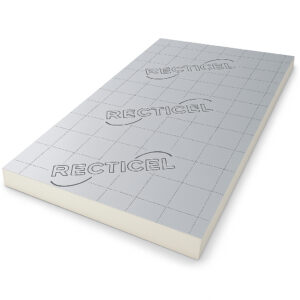
100mm Recticel Eurothane GP PIR Insulation Board 2400mm x 1200mm (8′ x 4′) 2.88m2
100mm Recticel Eurothane GP is a polyisocyanurate (PIR) insulation core with composite aluminium foil facings on both sides. Recticel is a multi-purpose insulation board suitable for use in pitched roofs, ceilings, floors and walls.
£37.18£44.62 Ex VATInc VAT£12.91£15.49 Per M2 Add to cart -
110mm Recticel Eurothane GP PIR Insulation Board 2400mm x 1200mm (8′ x 4′) 2.88m2
110mm Recticel Eurothane GP is a polyisocyanurate (PIR) insulation core with composite aluminium foil facings on both sides. Recticel is a multi-purpose insulation board suitable for use in pitched roofs, ceilings, floors and walls.
£45.43£54.52 Ex VATInc VAT£15.77£18.92 Per M2 Add to cart -
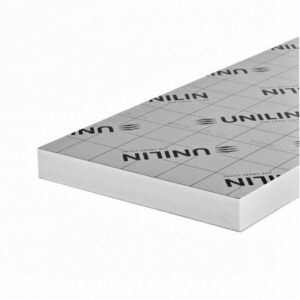
110mm Unilin Thin-R PIR Insulation Board 2400mm x 1200mm (8′ x 4′) Pallet of 21 (60.48m2)
110mm Unilin Thin-R PIR insulation is a foil faced, high-performance insulation solution that offers exceptional thermal efficiency and durability. This polyisocyanurate insulation board, formerly known as Xtratherm, is ideal for a range of applications, such as floors, pitched roofs, and walls.
POA Get a quote -
120mm Celotex XR4120 PIR Insulation Board 2400mm x 1200mm (8′ x 4′) 2.88m2
120mm Celotex XR4120 is a polyisocyanurate (PIR) insulation core with composite aluminium foil facings on both sides. Celotex is a multi-purpose insulation board suitable for use in pitched roofs, ceilings, floors and walls.
£46.38£55.66 Ex VATInc VAT£16.10£19.32 Per M2 Add to cart -
120mm Ecotherm Eco-Versal Rigid PIR Insulation Board 2400mm x 1200mm (8′ x 4′) 2.88m2
120mm Ecotherm Eco-Versal is a polyisocyanurate (PIR) insulation core with composite aluminium foil facings on both sides. Ecotherm Eco-Versal is a multi-purpose insulation board suitable for use in pitched roofs, ceilings, floors and walls.
£50.68£60.82 Ex VATInc VAT£17.60£21.12 Per M2 Add to cart -
120mm Kingspan GreenGuard GG300 R Rigid Extruded Polystyrene Insulation Board 1250mm x 600mm Pack of 3 (2.25m2)
120mm Kingspan GreenGuard GG300 is a high performance rigid extruded polystyrene insulation. It is used to insulate inverted roofs, basements, car park decks, and heavy-duty commercial, industrial and cold store flooring offering a thermal conductivities as low as 0.033 W/m·K
£59.33£71.20 Ex VATInc VAT£26.37£31.64 Per M2 Add to cart -
120mm Kingspan Kooltherm K103 Insulation Floorboard 2400mm x1200mm Pack of 2 (5.76m2)
120mm Kooltherm K103 is a premium phenolic core floor insulation solution, designed to deliver exceptional performance with solid concrete or suspended timber floors.
£265.38£318.46 Ex VATInc VAT£46.07£55.28 Per M2 Add to cart -
120mm Recticel Eurothane GP PIR Insulation Board 2400mm x 1200mm (8′ x 4′) 2.88m2
120mm Recticel Eurothane GP is a polyisocyanurate (PIR) insulation core with composite aluminium foil facings on both sides. Recticel is a multi-purpose insulation board suitable for use in pitched roofs, ceilings, floors and walls.
£45.86£55.03 Ex VATInc VAT£15.92£19.10 Per M2 Add to cart -
130mm Celotex XR4130 PIR Insulation Board 2400mm x 1200mm (8′ x 4′) 2.88m2
130mm Celotex XR4130 is a polyisocyanurate (PIR) insulation core with composite aluminium foil facings on both sides. Celotex is a multi-purpose insulation board suitable for use in pitched roofs, ceilings, floors and walls.
£60.85£73.02 Ex VATInc VAT£21.13£25.36 Per M2 Add to cart -
130mm Expanded Polystyrene EPS250 Floor Insulation Board 2400mm x 1200mm (8′ x 4′) Pack of 4 (11.52m2)
130mm EPS250, often known as Expanded Polystyrene, is a lightweight foam product produced from tiny polystyrene beads. Due to its high thermal value and simplicity of usage, it is commonly used as one of the most favoured insulation materials in construction.
£324.90£389.88 Ex VATInc VAT£28.20£33.84 Per M2 Add to cart -
140mm Celotex XR4140 PIR Insulation Board 2400mm x 1200mm (8′ x 4′) 2.88m2
140mm Celotex XR4140 is a polyisocyanurate (PIR) insulation core with composite aluminium foil facings on both sides. Celotex is a multi-purpose insulation board suitable for use in pitched roofs, ceilings, floors and walls.
£57.43£68.92 Ex VATInc VAT£19.94£23.93 Per M2 Add to cart -
140mm Kingspan Kooltherm K103 Insulation Floorboard 2400mm x1200mm Pack of 2 (5.76m2)
140mm Kooltherm K103 is a premium phenolic core floor insulation solution, designed to deliver exceptional performance with solid concrete or suspended timber floors.
£305.17£366.20 Ex VATInc VAT£52.98£63.58 Per M2 Add to cart -
140mm Recticel Eurothane GP PIR Insulation Board 2400mm x 1200mm (8′ x 4′) 2.88m2
140mm Recticel Eurothane GP is a polyisocyanurate (PIR) insulation core with composite aluminium foil facings on both sides. Recticel is a multi-purpose insulation board suitable for use in pitched roofs, ceilings, floors and walls.
£53.14£63.77 Ex VATInc VAT£18.45£22.14 Per M2 Add to cart -
150mm Celotex XR4150 PIR Insulation Board 2400mm x 1200mm (8′ x 4′) 2.88m2
150mm Celotex XR4150 is a polyisocyanurate (PIR) insulation core with composite aluminium foil facings on both sides. Celotex is a multi-purpose insulation board suitable for use in pitched roofs, ceilings, floors and walls.
£55.56£66.67 Ex VATInc VAT£19.29£23.15 Per M2 Add to cart -
150mm Ecotherm Eco-Versal Rigid PIR Insulation Board 2400mm x 1200mm (8′ x 4′) 2.88m2
The 150mm Ecotherm Eco-Versal is a polyisocyanurate (PIR) insulation core with composite aluminium foil facings on both sides. Ecotherm Eco-Versal is a multi-purpose insulation board suitable for use in pitched roofs, ceilings, floors and walls.
£60.22£72.26 Ex VATInc VAT£20.91£25.09 Per M2 Add to cart -
150mm Expanded Polystyrene EPS100 Insulation Board 2400mm x 1200mm (8′ x 4′) Pack of 12 (34.56m2)
150mm EPS100, often known as Expanded Polystyrene, is a lightweight foam product produced from tiny polystyrene beads. Due to its high thermal value and simplicity of usage, it is commonly used as one of the most favoured insulation materials in construction.
£494.27£593.12 Ex VATInc VAT£14.30£17.16 Per M2 Add to cart -
150mm Expanded Polystyrene EPS150 Floor Insulation Board 2400mm x 1200mm (8′ x 4′) Pack of 4 (11.52m2)
150mm EPS150, often known as Expanded Polystyrene, is a lightweight foam product produced from tiny polystyrene beads. Due to its high thermal value and simplicity of usage, it is commonly used as one of the most favoured insulation materials in construction.
£200.01£240.01 Ex VATInc VAT£17.36£20.83 Per M2 Add to cart -
150mm Expanded Polystyrene EPS200 Floor Insulation Board 2400mm x 1200mm (8′ x 4′) Pack of 4 (11.52m2)
150mm EPS200, often known as Expanded Polystyrene, is a lightweight foam product produced from tiny polystyrene beads. Due to its high thermal value and simplicity of usage, it is commonly used as one of the most favoured insulation materials in construction.
£340.37£408.44 Ex VATInc VAT£29.55£35.46 Per M2 Add to cart -
150mm Expanded Polystyrene EPS250 Floor Insulation Board 2400mm x 1200mm (8′ x 4′) Pack of 4 (11.52m2)
150mm EPS250, often known as Expanded Polystyrene, is a lightweight foam product produced from tiny polystyrene beads. Due to its high thermal value and simplicity of usage, it is commonly used as one of the most favoured insulation materials in construction.
£374.89£449.87 Ex VATInc VAT£32.54£39.05 Per M2 Add to cart -
150mm Kingspan GreenGuard GG300 R Rigid Extruded Polystyrene Insulation Board 1250mm x 600mm Pack of 2 (1.50m2)
150mm Kingspan GreenGuard GG300 is a high performance rigid extruded polystyrene insulation. It is used to insulate inverted roofs, basements, car park decks, and heavy-duty commercial, industrial and cold store flooring offering a thermal conductivities as low as 0.034 W/m·K.
Non-refundable.
£49.03£58.84 Ex VATInc VAT£32.69£39.23 Per M2 Add to cart -
150mm Kingspan Kooltherm K103 Insulation Floorboard 2400mm x 1200mm Pack of 2 (5.76m2)
150mm Kooltherm K103 is a premium phenolic core floor insulation solution, designed to deliver exceptional performance with solid concrete or suspended timber floors.
£313.47£376.16 Ex VATInc VAT£54.42£65.30 Per M2 Add to cart -
150mm Recticel Eurothane GP PIR Insulation Board 2400mm x 1200mm (8′ x 4′) 2.88m2
150mm Recticel Eurothane GP is a polyisocyanurate (PIR) insulation core with composite aluminium foil facings on both sides. Recticel is a multi-purpose insulation board suitable for use in pitched roofs, ceilings, floors and walls.
£53.56£64.27 Ex VATInc VAT£18.60£22.32 Per M2 Add to cart -
25mm Celotex TB4025 PIR Insulation Board 2400mm x 1200mm (8′ x 4′) 2.88m2
25mm Celotex TB4025 is a polyisocyanurate (PIR) insulation core with composite aluminium foil facings on both sides. Celotex is a multi-purpose insulation board suitable for use in pitched roofs, ceilings, floors and walls.
£14.03£16.84 Ex VATInc VAT£4.87£5.84 Per M2 Add to cart -
25mm Expanded Polystyrene EPS100 Insulation Board 2400mm x 1200mm (8′ x 4′) Pack of 24 (69.12m2)
25mm EPS100, often known as Expanded Polystyrene, is a lightweight foam product produced from tiny polystyrene beads. Due to its high thermal value and simplicity of usage, it is commonly used as one of the most favoured insulation materials in construction.
£131.16£157.39 Ex VATInc VAT£1.90£2.28 Per M2 Add to cart -
25mm Expanded Polystyrene EPS150 Insulation Board 2400mm x 1200mm (8′ x 4′) Pack of 24 (69.12m2)
25mm EPS150, often known as Expanded Polystyrene, is a lightweight foam product produced from tiny polystyrene beads. Due to its high thermal value and simplicity of usage, it is commonly used as one of the most favoured insulation materials in construction.
£199.81£239.77 Ex VATInc VAT£2.89£3.47 Per M2 Add to cart -
25mm Expanded Polystyrene EPS200 Floor Insulation Board 2400mm x 1200mm (8′ x 4′) Pack of 24 (69.12m2)
25mm EPS200, often known as Expanded Polystyrene, is a lightweight foam product produced from tiny polystyrene beads. Due to its high thermal value and simplicity of usage, it is commonly used as one of the most favoured insulation materials in construction.
£340.52£408.62 Ex VATInc VAT£4.93£5.92 Per M2 Add to cart -
25mm Expanded Polystyrene EPS250 Floor Insulation Board 2400mm x 1200mm (8′ x 4′) Pack of 24 (69.12m2)
25mm EPS250, often known as Expanded Polystyrene, is a lightweight foam product produced from tiny polystyrene beads. Due to its high thermal value and simplicity of usage, it is commonly used as one of the most favoured insulation materials in construction.
£374.89£449.87 Ex VATInc VAT£5.42£6.50 Per M2 Add to cart -
25mm Kingspan Kooltherm K103 Insulation Floorboard 2400mm x 1200mm Pack of 12 (34.56m2)
25mm Kooltherm K103 is a premium phenolic core floor insulation solution, designed to deliver exceptional performance with solid concrete or suspended timber floors.
£442.87£531.44 Ex VATInc VAT£12.81£15.37 Per M2 Add to cart