125mm Insulation
125mm insulation is a commonly specified thickness in the UK construction industry. It provides reliable thermal performance without making walls or roofs difficult to build around. It is often specified for applications requiring good thermal performance, particularly in modern residential construction.
What is the insulation 125mm thickness?
125mm insulation thickness means the insulating material is 125 millimetres deep.
A layer of 125mm thick insulation creates a longer path for heat to travel, reducing how quickly warmth escapes and passes through the building fabric.
A 125mm PIR provides high thermal resistance by efficiently resisting heat flow. In comparison, fibrous materials like glass mineral wool rely on trapped air within the fibres. So 125mm thickness offers slightly lower thermal performance but better sound absorption and noncombustible fire performance compared with PIR at the same thickness.
What is 125mm insulation used for?
Insulation at 125mm thickness is commonly used in areas where building regulations or design require solid thermal performance without oversizing the wall or roof.
Its uses include:
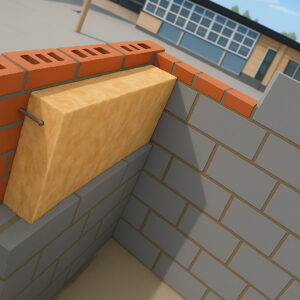
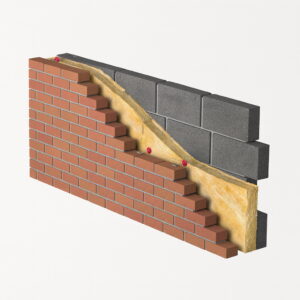
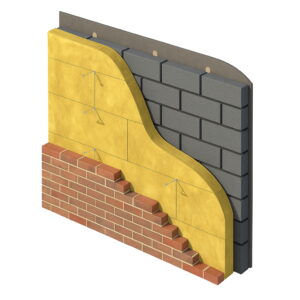
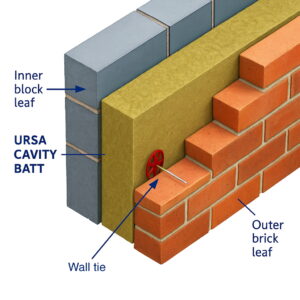
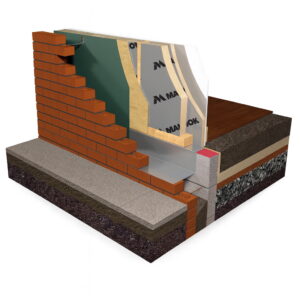
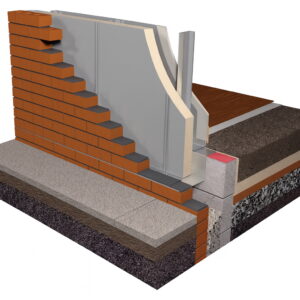
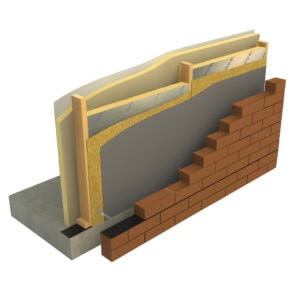
- Cavity wall infill – Between the skins of a brick wall to stop heat escaping.
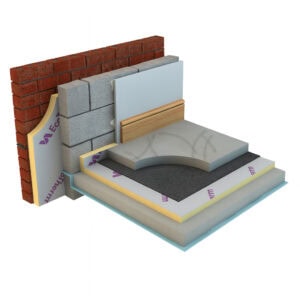
- Floor insulation – Under screeds or between joists to cut heat loss downwards.
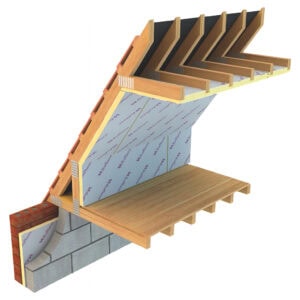
- Roof or ceiling insulation – Between rafters or joists in pitched and flat roofs.
- Partition and separating walls – Primarily for acoustic and fire performance rather than thermal separation.
Types of 125mm thick insulation
Several materials are available in 125mm insulation thickness in the UK:
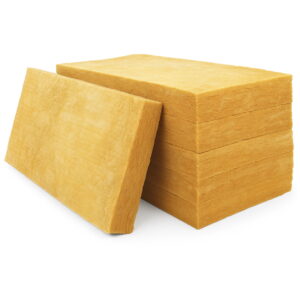
Glass wool insulation
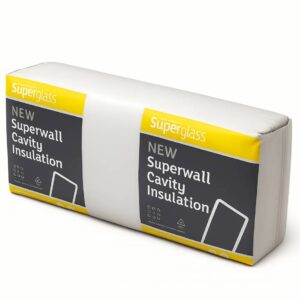
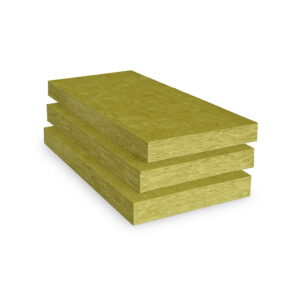
Products in this category include cavity wall slabs, such as 125mm Knauf Dritherm and Superglass Superwall 125mm thickness. They are:
- Non-combustible, so excellent for fire safety.
- Soft to semi-rigid – Easy to cut and fit between ties or joists.
- Water-repellent – Designed to resist moisture ingress when correctly installed.
- Good for sound and thermal protection.
Glass mineral wool slabs are often used to fill the whole cavity or the space between timber or steel framing.
PIR Insulation (Polyisocyanurate) Boards
PIR is available in rigid foam boards. It has lower thermal conductivity than mineral wool, meaning greater heat resistance per millimetre. A 125mm PIR insulation panel gives very good thermal performance in a relatively thin thickness. Applications include:
- Between rafters in roofs.
- Underfloor insulation beneath screeds or timber floors.
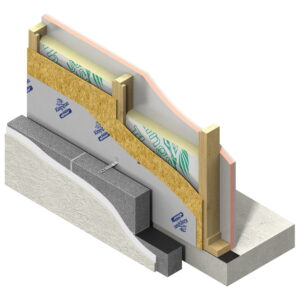
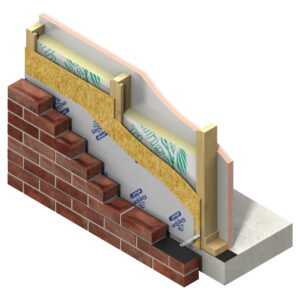
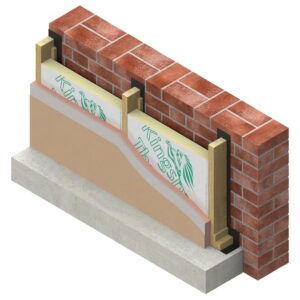
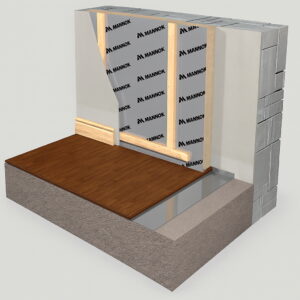
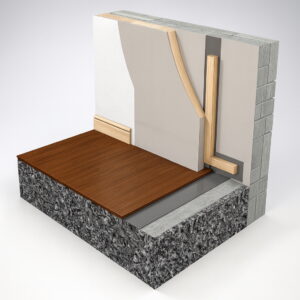
- Internal and external wall insulation where boards are bonded or fixed mechanically.
PIR boards are often faced with foil or composite facings for added protection.
Other materials
Expanded polystyrene (EPS) and rock mineral wool may also be made to this depth, but they are less commonly stocked at this thickness.
Benefits of 125mm insulation thickness
A thick 125mm insulation layer offers:
- Better thermal resistance than thinner layers – greater thickness generally increases thermal resistance.
- Works well with UK typical cavity widths and joist depths.
- Good compliance with building regulations when paired with the right materials and details.
- Often easier to fit than very thick insulation because it is easier to handle in many site conditions.
A product with 125mm insulation typically performs notably better than 100mm options in slowing heat flow.
FAQ
Where to buy 125mm thick insulation?
You can purchase 125mm thick insulation online from Insulation Wholesale. We stock a wide range of 125mm products from trusted manufacturers, including PIR boards and glass mineral wool slabs that meet UK standards. Whether you need a few packs or bulk quantities, our store is set up for both trade and DIY customers. We offer competitive pricing and solid support throughout ordering and delivery.
How to cut 125mm insulation?
Cutting a 125mm insulation board or slab properly makes installation easier:
- Measure and mark the cut location on the face of the board or slab.
- Use a fine saw on PIR and a long-bladed knife or insulation saw on mineral wool.
- Cut on a flat, stable surface. It keeps the material from bending or lifting.
- Keep edges straight to get a snug fit.
Use gloves, eye protection, and a dust mask to protect yourself from fibre particles.
How to fix 125mm insulation?
For PIR boards
- Adhesive fix – Apply a suitable construction adhesive to the back of the board. Press into place.
- Mechanical fixings – Use insulation fixings, especially in overhead or vertical applications.
- Stagger joints where possible to avoid seams lining up. This minimises thermal bridging.
For Glass Mineral Wool
- Friction fit – Push the slabs between wall ties or joist spaces so they are held by tension.
- Do not compress mineral wool, as this could impact performance.
- Support netting under floor or ceiling joists helps hold slabs up before finishing.
Showing all 11 results
-

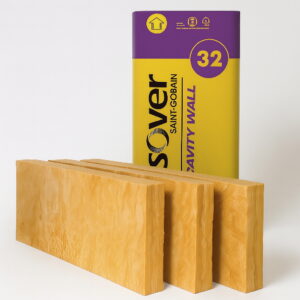
125mm Isover CWS 32 Cavity Wall Slab 2.73m2 Pack
125mm Isover CWS 32 Cavity Wall Slab offers excellent thermal insulation for cavity walls, effectively reducing heat loss and boosting energy efficiency. Lightweight and easy to install, it delivers reliable, long-lasting performance.
£34.85£41.82 Ex VATInc VAT£12.77£15.32 Per m2 Add to cart -
125mm Isover CWS 36 Cavity Wall Slab 4.37m2 Pack
125mm Isover CWS 36 Cavity Wall Slab offers excellent thermal insulation for cavity walls, effectively reducing heat loss and boosting energy efficiency. Lightweight and easy to install, it delivers reliable, long-lasting performance.
£30.10£36.12 Ex VATInc VAT£6.89£8.27 Per m2 Add to cart -
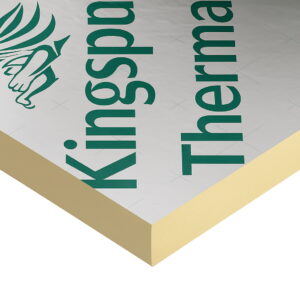
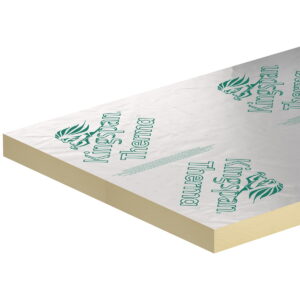
125mm Kingspan Therma TP10 / TF70 / TW55 PIR Insulation Board 2400mm x 1200mm (8′ x 4′) Pack of 2 (5.76m2)
All three models 20mm Kingspan Therma PIR Insulation Board:
- 125mm Thermapitch TP10
- 125mm Thermafloor TF70
- 125mm Thermawall TW55
share the same high-performance PIR core and low-emissivity foil facings, offering excellent thermal efficiency and easy installation. Although labeled differently, these boards share identical technical specifications.
£144.39£173.27 Ex VATInc VAT£25.07£30.08 Per M2 Add to cart -
125mm Superglass Superwall 32 Cavity Wall Slab 2.18m2 Pack
125mm Superglass Superwall 32 is a British Board of Agrément (BBA) approved, non-combustible and water repellent glass mineral wool insulation cavity wall batt. The flexible batt is supplied at 455mm wide to allow easy installation between standard vertical wall tie spacings and minimum on-site cutting and waste.
£28.73£34.48 Ex VATInc VAT£13.18£15.82 Per m2 Add to cart -
125mm Superglass Superwall 36 Cavity Wall Slab 3.28m2 Pack
125mm Superglass Superwall 36 is non-combustible and water repellent glass mineral wool insulation cavity wall batt. The flexible batt is supplied at 455mm wide to allow easy installation between standard vertical wall tie spacings and minimum on-site cutting and waste.
£24.93£29.92 Ex VATInc VAT£7.60£9.12 Per m2 Add to cart -
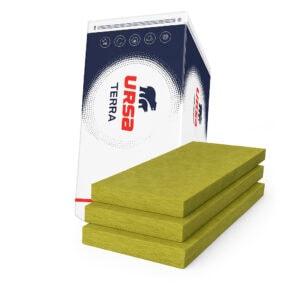
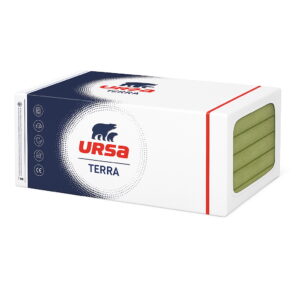
125mm URSA 32 Cavity Wall Insulation Slab 2.46m2 Pack
125mm URSA Cavity Batt is a lightweight, semi-rigid glass mineral wool slab treated with silicon-based water repellent. It is suitable for use in both fully and partially filled masonry cavity walls up to 25m high.
£32.94£39.53 Ex VATInc VAT£13.39£16.07 Per m2 Add to cart -
125mm URSA 35 Cavity Wall Insulation Slab 3.07m2 Pack
125mm URSA Cavity Batt is a lightweight, semi-rigid glass mineral wool slab treated with silicon-based water repellent. It is suitable for use in both fully and partially filled masonry cavity walls up to 25m high.
£24.33£29.20 Ex VATInc VAT£7.93£9.52 Per m2 Add to cart -
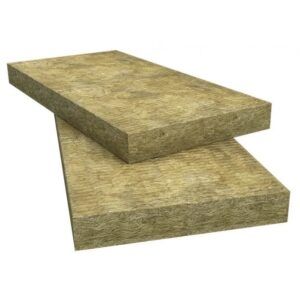
125mm Rockwool Rainscreen Duo Slab 1200mm x 600mm 34.56m2 Pallet
125mm Rainscreen Duo Slab is dual-density insulation specifically developed for use within ventilated cladding systems, as well as sealed systems such as curtain walling. Once installed, the robust outer surface of the slabs, in combination with a factory applied water-repelling agent, acts to resist rain ingress during construction.
POA Get a quote -
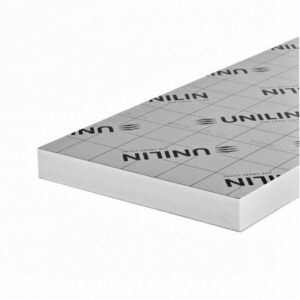
125mm Unilin Thin-R PIR Insulation Board 2400mm x 1200mm (8′ x 4′) Pallet of 18 (51.84m2)
125mm Unilin Thin-R PIR insulation is a foil faced, high-performance insulation solution that offers exceptional thermal efficiency and durability. This polyisocyanurate insulation board, formerly known as Xtratherm, is ideal for a range of applications, such as floors, pitched roofs, and walls.
POA Get a quote -
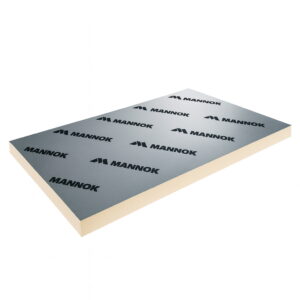
125mm Mannok PIR Insulation Board 2400mm x 1200mm (8′ x 4′) 2.88m2
125mm Mannok PIR Insulation Board is an excellent choice for anyone looking for a high-performance insulation solution that provides superior thermal efficiency. It is ideal for use in any construction project, such as commercial and residential, in wall applications as well as roofing and flooring applications.
POA Get a quote -
125mm Ecotherm Eco-Versal Rigid PIR Insulation Board 2400mm x 1200mm (8′ x 4′) 2.88m2
125mm Ecotherm Eco-Versal is a polyisocyanurate (PIR) insulation core with composite aluminium foil facings on both sides. Ecotherm Eco-Versal is a multi-purpose insulation board suitable for use in pitched roofs, ceilings, floors and walls.
£46.13£55.36 Ex VATInc VAT£16.02£19.22 Per M2 Get restock alertWould you be happy to accept alternative product?