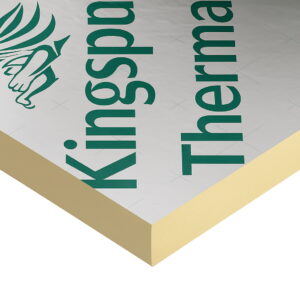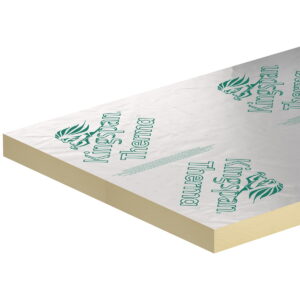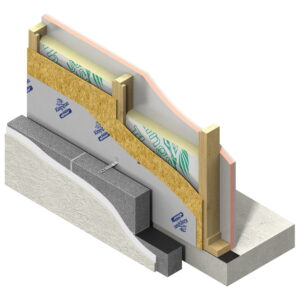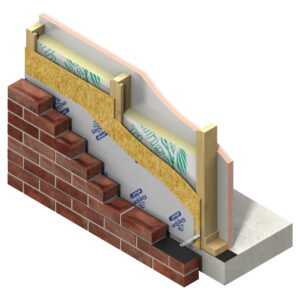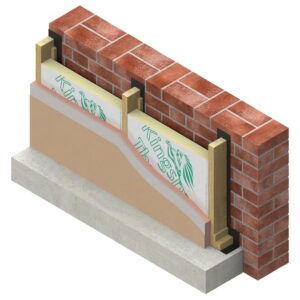
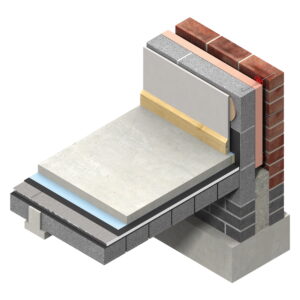
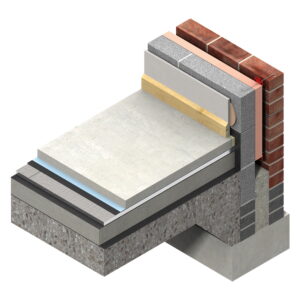
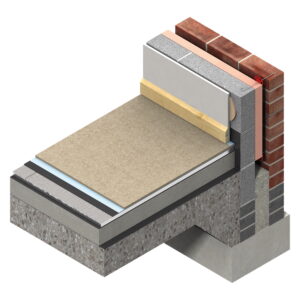

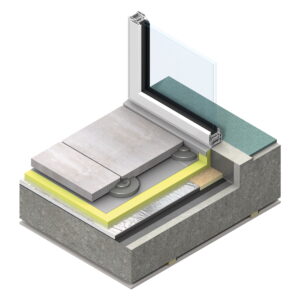
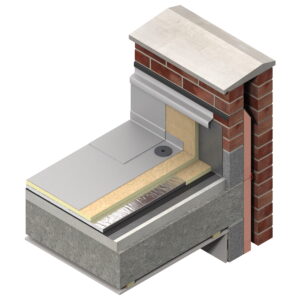
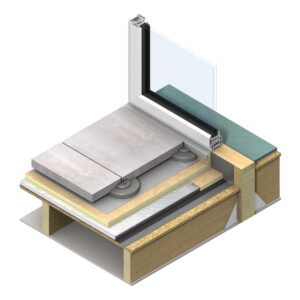
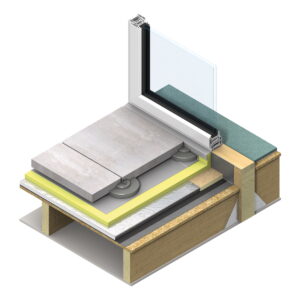
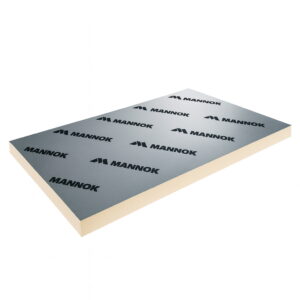
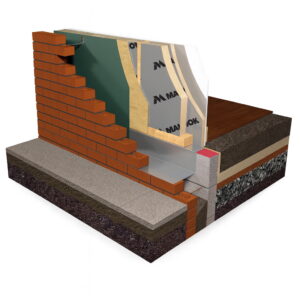
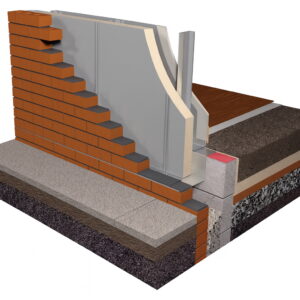
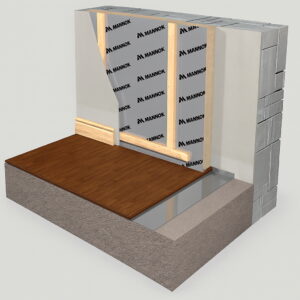
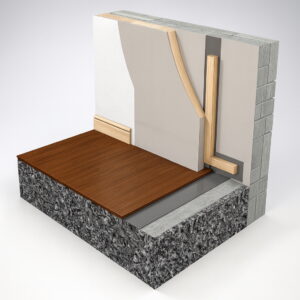
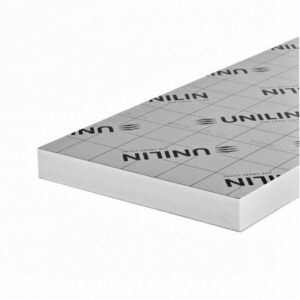
20mm Unilin Thin-R PIR insulation is a foil faced, high-performance insulation solution that offers exceptional thermal efficiency and durability. This polyisocyanurate insulation board, formerly known as Xtratherm, is ideal for a range of applications, such as floors, pitched roofs, and walls.
20mm Insulation
20mm insulation refers primarily to rigid insulation boards or panels that are 20mm thick. Despite their slim profile, they still help slow heat transfer through walls, floors, or ceilings. It is used when there is insufficient room for thicker layers, but you still need performance and compliance with UK thermal standards (e.g., Part L).
What is 20mm insulation thickness?
Insulation 20mm thickness materials have a consistent depth of 20 millimetres across the full depth of the board.
A 20mm insulation layer is thin and does not provide high thermal resistance on its own (compared to thicker boards). However, modern materials like PIR and VIP achieve strong thermal performance in their slim profiles by having much better insulating performance per millimetre than older options.
20mm boards are chosen to deliver good thermal control when space is limited. They are a practical option when upgrading a refurbishment, adding insulation within stud wall build-ups or as an internal lining, or adding a thermal layer under finishes where depth is tight.
What is 20mm insulation used for?
Common applications of 20mm thick insulation include:
- Space-restricted upgrades: In renovations or extensions where you cannot add thick insulation, 20mm boards help raise performance without losing head height, floor clearance, or cabinet depth.
- Layered systems: Sometimes it is part of a multi-layer build – for example, combining with thicker insulation elsewhere to achieve target U-values or reduce cold bridging.
- Thermal bridging control: Placed around window reveals, service penetrations, structural steel, and plasterboard backings to minimise heat loss paths.
- Lightweight installs: Adds minimal dead load to the structure, making handling easier in ceilings or partitions.
Types of 20mm thick insulation
There are several kinds of thin 20mm insulation boards on the market today:
PIR (Polyisocyanurate) boards
These are rigid foam boards with foil facings.
- Offers very high thermal performance for the thickness– excellent for tight spaces.
- Often used in walls, floors, and roofs when you need to meet target U-values with limited depth.
- Lightweight and relatively straightforward to install.
- Best for refurb walls, internal lining, and installing under a finish.
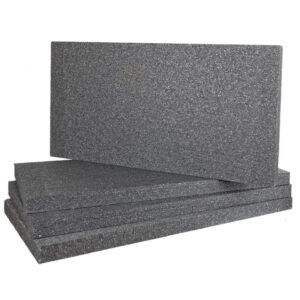
EPS (Expanded Polystyrene) boards
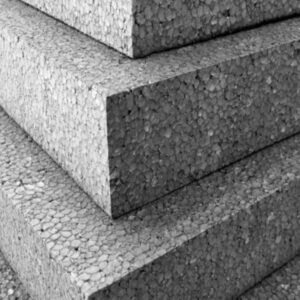
EPS is classic rigid foam made from fused beads.
- Cheaper than many PIR options.
- Lower performance per millimetre than PIR.
- Budget-friendly and easy to cut.
- Ideal for floor insulation layers, cavity detailing, and low-demand thermal zones.
VIP (Vacuum Insulated Panels)
These are a specialist solution where 20mm insulation offers exceptionally high thermal performance. They are built with a vacuum-sealed core that vastly cuts heat flow, giving much higher resistance per millimetre than foam or fibre.
- VIPs outperform other insulation materials in thermal performance by a wide margin – sometimes five to ten times better per millimetre.
- Best for projects where space is very limited, like tight retrofit walls or floors, but where performance must still be high.
Because of the vacuum core, you cannot cut VIP boards. Doing so destroys the vacuum and ruins the performance.
At Insulation Wholesale, you can purchase 20mm Insulation at low wholesale prices with fast delivery for most of items within 2-5 days. Competitive rates guaranteed.
FAQ
Where to buy 20mm thin insulation?
You can get the full range of thin 20mm insulation boards online from Insulation Wholesale. We stock a wide selection of PIR, EPS, and other insulating materials, so you can match the right product to your job. We offer UK stock, so delivery is fast, and we work with big brands at competitive prices.
Can you cut 20mm insulation?
Most 20mm thick insulation types like PIR and EPS can be cut on site with the right tools (insulation knife, fine saw, or board cutter). Careful marking and controlled cutting are recommended.
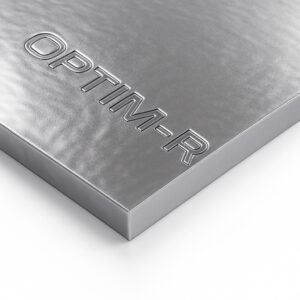
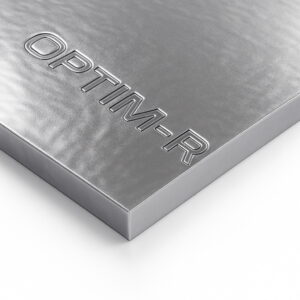
But Optim-R (a type of VIP) and most vacuum panel products cannot be cut. If you slice them, the vacuum seal breaks and the panel stops working properly. Always check the manufacturer’s spec before trying to alter VIP boards.
How to fix 20mm insulation thickness?
Follow these basics:
- Drylining or stud walls: Push the boards so they fit tightly between studs. Secure them using adhesive or mechanical fixings. Then seal joints with tape to reduce air gaps.
- Floors: Place insulation panels on a flat surface. Bond with recommended adhesives or clips under flooring fixings.
- Roofs/walls: Use appropriate fixings for the substrate – brick, block, timber. Fit boards tightly with staggered or closely butted joints, then seal edges to reduce draughts.
Follow the manufacturer’s instructions for fixing to keep performance on specification.
Showing all 24 results
-

20mm Jablite HP+ 70E External Wall Insulation Board 1200mm x 600mm (4′ X 2′) Pack of 30 (21.60m2)
20mm Jablite HP+ 70E External Wall Insulation Board is designed to enhance thermal efficiency for external walls. It can be bonded or mechanically fixed, providing reliable insulation solution.
£48.93£58.72 Ex VATInc VAT£2.27£2.72 Per M2 Add to cart -
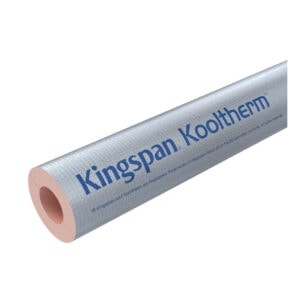
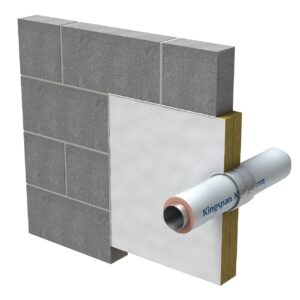
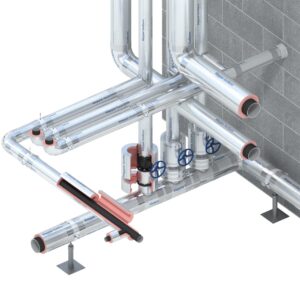
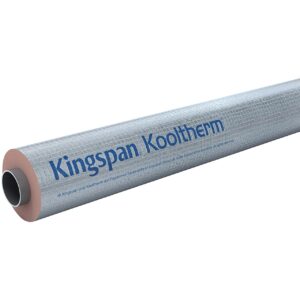
20mm Thick 15mm Pipe Diameter Kingspan Kooltherm Pipe Lagging 1000mm
20mm Thick 15mm Pipe Diameter Insulation is an efficient, fiber-free solution that wraps pipes in a sleek layer of high-performance thermal protection, redefining energy-saving insulation.
£5.19£6.23 Ex VATInc VAT Add to cart -
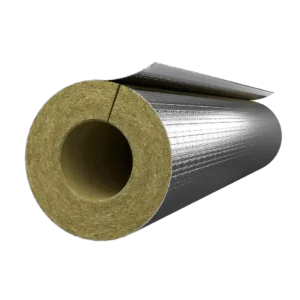
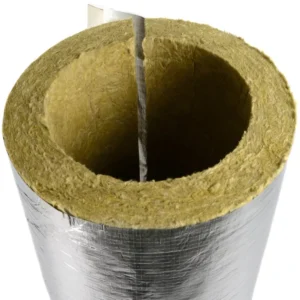
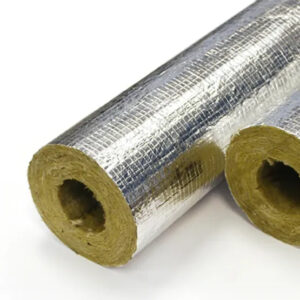
20mm Thick 17mm Pipe Diameter Rockwool Rocklap Aluminium Foil Faced Pipe Lagging 1000mm
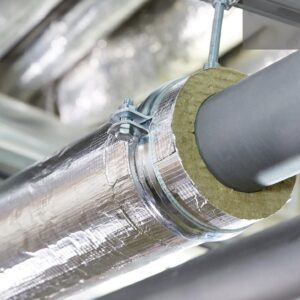
Rockwool Rocklap Aluminium Foil Faced Pipe Lagging (length – 1000mm) is a premium thermal insulation material engineered to improve energy efficiency and minimise heat loss in pipe systems.
£4.93£5.92 Ex VATInc VAT Add to cart -
20mm Thick 21mm Pipe Diameter Rockwool Rocklap Aluminium Foil Faced Pipe Lagging 1000mm
20mm Thick 21mm Pipe Diameter Rockwool Rocklap Aluminium Foil Faced Pipe Lagging (length – 1000mm) is a premium thermal insulation material engineered to improve energy efficiency and minimise heat loss in pipe systems.
£5.11£6.13 Ex VATInc VAT Add to cart -
20mm Thick 22mm Pipe Diameter Kingspan Kooltherm Pipe Lagging 1000mm
20mm Thick 22mm Pipe Diameter Insulation is an efficient, fiber-free solution that wraps pipes in a sleek layer of high-performance thermal protection, redefining energy-saving insulation.
£5.55£6.66 Ex VATInc VAT Add to cart -
20mm Thick 27mm Pipe Diameter Rockwool Rocklap Aluminium Foil Faced Pipe Lagging 1000mm
20mm Thick 27mm Pipe Diameter Rockwool Rocklap Aluminium Foil Faced Pipe Lagging (length – 1000mm) is a premium thermal insulation material engineered to improve energy efficiency and minimise heat loss in pipe systems.
£5.46£6.55 Ex VATInc VAT Add to cart -
20mm Thick 28mm Pipe Diameter Kingspan Kooltherm Pipe Lagging 1000mm
20mm Thick 28mm Pipe Diameter Insulation is an efficient, fiber-free solution that wraps pipes in a sleek layer of high-performance thermal protection, redefining energy-saving insulation.
£6.13£7.36 Ex VATInc VAT Add to cart -
20mm Thick 34mm Pipe Diameter Rockwool Rocklap Aluminium Foil Faced Pipe Lagging 1000mm
20mm Thick 34mm Pipe Diameter Rockwool Rocklap Aluminium Foil Faced Pipe Lagging (length – 1000mm) is a premium thermal insulation material engineered to improve energy efficiency and minimise heat loss in pipe systems.
£5.90£7.08 Ex VATInc VAT Add to cart -
20mm Thick 35mm Pipe Diameter Kingspan Kooltherm Pipe Lagging 1000mm
20mm Thick 35mm Pipe Diameter Insulation is an efficient, fiber-free solution that wraps pipes in a sleek layer of high-performance thermal protection, redefining energy-saving insulation.
£7.16£8.59 Ex VATInc VAT Add to cart -
20mm Thick 42mm Pipe Diameter Kingspan Kooltherm Pipe Lagging 1000mm
20mm Thick 42mm Pipe Diameter Insulation is an efficient, fiber-free solution that wraps pipes in a sleek layer of high-performance thermal protection, redefining energy-saving insulation.
£7.95£9.54 Ex VATInc VAT Add to cart -
20mm Thick 42mm Pipe Diameter Rockwool Rocklap Aluminium Foil Faced Pipe Lagging 1000mm
20mm Thick 42mm Pipe Diameter Rockwool Rocklap Aluminium Foil Faced Pipe Lagging (length – 1000mm) is a premium thermal insulation material engineered to improve energy efficiency and minimise heat loss in pipe systems.
£6.71£8.05 Ex VATInc VAT Add to cart -
20mm Thick 48mm Pipe Diameter Kingspan Kooltherm Pipe Lagging 1000mm
20mm Thick 48mm Pipe Diameter Insulation is an efficient, fiber-free solution that wraps pipes in a sleek layer of high-performance thermal protection, redefining energy-saving insulation.
£8.73£10.48 Ex VATInc VAT Add to cart -
20mm Thick 48mm Pipe Diameter Rockwool Rocklap Aluminium Foil Faced Pipe Lagging 1000mm
20mm Thick 48mm Pipe Diameter Rockwool Rocklap Aluminium Foil Faced Pipe Lagging (length – 1000mm) is a premium thermal insulation material engineered to improve energy efficiency and minimise heat loss in pipe systems.
£6.10£7.32 Ex VATInc VAT Add to cart -
20mm Thick 54mm Pipe Diameter Kingspan Kooltherm Pipe Lagging 1000mm
20mm Thick 54mm Pipe Diameter Insulation is an efficient, fiber-free solution that wraps pipes in a sleek layer of high-performance thermal protection, redefining energy-saving insulation.
£10.12£12.14 Ex VATInc VAT Add to cart -
20mm Thick 54mm Pipe Diameter Rockwool Rocklap Aluminium Foil Faced Pipe Lagging 1000mm
20mm Thick 54mm Pipe Diameter Rockwool Rocklap Aluminium Foil Faced Pipe Lagging (length – 1000mm) is a premium thermal insulation material engineered to improve energy efficiency and minimise heat loss in pipe systems.
£7.53£9.04 Ex VATInc VAT Add to cart -
20mm Thick 60mm Pipe Diameter Kingspan Kooltherm Pipe Lagging 1000mm
20mm Thick 60mm Pipe Diameter Insulation is an efficient, fiber-free solution that wraps pipes in a sleek layer of high-performance thermal protection, redefining energy-saving insulation.
£11.29£13.55 Ex VATInc VAT Add to cart -
20mm Thick 60mm Pipe Diameter Rockwool Rocklap Aluminium Foil Faced Pipe Lagging 1000mm
20mm Thick 60mm Pipe Diameter Rockwool Rocklap Aluminium Foil Faced Pipe Lagging (length – 1000mm) is a premium thermal insulation material engineered to improve energy efficiency and minimise heat loss in pipe systems.
£7.95£9.54 Ex VATInc VAT Add to cart -
20mm Thick 67mm Pipe Diameter Kingspan Kooltherm Pipe Lagging 1000mm
20mm Thick 67mm Pipe Diameter Insulation is an efficient, fiber-free solution that wraps pipes in a sleek layer of high-performance thermal protection, redefining energy-saving insulation.
£11.40£13.68 Ex VATInc VAT Add to cart -
20mm Thick 76mm Pipe Diameter Kingspan Kooltherm Pipe Lagging 1000mm
20mm Thick 76mm Pipe Diameter Insulation is an efficient, fiber-free solution that wraps pipes in a sleek layer of high-performance thermal protection, redefining energy-saving insulation.
£13.56£16.27 Ex VATInc VAT Add to cart -
20mm Kingspan OPTIM-R Flooring Insulation Board
20mm Kingspan OPTIM-R Flooring Insulation Panels achieve a declared thermal conductivity of 0.007 W/m∙K.
POA Get a quote -
20mm Kingspan OPTIM-R Roofing Insulation Board
20mm Kingspan OPTIM-R Roofing Insulation Panels achieve a declared thermal conductivity of 0.007 W/m∙K.
POA Get a quote -
20mm Mannok PIR Insulation Board 2400mm x 1200mm (8′ x 4′) 2.88m2
20mm Mannok PIR Insulation Board is an excellent choice for anyone looking for a high-performance insulation solution that provides superior thermal efficiency. It is ideal for use in any construction project, such as commercial and residential, in wall applications as well as roofing and flooring applications.
POA Get a quote -
20mm Kingspan Therma TP10 / TF70 / TW55 PIR Insulation Board 2400mm x 1200mm (8′ x 4′) Pack of 15 (43.20m2)
All three models 20mm Kingspan Therma PIR Insulation Board:
- 20mm Thermapitch TP10
- 20mm Thermafloor TF70
- 20mm Thermawall TW55
share the same high-performance PIR core and low-emissivity foil facings, offering excellent thermal efficiency and easy installation. Although labeled differently, these boards share identical technical specifications.
No longer in production.
£281.72£338.06 Ex VATInc VAT£6.52£7.82 Per M2 Get restock alert