Insulation By Thickness
Insulation thickness is a simple way to choose insulation based on the depth of the space you need to fill. This allows you to select the most appropriate material or product range to deliver the performance you need for that required depth. That makes it easier to match the insulation to structures and cavities without forcing or compressing it.
What is insulation by thickness?
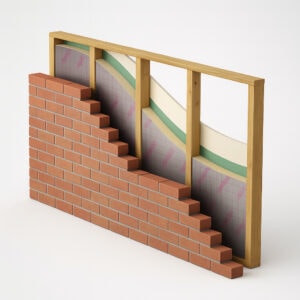
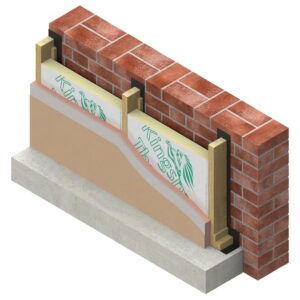
Insulation by thickness means selecting an insulating material that matches a required depth. The required depth typically depends on the size of timber or steel framing members. It is also determined by UK Building Regulations and target U-values, as well as existing construction constraints that cannot be altered.
To work properly, insulation must fit the space for which it is designed. If it is thinner than the void, heat can escape around it. If fibrous insulation is over-compressed, the trapped air structure is reduced, leading to a drop in performance. So thickness matters just as much as the material itself.
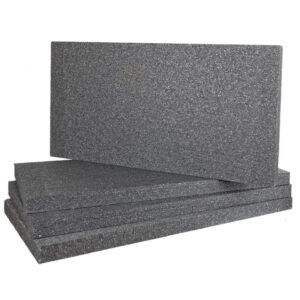
This approach applies to all insulation types. Mineral wool slabs, glass wool rolls, blown fibre, phenolic foam, PIR, EPS, XPS, and aerogel products are all installed to set depths, and so they can be used correctly in different parts of a building.
What are the different insulation thicknesses used for?
Insulation comes in these common depths:
- Very thin insulation (2–10mm) – usually used for surface upgrades. This includes acoustic layers, thermal laminates, pipe wraps, and specialist products like aerogel, where space is extremely tight.
- Thin to mid-range insulation (12–50mm) – common for internal wall linings, under screeds, between battens, and in service voids, to reduce surface condensation and cold-spot formation. High‑performance foams do more at these depths than fibrous materials.
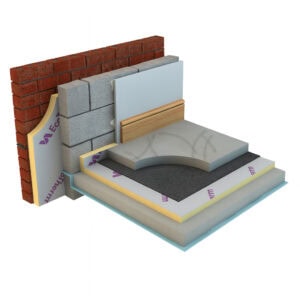
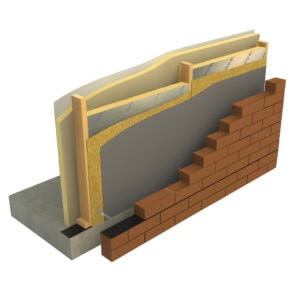
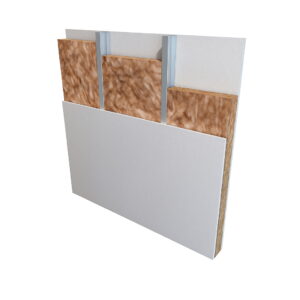
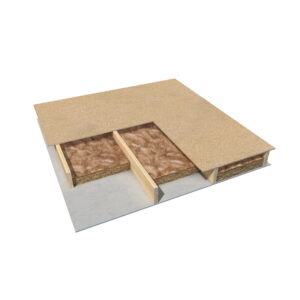
- Mid-range insulation (60–100mm) – widely used in stud walls, timber floors, warm roofs, and solid wall upgrades. Mostly offered in mineral wool (glass or stone), PIR, and phenolic foam. All can perform reliably when correctly specified and installed.
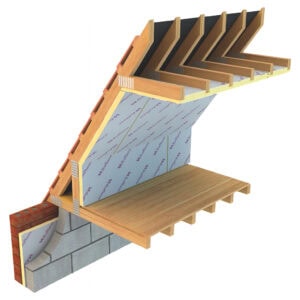
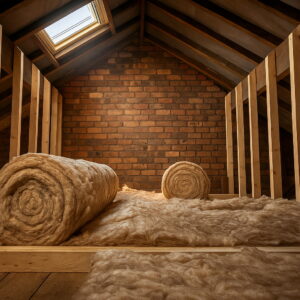
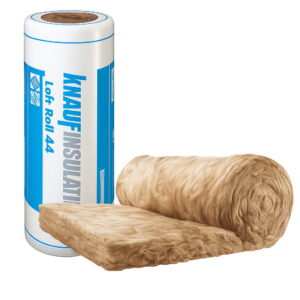
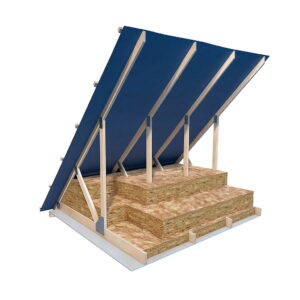
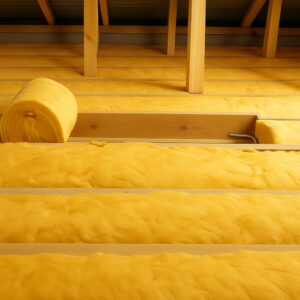
- Thicker insulation (120–200mm) – typically for roofs, lofts, deep floor zones, and high‑performance wall systems. These depths are about slowing heat flow over time, not just stopping drafts. Loose‑fill and quilt products work well here because they fully fill irregular spaces.
What thicknesses of insulation are there?
Insulation Wholesale stocks insulation thicknesses from 2mm right up to 200mm. Manufacturing constraints and performance requirements determine the depth ranges for each material.
Typical available ranges include:
- Ultra‑thin specialist layers – These are mostly 2–10mm.
- Standard board and slab depths – including 20, 25, 30, 40, and 50mm.
- Common structural fills – Usually 60, 70, 75, 80, 90, 100mm.
- Deep‑fill options – Commonly 120, 140, 150, 170, 200mm.
This wide range allows insulation by thickness to work across refurbishments, extensions, and new builds without structural redesign.
FAQ
Where to buy insulation by thickness?
You can buy insulation by thickness from Insulation Wholesale. We stock multiple materials across a full depth range, so you can choose the material that best fits your construction build-up, without compromising. Our team helps match insulation thickness to your application, whether for floors, walls, roofs, or specialist applications. We supply UK stock and support both trade and DIY customers with clear advice and reliable delivery.
What insulation thickness is best?
There is no single “best” insulation thickness. The right choice depends on the space available, the target U‑value, and the material used. A thinner high‑performance foam can outperform a thicker fibrous product, while deeper mineral wool can give better sound control and fire resistance. Choose the thickest insulation that fits without compression while complying with UK Building Regulations.
Can different materials be mixed at the same thickness?
Yes, you may combine materials - as long as they are compatible and correctly detailed. You can combine a rigid board layer with mineral wool of the same depth to improve thermal control and sound absorption, for example. The key is to maintain continuity with no air gaps. Do a full vapour control and condensation risk assessment before combining materials.
-
2mm Insulation (1)
-
3mm Insulation (2)
-
5mm Insulation (6)
-
6mm Insulation (3)
-
8mm Insulation (1)
-
9mm Insulation (3)
-
10mm Insulation (2)
-
12mm Insulation (5)
-
15mm Insulation (7)
-
18mm Insulation (1)
-
20mm Insulation (24)
-
25mm Insulation (86)
-
27mm Insulation (2)
-
30mm Insulation (29)
-
37.5mm Insulation (6)
-
40mm Insulation (24)
-
42.5mm Insulation (1)
-
45mm Insulation (2)
-
48mm Insulation (2)
-
50mm Insulation (62)
-
50.5mm Insulation (1)
-
52.5mm Insulation (6)
-
57.5mm Insulation (1)
-
60mm Insulation (40)
-
62.5mm Insulation (7)
-
65mm Insulation (1)
-
70mm Insulation (19)
-
72.5mm Insulation (6)
-
75mm Insulation (43)
-
80mm Insulation (27)
-
82.5mm Insulation (4)
-
85mm Insulation (2)
-
90mm Insulation (25)
-
92.5mm Insulation (2)
-
100mm Insulation (63)
-
110mm Insulation (11)
-
115mm Insulation (4)
-
120mm Insulation (22)
-
125mm Insulation (11)
-
130mm Insulation (16)
-
140mm Insulation (23)
-
150mm Insulation (36)
-
165mm Insulation (2)
-
180mm Insulation (2)
-
200mm Insulation (6)
Showing 1–32 of 664 results
-

100mm Celotex CW4100 Cavity Wall Insulation Board 1200mm x 450mm 3.24m2 Pack of 6 (3.24m2)
100mm Celotex CW4100 Cavity Wall Insulation Board is an easy to install polyisocyanurate (PIR) insulation board with excellent thermal performance, featuring a low emissivity foil facing.
£49.64£59.57 Ex VATInc VAT£15.32£18.38 Per M2 Add to cart -
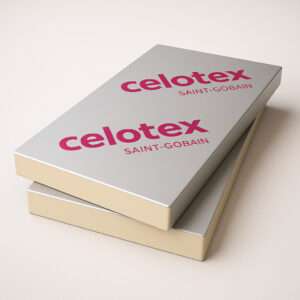
100mm Celotex GA4100 PIR Insulation Board 2400mm x 1200mm (8′ x 4′) 2.88m2
100mm Celotex GA4100 is a polyisocyanurate (PIR) insulation core with composite aluminium foil facings on both sides. Celotex is a multi-purpose insulation board suitable for use in pitched roofs, ceilings, floors and walls.
£31.95£38.34 Ex VATInc VAT£11.09£13.31 Per M2 Add to cart -
100mm Ecotherm Eco-Versal Rigid PIR Insulation Board 2400mm x 1200mm (8′ x 4′) 2.88m2
100mm Ecotherm Eco-Versal is a polyisocyanurate (PIR) insulation core with composite aluminium foil facings on both sides. Ecotherm Eco-Versal is a multi-purpose insulation board suitable for use in pitched roofs, ceilings, floors and walls.
£30.85£37.02 Ex VATInc VAT£10.71£12.85 Per M2 Add to cart -
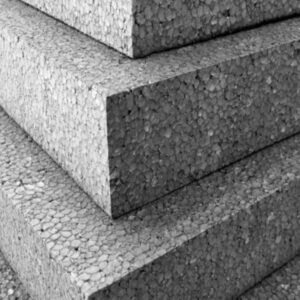
100mm Expanded Polystyrene EPS100 Insulation Board 2400mm x 1200mm (8′ x 4′) Pack of 24 (69.12m2)
100mm EPS100, often known as Expanded Polystyrene, is a lightweight foam product produced from tiny polystyrene beads. Due to its high thermal value and simplicity of usage, it is commonly used as one of the most favoured insulation materials in construction.
£501.00£601.20 Ex VATInc VAT£7.25£8.70 Per M2 Add to cart -
100mm Expanded Polystyrene EPS150 Floor Insulation Board 2400mm x 1200mm (8′ x 4′) Pack of 6 (17.28m2)
100mm EPS150, often known as Expanded Polystyrene, is a lightweight foam product produced from tiny polystyrene beads. Due to its high thermal value and simplicity of usage, it is commonly used as one of the most favoured insulation materials in construction.
£175.69£210.83 Ex VATInc VAT£10.17£12.20 Per M2 Add to cart -
100mm Expanded Polystyrene EPS200 Floor Insulation Board 2400mm x 1200mm (8′ x 4′) Pack of 6 (17.28m2)
100mm EPS200, often known as Expanded Polystyrene, is a lightweight foam product produced from tiny polystyrene beads. Due to its high thermal value and simplicity of usage, it is commonly used as one of the most favoured insulation materials in construction.
£282.11£338.53 Ex VATInc VAT£16.33£19.60 Per M2 Add to cart -
100mm Expanded Polystyrene EPS250 Floor Insulation Board 2400mm x 1200mm (8′ x 4′) Pack of 6 (17.28m2)
100mm EPS250, often known as Expanded Polystyrene, is a lightweight foam product produced from tiny polystyrene beads. Due to its high thermal value and simplicity of usage, it is commonly used as one of the most favoured insulation materials in construction.
£374.89£449.87 Ex VATInc VAT£21.70£26.04 Per M2 Add to cart -
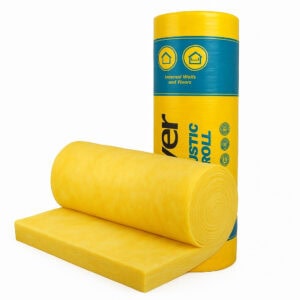
100mm Isover Acoustic Partition Insulation Roll – Glass Mineral Wool 11m2
100mm Isover Acoustic Partition Insulation Roll is a glass mineral wooldesigned to reduce sound transmission between walls and floors, creating quieter and more comfortable spaces.
£47.62£57.14 Ex VATInc VAT£4.33£5.20 Per m2 Add to cart -
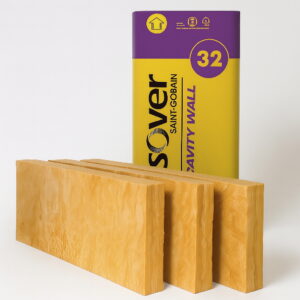
100mm Isover CWS 32 Cavity Wall Slab 3.28m2 Pack
100mm Isover CWS 32 Cavity Wall Slab offers excellent thermal insulation for cavity walls, effectively reducing heat loss and boosting energy efficiency. Lightweight and easy to install, it delivers reliable, long-lasting performance.
£37.84£45.41 Ex VATInc VAT£11.54£13.85 Per m2 Add to cart -
100mm Isover CWS 36 Cavity Wall Slab 6.55m2 Pack
100mm Isover CWS 36 Cavity Wall Slab offers excellent thermal insulation for cavity walls, effectively reducing heat loss and boosting energy efficiency. Lightweight and easy to install, it delivers reliable, long-lasting performance.
£35.31£42.37 Ex VATInc VAT£5.39£6.47 Per m2 Add to cart -
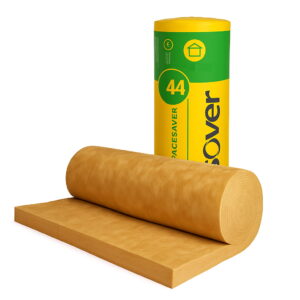
100mm Isover Spacesaver Insulation Loft Roll 14.13m2
100mm Isover Spacesaver Insulation Loft Roll is an efficient and easy-to-install solution for insulating loft spaces, designed to enhance energy efficiency and home comfort.
£31.78£38.14 Ex VATInc VAT£2.25£2.70 Per m2 Add to cart -
100mm Jablite HP+ 70E External Wall Insulation Board 1200mm x 600mm (4′ X 2′) Pack of 6 (4.32m2)
100mm Jablite HP+ 70E External Wall Insulation Board is designed to enhance thermal efficiency for external walls. It can be bonded or mechanically fixed, providing reliable insulation solution.
£48.88£58.66 Ex VATInc VAT£11.31£13.57 Per M2 Add to cart -
100mm Kingspan GreenGuard GG300 R Rigid Extruded Polystyrene Insulation Board 1250mm x 600mm Pack of 4 (3.00m2)
100mm Kingspan GreenGuard GG300 is a high performance rigid extruded polystyrene insulation. It is used to insulate inverted roofs, basements, car park decks, and heavy-duty commercial, industrial and cold store flooring offering a thermal conductivities as low as 0.033 W/mK.
£61.56£73.87 Ex VATInc VAT£20.52£24.62 Per M2 Add to cart -
100mm Kingspan Kooltherm K103 Insulation Floorboard 2400mm x 1200mm Pack of 3 (8.64m2)
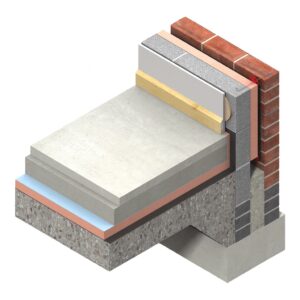
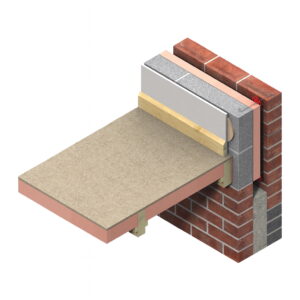
100mm Kooltherm K103 is a premium phenolic core floor insulation solution, designed to deliver exceptional performance with solid concrete or suspended timber floors.
£324.00£388.80 Ex VATInc VAT£37.50£45.00 Per M2 Add to cart -
100mm Kingspan Kooltherm K107 Pitched Roof Board 2400mm x 1200mm Pack of 3 (8.64m2)
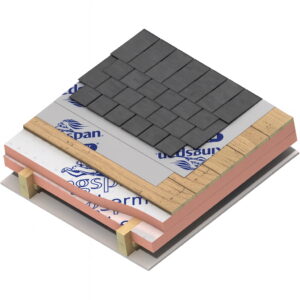
100mm Kingspan Kooltherm K107 Pitched Roof Board is a premium performance insulation with a fibre-free rigid thermoset phenolic core. It is used to insulate pitched roofs and attic spaces, and has a thermal conductivity of just 0.019 W/m.K across all thicknesses.
£338.00£405.60 Ex VATInc VAT£39.12£46.94 Per M2 Add to cart -
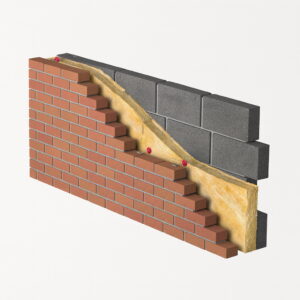
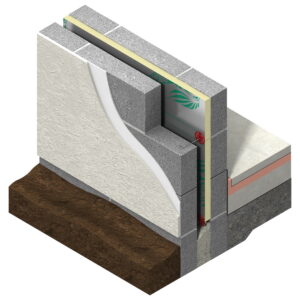
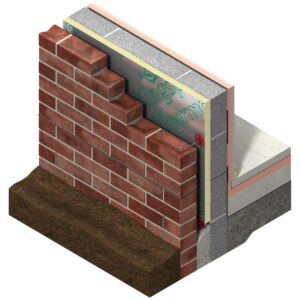
100mm Kingspan Kooltherm K108 Cavity Board Insulation 1200mm x 450mm Pack of 5 (2.70m2)
100mm Kingspan Kooltherm K108 partial fill cavity wall board is a premium performance lower lambda insulation with a rigid thermoset fibre-free phenolic core. It is faced on both sides with a low emissivity composite foil facing and is used in partially filled cavity walls.
£116.00£139.20 Ex VATInc VAT£42.96£51.55 Per M2 Add to cart -
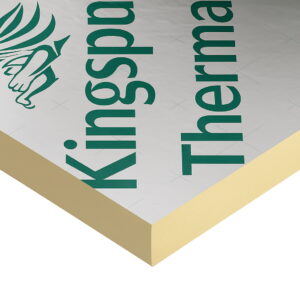
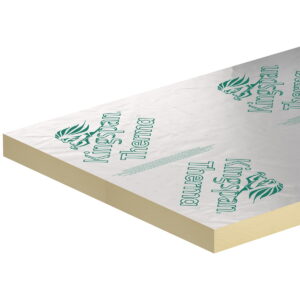
100mm Kingspan Therma TP10 / TF70 / TW55 PIR Insulation Board 2400mm x 1200mm (8′ x 4′) Pack of 3 (8.64m2)
All three models 100mm Kingspan Therma PIR Insulation Board:
- 100mm Thermapitch TP10
- 100mm Thermafloor TF70
- 100mm Thermawall TW55
share the same high-performance PIR core and low-emissivity foil facings, offering excellent thermal efficiency and easy installation. Although labeled differently, these boards share identical technical specifications.
£156.03£187.24 Ex VATInc VAT£18.06£21.67 Per M2 Add to cart -
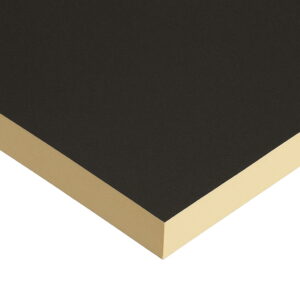
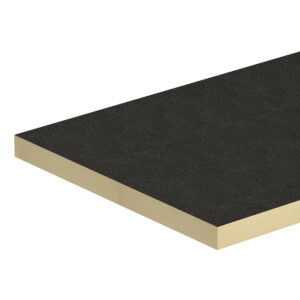
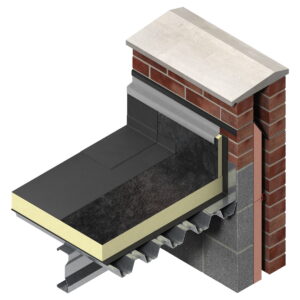
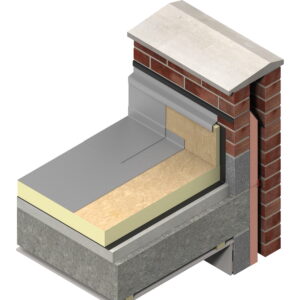
100mm Kingspan Thermaroof TR24 Flat Roof PIR Insulation Board 1200mm x 600mm Pack of 5 (3.60m2)
100mm Kingspan Thermaroof TR24 is a high performance insulation with a fibre-free rigid thermoset polyisocyanurate (PIR) core. Kingspan Thermaroof is suitable for flat roofs waterproofed with partially bonded torch applied multi-layer bituminous waterproofing.
£102.06£122.47 Ex VATInc VAT£28.35£34.02 Per M2 Add to cart -
100mm Kingspan Thermaroof TR26 PIR Insulation Board 2400mm x 1200mm (8′ x 4′) Pack of 3 (8.64m2)
100mm Kingspan TR26 Thermaroof is high-performance insulation that has a fiber-free rigid thermoset polyisocyanurate (PIR) core. Suitable for flat roof application waterproofed with mechanically fixed single-ply waterproofing.
£210.31£252.37 Ex VATInc VAT£24.34£29.21 Per M2 Add to cart -
100mm Kingspan Thermaroof TR27 PIR Insulation Board 1200mm x 1200mm Pack of 4 (5.76m2)
100mm Kingspan Thermaroof TR27 is a high performance insulation with a fibre-free rigid thermoset polyisocyanurate (PIR) core. It is used to insulate flat roofs waterproofed with fully adhered single-ply, partially bonded built-up felt, mastic asphalt and cold liquid applied waterproofing.
£146.99£176.39 Ex VATInc VAT£25.52£30.62 Per M2 Add to cart -
100mm Kingspan Thermawall TW50 PIR Insulation Board 1200mm x 450mm Pack of 5 (2.70m2)
100mm Kingspan Thermawall TW50 is a high performance insulation with thermal conductivity of 0.022 W/mK. Therma is a range of PIR insulation available in a range of thicknesses.£51.91£62.29 Ex VATInc VAT£19.23£23.08 Per M2 Add to cart -
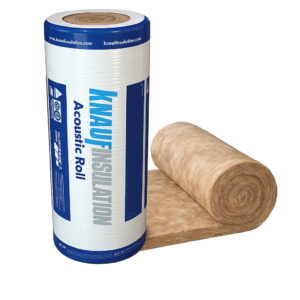
100mm Knauf Acoustic Insulation Roll – Glass Mineral Wool 12.36m2
100mm Acoustic Insulation Roll from Knauf is a Glass Mineral Wool roll, designed for use in internal wall and floor applications, to offer sound absorption and noise reduction properties.
£50.42£60.50 Ex VATInc VAT£4.08£4.90 Per m2 Add to cart -
100mm Knauf Insulation Loft Roll 44 Combi-Cut 13.89m2 Roll
Knauf Insulation Loft Roll 44 is a non-combustible glass mineral wool roll supplied in a Combi-Cut format. It is designed for use in cold lofts. Manufactured using Knauf Insulation’s unique bio-based binder, ECOSE® Technology.
£28.62£34.34 Ex VATInc VAT£2.06£2.47 Per m2 Add to cart -
100mm ODE Acoustic Roll Insulation 7.8m2 Roll
100mm ODE Insulation Acoustic Roll is designed to reduce sound transmission, making it an ideal solution for creating quieter indoor environments. Its flexible and simple-to-install design effectively absorbs sound, making it perfect for both residential and commercial spaces.
£24.41£29.29 Ex VATInc VAT£3.13£3.76 Per m2 Add to cart -
100mm ODE Insulation Loft Roll 10.83m2
100mm ODE Insulation Loft Roll is a highly effective thermal loft solution for improving home energy efficiency. Made from eco-friendly materials, it offers a simple and effective way to improve comfort while lowering energy costs.
£19.36£23.23 Ex VATInc VAT£1.79£2.15 Per m2 Add to cart -
100mm Recticel Eurothane Eurodeck Insulation Board 2400mm x 1200mm Pack of 4 (11.52m2)
100mm Eurothane® Eurodeck is compatible with mechanically fixed single-ply systems, benefiting from high compressive strength and excellent dimensional stability that ensures the flat surface finish required for optimum performance in new build and refurbishment projects. It is faced on both sides with a multi-layer coated aluminum foil.
£177.89£213.47 Ex VATInc VAT£15.44£18.53 Per M2 Add to cart -
100mm Recticel Eurothane GP PIR Insulation Board 2400mm x 1200mm (8′ x 4′) 2.88m2
100mm Recticel Eurothane GP is a polyisocyanurate (PIR) insulation core with composite aluminium foil facings on both sides. Recticel is a multi-purpose insulation board suitable for use in pitched roofs, ceilings, floors and walls.
£30.99£37.19 Ex VATInc VAT£10.76£12.91 Per M2 Add to cart -
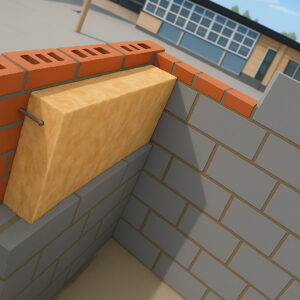
100mm Recticel Eurowall Partial Cavity Wall Insulation Board 1200mm x 450mm Pack of 10 (5.40m2)
100mm Recticel Eurowall Partial Cavity is an advanced thermal insulation panel tailored for use in cavity wall systems, delivering exceptional energy efficiency and robust performance.
£93.63£112.36 Ex VATInc VAT£17.34£20.81 Per M2 Add to cart -
100mm Recticel Powerdeck F Flat Roof Insulation Board 1200mm x 600mm Pack of 5 (3.60m2)
100mm Powerdeck F flat roof insulation board is compatible with multiple waterproofing systems, benefiting from high compressive strength and excellent dimensional stability. Both sides of Powerdeck F are faced with a mineral coated glass fleece.
£65.26£78.31 Ex VATInc VAT£18.13£21.76 Per M2 Add to cart -
100mm Recticel Powerdeck U Flat Roof Insulation Board 1200mm x 600mm Pack of 5 (3.60m2)
100mm Powerdeck U flat roof insulation board is a high performance rigid PIR insulation board for use in warm flat roofs with bituminous torch-on felt waterproofing systems. Both sides of Powerdeck U are faced with a bituminous coated glass fleece.
£71.44£85.73 Ex VATInc VAT£19.84£23.81 Per M2 Add to cart -
100mm Rockwool Flexi Slab Acoustic Insulation 1200mm x 600mm 4.32m2 Pack
100mm Rockwool Flexi has been designed as a multi-use, dual-purpose acoustic and thermal mineral wool insulation with a unique flexible edge along one side. It is suitable for use all over the home, in pitched roof rafters, framed external walls, internal partitions, intermediate floors, separating walls and floors, and timber suspended ground floors.
£40.41£48.49 Ex VATInc VAT£9.35£11.22 Per m2 Add to cart -
100mm Rockwool RW3 Acoustic Insulation Slab 1200mm x 600mm 2.88m2 Pack
100mm Rockwool RW3 Slabs can be applied to an array of general building applications for acoustic, thermal and fire protection of partition walls, ceilings, floors and roofs.
£35.16£42.19 Ex VATInc VAT£12.21£14.65 Per m2 Add to cart