Products in Foiled Back Pipe Insulation
-
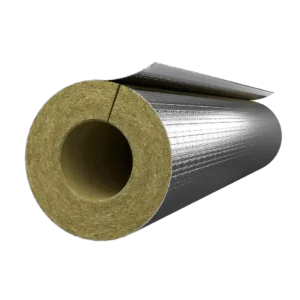

20mm Thick 17mm Pipe Diameter Rockwool Rocklap Aluminium Foil Faced Pipe Lagging 1000mm
Rockwool Rocklap Aluminium Foil Faced Pipe Lagging (length – 1000mm) is a premium thermal insulation material engineered to improve energy efficiency and minimise heat loss in pipe systems.
£5.22£6.26 Ex VATInc VAT Add to cart -
20mm Thick 21mm Pipe Diameter Rockwool Rocklap Aluminium Foil Faced Pipe Lagging 1000mm
20mm Thick 21mm Pipe Diameter Rockwool Rocklap Aluminium Foil Faced Pipe Lagging (length – 1000mm) is a premium thermal insulation material engineered to improve energy efficiency and minimise heat loss in pipe systems.
£5.18£6.22 Ex VATInc VAT Add to cart -
20mm Thick 27mm Pipe Diameter Rockwool Rocklap Aluminium Foil Faced Pipe Lagging 1000mm
20mm Thick 27mm Pipe Diameter Rockwool Rocklap Aluminium Foil Faced Pipe Lagging (length – 1000mm) is a premium thermal insulation material engineered to improve energy efficiency and minimise heat loss in pipe systems.
£5.46£6.55 Ex VATInc VAT Add to cart -
20mm Thick 34mm Pipe Diameter Rockwool Rocklap Aluminium Foil Faced Pipe Lagging 1000mm
20mm Thick 34mm Pipe Diameter Rockwool Rocklap Aluminium Foil Faced Pipe Lagging (length – 1000mm) is a premium thermal insulation material engineered to improve energy efficiency and minimise heat loss in pipe systems.
£5.90£7.08 Ex VATInc VAT Add to cart -
20mm Thick 42mm Pipe Diameter Rockwool Rocklap Aluminium Foil Faced Pipe Lagging 1000mm
20mm Thick 42mm Pipe Diameter Rockwool Rocklap Aluminium Foil Faced Pipe Lagging (length – 1000mm) is a premium thermal insulation material engineered to improve energy efficiency and minimise heat loss in pipe systems.
£6.71£8.05 Ex VATInc VAT Add to cart -
20mm Thick 48mm Pipe Diameter Rockwool Rocklap Aluminium Foil Faced Pipe Lagging 1000mm
20mm Thick 48mm Pipe Diameter Rockwool Rocklap Aluminium Foil Faced Pipe Lagging (length – 1000mm) is a premium thermal insulation material engineered to improve energy efficiency and minimise heat loss in pipe systems.
£6.10£7.32 Ex VATInc VAT Add to cart -
20mm Thick 54mm Pipe Diameter Rockwool Rocklap Aluminium Foil Faced Pipe Lagging 1000mm
20mm Thick 54mm Pipe Diameter Rockwool Rocklap Aluminium Foil Faced Pipe Lagging (length – 1000mm) is a premium thermal insulation material engineered to improve energy efficiency and minimise heat loss in pipe systems.
£7.53£9.04 Ex VATInc VAT Add to cart -
20mm Thick 60mm Pipe Diameter Rockwool Rocklap Aluminium Foil Faced Pipe Lagging 1000mm
20mm Thick 60mm Pipe Diameter Rockwool Rocklap Aluminium Foil Faced Pipe Lagging (length – 1000mm) is a premium thermal insulation material engineered to improve energy efficiency and minimise heat loss in pipe systems.
£7.95£9.54 Ex VATInc VAT Add to cart -
25mm Thick 108mm Pipe Diameter Rockwool Rocklap Aluminium Foil Faced Pipe Lagging 1000mm
25mm Thick 108mm Pipe Diameter Rockwool Rocklap Aluminium Foil Faced Pipe Lagging (length – 1000mm) is a premium thermal insulation material engineered to improve energy efficiency and minimise heat loss in pipe systems.
£16.39£19.67 Ex VATInc VAT Add to cart -
25mm Thick 114mm Pipe Diameter Rockwool Rocklap Aluminium Foil Faced Pipe Lagging 1000mm
25mm Thick 114mm Pipe Diameter Rockwool Rocklap Aluminium Foil Faced Pipe Lagging (length – 1000mm) is a premium thermal insulation material engineered to improve energy efficiency and minimise heat loss in pipe systems.
£17.14£20.57 Ex VATInc VAT Add to cart -
25mm Thick 127mm Pipe Diameter Rockwool Rocklap Aluminium Foil Faced Pipe Lagging 1000mm
25mm Thick 127mm Pipe Diameter Rockwool Rocklap Aluminium Foil Faced Pipe Lagging (length – 1000mm) is a premium thermal insulation material engineered to improve energy efficiency and minimise heat loss in pipe systems.
£24.38£29.26 Ex VATInc VAT Add to cart -
25mm Thick 140mm Pipe Diameter Rockwool Rocklap Aluminium Foil Faced Pipe Lagging 1000mm
25mm Thick 140mm Pipe Diameter Rockwool Rocklap Aluminium Foil Faced Pipe Lagging (length – 1000mm) is a premium thermal insulation material engineered to improve energy efficiency and minimise heat loss in pipe systems.
£19.49£23.39 Ex VATInc VAT Add to cart -
25mm Thick 159mm Pipe Diameter Rockwool Rocklap Aluminium Foil Faced Pipe Lagging 1000mm
25mm Thick 159mm Pipe Diameter Rockwool Rocklap Aluminium Foil Faced Pipe Lagging (length – 1000mm) is a premium thermal insulation material engineered to improve energy efficiency and minimise heat loss in pipe systems.
£43.86£52.63 Ex VATInc VAT Add to cart -
25mm Thick 169mm Pipe Diameter Rockwool Rocklap Aluminium Foil Faced Pipe Lagging 1000mm
25mm Thick 169mm Pipe Diameter Rockwool Rocklap Aluminium Foil Faced Pipe Lagging (length – 1000mm) is a premium thermal insulation material engineered to improve energy efficiency and minimise heat loss in pipe systems.
£23.29£27.95 Ex VATInc VAT Add to cart -
25mm Thick 17mm Pipe Diameter Rockwool Rocklap Aluminium Foil Faced Pipe Lagging 1000mm
25mm Thick 17mm Pipe Diameter Rockwool Rocklap Aluminium Foil Faced Pipe Lagging (length – 1000mm) is a premium thermal insulation material engineered to improve energy efficiency and minimise heat loss in pipe systems.
£5.52£6.62 Ex VATInc VAT Add to cart -
25mm Thick 219mm Pipe Diameter Rockwool Rocklap Aluminium Foil Faced Pipe Lagging 1000mm
25mm Thick 129mm Pipe Diameter Rockwool Rocklap Aluminium Foil Faced Pipe Lagging (length – 1000mm) is a premium thermal insulation material engineered to improve energy efficiency and minimise heat loss in pipe systems.
£33.15£39.78 Ex VATInc VAT Add to cart -
25mm Thick 21mm Pipe Diameter Rockwool Rocklap Aluminium Foil Faced Pipe Lagging 1000mm
25mm Thick 21mm Pipe Diameter Rockwool Rocklap Aluminium Foil Faced Pipe Lagging (length – 1000mm) is a premium thermal insulation material engineered to improve energy efficiency and minimise heat loss in pipe systems.
£5.72£6.86 Ex VATInc VAT Add to cart -
25mm Thick 273mm Pipe Diameter Rockwool Rocklap Aluminium Foil Faced Pipe Lagging 1000mm
25mm Thick 273mm Pipe Diameter Rockwool Rocklap Aluminium Foil Faced Pipe Lagging (length – 1000mm) is a premium thermal insulation material engineered to improve energy efficiency and minimise heat loss in pipe systems.
£91.27£109.52 Ex VATInc VAT Add to cart -
25mm Thick 27mm Pipe Diameter Rockwool Rocklap Aluminium Foil Faced Pipe Lagging 1000mm
25mm Thick 27mm Pipe Diameter Rockwool Rocklap Aluminium Foil Faced Pipe Lagging (length – 1000mm) is a premium thermal insulation material engineered to improve energy efficiency and minimise heat loss in pipe systems.
£6.26£7.51 Ex VATInc VAT Add to cart -
25mm Thick 34mm Pipe Diameter Rockwool Rocklap Aluminium Foil Faced Pipe Lagging 1000mm
25mm Thick 34mm Pipe Diameter Rockwool Rocklap Aluminium Foil Faced Pipe Lagging (length – 1000mm) is a premium thermal insulation material engineered to improve energy efficiency and minimise heat loss in pipe systems.
£6.81£8.17 Ex VATInc VAT Add to cart -
25mm Thick 42mm Pipe Diameter Rockwool Rocklap Aluminium Foil Faced Pipe Lagging 1000mm
25mm Thick 42mm Pipe Diameter Rockwool Rocklap Aluminium Foil Faced Pipe Lagging (length – 1000mm) is a premium thermal insulation material engineered to improve energy efficiency and minimise heat loss in pipe systems.
£7.53£9.04 Ex VATInc VAT Add to cart -
25mm Thick 60mm Pipe Diameter Rockwool Rocklap Aluminium Foil Faced Pipe Lagging 1000mm
25mm Thick 60mm Pipe Diameter Rockwool Rocklap Aluminium Foil Faced Pipe Lagging (length – 1000mm) is a premium thermal insulation material engineered to improve energy efficiency and minimise heat loss in pipe systems.
£9.28£11.14 Ex VATInc VAT Add to cart -
25mm Thick 67mm Pipe Diameter Rockwool Rocklap Aluminium Foil Faced Pipe Lagging 1000mm
25mm Thick 67mm Pipe Diameter Rockwool Rocklap Aluminium Foil Faced Pipe Lagging (length – 1000mm) is a premium thermal insulation material engineered to improve energy efficiency and minimise heat loss in pipe systems.
£10.75£12.90 Ex VATInc VAT Add to cart -
25mm Thick 76mm Pipe Diameter Rockwool Rocklap Aluminium Foil Faced Pipe Lagging 1000mm
25mm Thick 76mm Pipe Diameter Rockwool Rocklap Aluminium Foil Faced Pipe Lagging (length – 1000mm) is a premium thermal insulation material engineered to improve energy efficiency and minimise heat loss in pipe systems.
£10.99£13.19 Ex VATInc VAT Add to cart -
25mm Thick 89mm Pipe Diameter Rockwool Rocklap Aluminium Foil Faced Pipe Lagging 1000mm
25mm Thick 89mm Pipe Diameter Rockwool Rocklap Aluminium Foil Faced Pipe Lagging (length – 1000mm) is a premium thermal insulation material engineered to improve energy efficiency and minimise heat loss in pipe systems.
£12.09£14.51 Ex VATInc VAT Add to cart -
30mm Thick 17mm Pipe Diameter Rockwool Rocklap Aluminium Foil Faced Pipe Lagging 1000mm
30mm Thick 17mm Pipe Diameter Rockwool Rocklap Aluminium Foil Faced Pipe Lagging (length – 1000mm) is a premium thermal insulation material engineered to improve energy efficiency and minimise heat loss in pipe systems.
£7.88£9.46 Ex VATInc VAT Add to cart -
30mm Thick 21mm Pipe Diameter Rockwool Rocklap Aluminium Foil Faced Pipe Lagging 1000mm
30mm Thick 21mm Pipe Diameter Rockwool Rocklap Aluminium Foil Faced Pipe Lagging (length – 1000mm) is a premium thermal insulation material engineered to improve energy efficiency and minimise heat loss in pipe systems.
£8.11£9.73 Ex VATInc VAT Add to cart -
30mm Thick 27mm Pipe Diameter Rockwool Rocklap Aluminium Foil Faced Pipe Lagging 1000mm
30mm Thick 27mm Pipe Diameter Rockwool Rocklap Aluminium Foil Faced Pipe Lagging (length – 1000mm) is a premium thermal insulation material engineered to improve energy efficiency and minimise heat loss in pipe systems.
£8.68£10.42 Ex VATInc VAT Add to cart -
30mm Thick 34mm Pipe Diameter Rockwool Rocklap Aluminium Foil Faced Pipe Lagging 1000mm
30mm Thick 34mm Pipe Diameter Rockwool Rocklap Aluminium Foil Faced Pipe Lagging (length – 1000mm) is a premium thermal insulation material engineered to improve energy efficiency and minimise heat loss in pipe systems.
£9.21£11.05 Ex VATInc VAT Add to cart -
30mm Thick 42mm Pipe Diameter Rockwool Rocklap Aluminium Foil Faced Pipe Lagging 1000mm
30mm Thick 42mm Pipe Diameter Rockwool Rocklap Aluminium Foil Faced Pipe Lagging (length – 1000mm) is a premium thermal insulation material engineered to improve energy efficiency and minimise heat loss in pipe systems.
£10.09£12.11 Ex VATInc VAT Add to cart -
30mm Thick 48mm Pipe Diameter Rockwool Rocklap Aluminium Foil Faced Pipe Lagging 1000mm
30mm Thick 48mm Pipe Diameter Rockwool Rocklap Aluminium Foil Faced Pipe Lagging (length – 1000mm) is a premium thermal insulation material engineered to improve energy efficiency and minimise heat loss in pipe systems.
£10.66£12.79 Ex VATInc VAT Add to cart -
30mm Thick 54mm Pipe Diameter Rockwool Rocklap Aluminium Foil Faced Pipe Lagging 1000mm
30mm Thick 54mm Pipe Diameter Rockwool Rocklap Aluminium Foil Faced Pipe Lagging (length – 1000mm) is a premium thermal insulation material engineered to improve energy efficiency and minimise heat loss in pipe systems.
£11.62£13.94 Ex VATInc VAT Add to cart -
30mm Thick 60mm Pipe Diameter Rockwool Rocklap Aluminium Foil Faced Pipe Lagging 1000mm
30mm Thick 60mm Pipe Diameter Rockwool Rocklap Aluminium Foil Faced Pipe Lagging (length – 1000mm) is a premium thermal insulation material engineered to improve energy efficiency and minimise heat loss in pipe systems.
£12.26£14.71 Ex VATInc VAT Add to cart -
30mm Thick 67mm Pipe Diameter Rockwool Rocklap Aluminium Foil Faced Pipe Lagging 1000mm
30mm Thick 67mm Pipe Diameter Rockwool Rocklap Aluminium Foil Faced Pipe Lagging (length – 1000mm) is a premium thermal insulation material engineered to improve energy efficiency and minimise heat loss in pipe systems.
£11.06£13.27 Ex VATInc VAT Add to cart -
30mm Thick 76mm Pipe Diameter Rockwool Rocklap Aluminium Foil Faced Pipe Lagging 1000mm
30mm Thick 76mm Pipe Diameter Rockwool Rocklap Aluminium Foil Faced Pipe Lagging (length – 1000mm) is a premium thermal insulation material engineered to improve energy efficiency and minimise heat loss in pipe systems.
£13.91£16.69 Ex VATInc VAT Add to cart -
30mm Thick 89mm Pipe Diameter Rockwool Rocklap Aluminium Foil Faced Pipe Lagging 1000mm
30mm Thick 89mm Pipe Diameter Rockwool Rocklap Aluminium Foil Faced Pipe Lagging (length – 1000mm) is a premium thermal insulation material engineered to improve energy efficiency and minimise heat loss in pipe systems.
£16.39£19.67 Ex VATInc VAT Add to cart