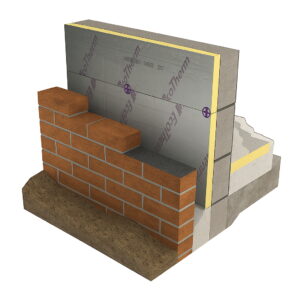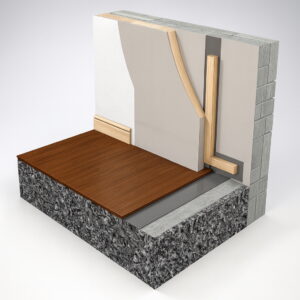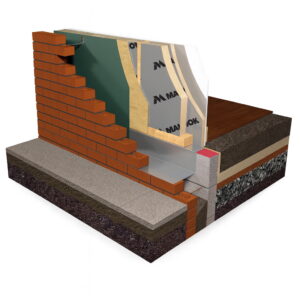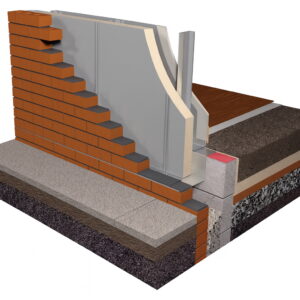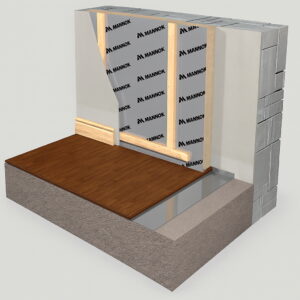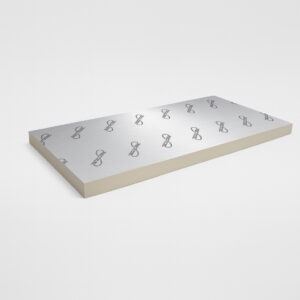


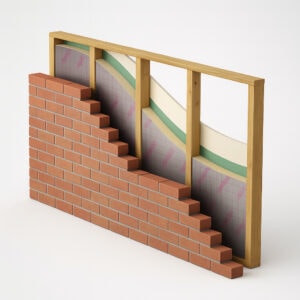
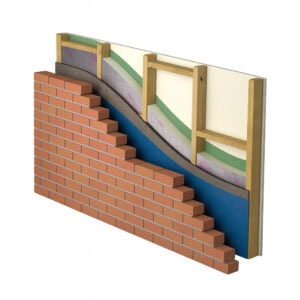
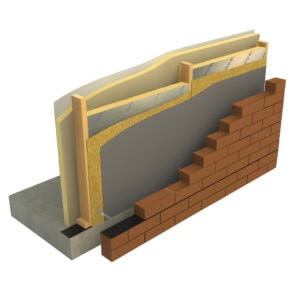



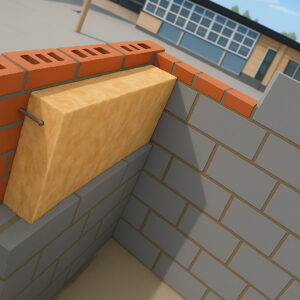
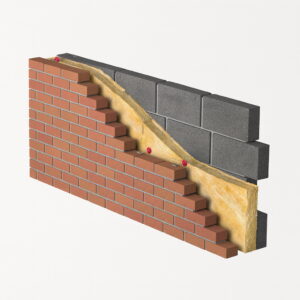
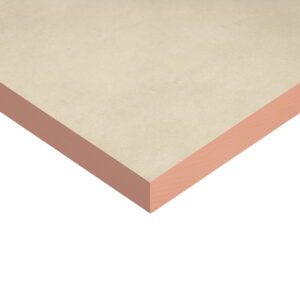
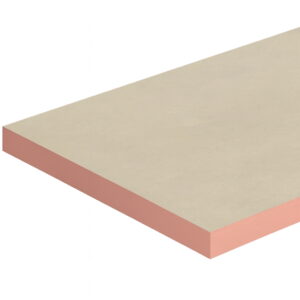
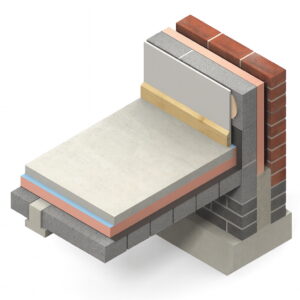
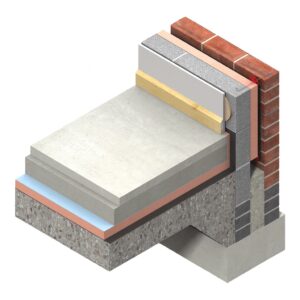
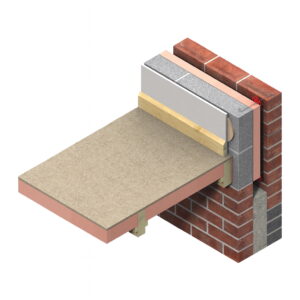

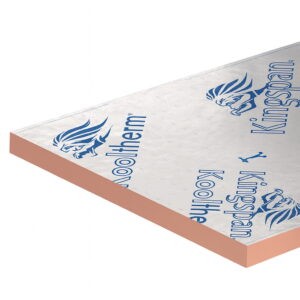
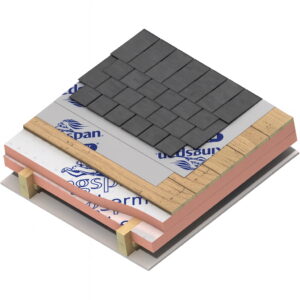
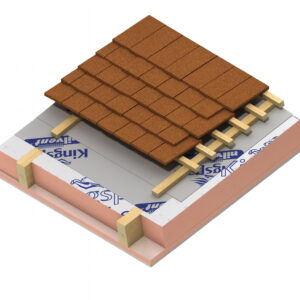


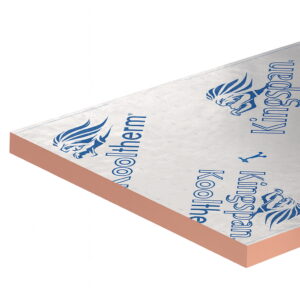
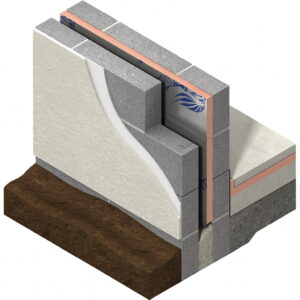
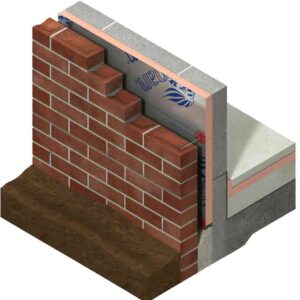
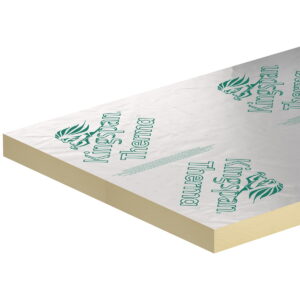
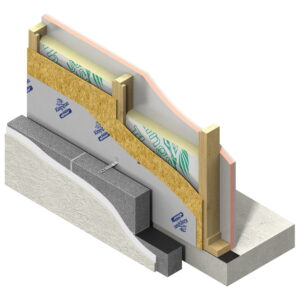
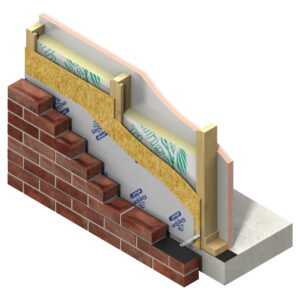
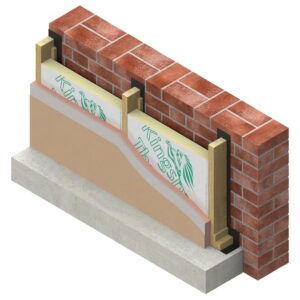
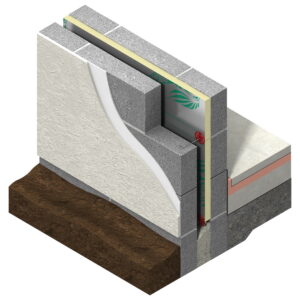
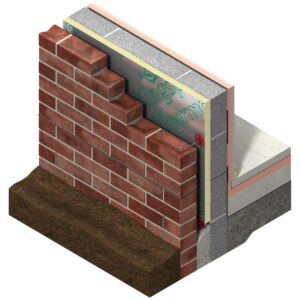

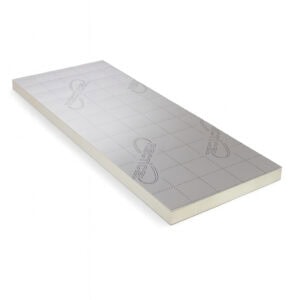
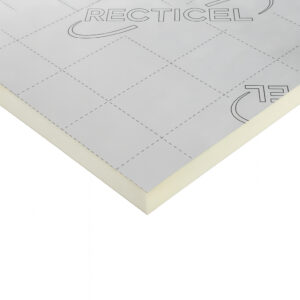

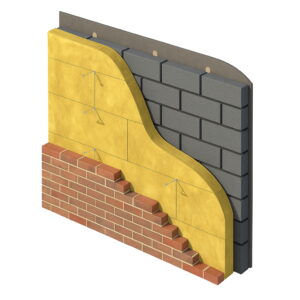

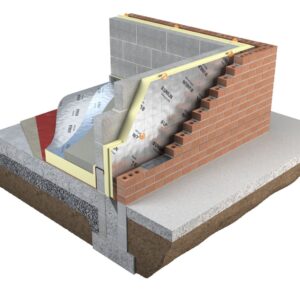
75mm Unilin Thin-R XT/CW Partial Fill Cavity Wall Insulation (T&G) is typically used in external walls of buildings with cavity wall construction.
75mm Insulation
75mm insulation boards, rolls, and slabs are exactly 75mm thick. That depth is measured from one face to the other. This makes it easier to plan installation within joists, studwork, and other cavities.
75mm insulation thickness is common in floors, walls, and partitions where space may be limited or where a bigger board would project beyond the available build-up.
What is 75mm insulation?
75mm thick insulation is any insulating material, including foam boards, mineral wool rolls, and rigid slabs, cut to a thickness of 75mm. All 75mm insulation materials limit heat transfer through the building fabric.
75mm insulation offers measurable thermal resistance when fitted properly. Some materials have lower thermal conductivity than others, which affects the overall R-value. This means the products resist heat more effectively per millimetre. It is why some 75mm PIR boards can perform nearly as well as thicker, lower-performing materials.
What is 75mm thick insulation used for?
Here is how 75mm insulating products are used:
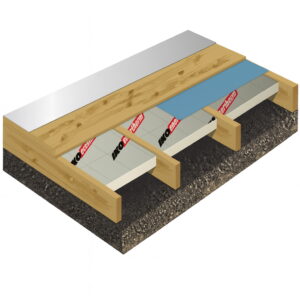
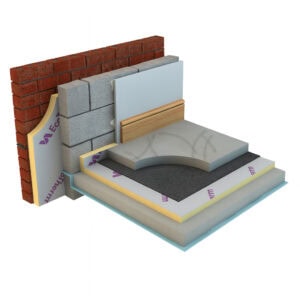
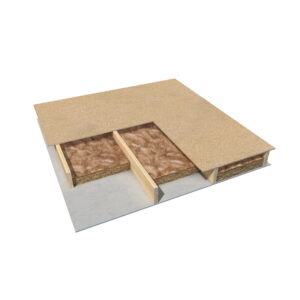
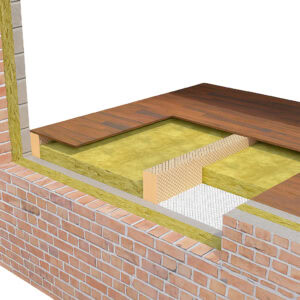
- Floors: Fit between joists to minimise heat loss underneath fitted flooring, or to help meet U-value targets in solid floors. PIR boards often perform best thermally in this application, while EPS or XPS may be preferred where compressive strength is more critical.
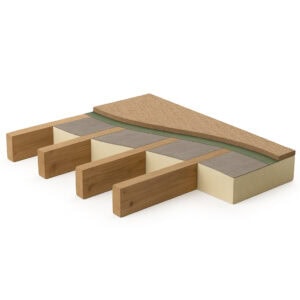
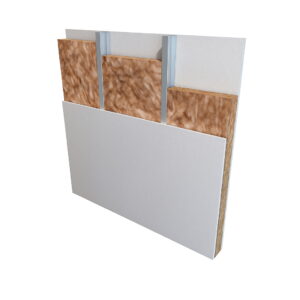
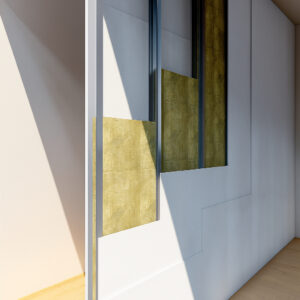
- Walls: Installed between timber or metal studs and in cavity walls. Both rigid boards and wool slabs can be used here.
- Partitions (internal walls and floors): Mineral wool slabs and rolls are effective in reducing sound travel and thermal transfer.
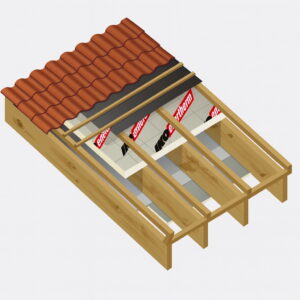
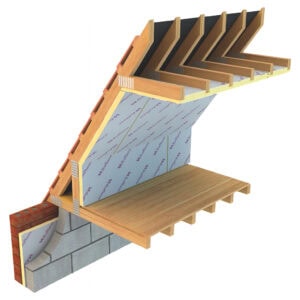
- Roofs/lofts: Used in cold roofs or between rafters where installing deeper insulation is impractical.
Types of insulation in 75mm thickness
Common types of 75mm thick insulation include:
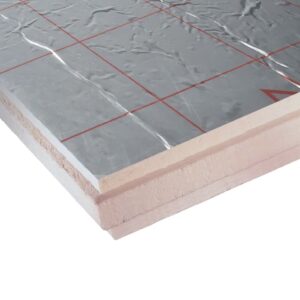
75mm Rigid PIR Insulation Boards
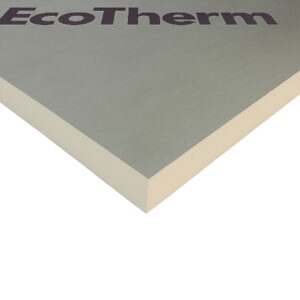
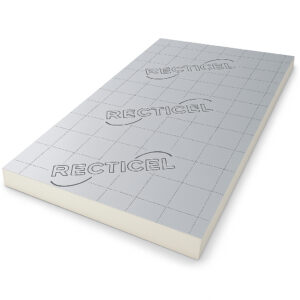
Firm, foam panels with foil backing. At insulation 75mm thick, they offer high thermal resistance in a relatively shallow layer.
PIR panels pack a lot of insulating power into that 75mm thickness without compressing. The foil facings contribute to thermal performance when installed with appropriate air spaces.
75mm Expanded Polystyrene (EPS)
EPS is strong and can support a considerable load without crushing. As a result, 75mm EPS is commonly used in floors, ground slabs, and flat roof systems where insulation must carry the weight of screeds or finishes.
Also ideal for cavity walls and external wall insulation systems, and popular for standard residential and commercial builds where cost control is a priority.
75mm Phenolic Insulation
75mm boards contain extremely small cells packed tightly together. Because of this structure, the material has very low conductivity.
Phenolic insulation also has good fire behaviour compared with many other rigid foams. It tends to char rather than melt quickly, which helps slow fire spread when used within a tested system.
Delivers strong thermal protection for long service periods without sagging or compressing.
75mm Glass Mineral Wool Insulation Rolls
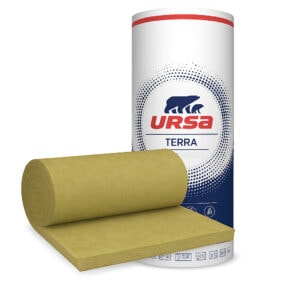
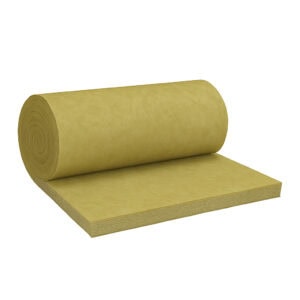
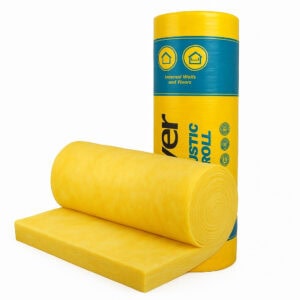
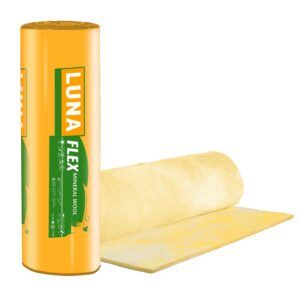
These are soft, fibrous rolls that friction fit between joists or studs. The material is cut to size and friction-fitted. Rolls absorb noise and are noncombustible (Euroclass A1).
They are useful in internal partition walls or floors where sound control is as important as warmth.
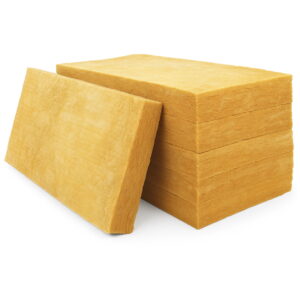
75mm Rock Mineral Wool Insulation Slabs
These slabs are denser than glass wool.
They are classified A1 (noncombustible) for fire performance and are good at absorbing sound. They also hold their shape once fitted.
Commonly specified for separating walls, floors, and ceilings.
At Insulation Wholesale, you can purchase 75mm Insulation at low wholesale prices with fast delivery for most of items within 2-5 days. Competitive rates guaranteed.
FAQ
Where to buy 75mm thick insulation?
You can buy 75mm insulation thickness products online from Insulation Wholesale, a UK specialist insulation store. We stock PIR boards, glass wool, mineral slabs, and more at wholesale prices, with fast delivery across the UK. Contact us for competitive pricing with trade deals, fast quotes, and credit options.
How to cut 75mm insulation?
Cutting methods depend on material type:
For PIR boards:
- Draw a line along the area you want to cut.
- Score repeatedly with a utility knife until the tool passes through the material. Or cut with a fine saw.
- Go slow to avoid chipping the edges.
For mineral wool rolls/slabs:
- Place a straight edge where you are cutting.
- Push straight through the wool using a long-bladed knife or serrated insulation knife.
Wear goggles and a dust mask, as airborne fibres can irritate.
How to fix 75mm insulation?
Between timber studs or floor joists:
- Insert the insulation gently until it friction-fits between joists or studs. It should stay up without gaps.
- Use adhesive or fixings if needed to fasten PIR sheets – board adhesive, insulation plugs, or screws with washers.
- Work from the bottom up, where applicable, so that each layer supports the one above.
Against walls:
- PIR boards can be glued directly to the substrate (render, blockwork) using the appropriate adhesive.
- Use mechanical fixings if required by the manufacturer or building control.
To seal joints:
Butt insulation edges tightly and seal gaps with insulation tape or foam to reduce draughts and heat leaks.
Showing 1–32 of 43 results
-
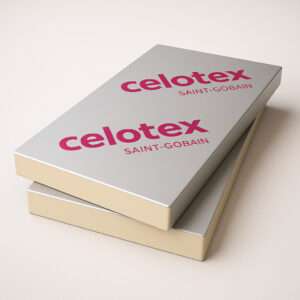

75mm Celotex CW4075 Cavity Wall Insulation Board 1200mm x 450mm 4.32m2 Pack of 8 (4.32m2)
75mm Celotex CW4075 Cavity Wall Insulation Board is an easy to install polyisocyanurate (PIR) insulation board with excellent thermal performance, featuring a low emissivity foil facing.
£50.00£60.00 Ex VATInc VAT£11.57£13.88 Per M2 Add to cart -
75mm Celotex GA4075 PIR Insulation Board 2400mm x 1200mm (8′ x 4′) 2.88m2
75mm Celotex GA4075 is a polyisocyanurate (PIR) insulation core with composite aluminium foil facings on both sides. Celotex is a multi-purpose insulation board suitable for use in pitched roofs, ceilings, floors and walls.
£26.80£32.16 Ex VATInc VAT£9.31£11.17 Per M2 Add to cart -

75mm Ecotherm Eco-Versal Rigid PIR Insulation Board 2400mm x 1200mm (8′ x 4′) 2.88m2
75mm Ecotherm Eco-Versal is a polyisocyanurate (PIR) insulation core with composite aluminium foil facings on both sides. Ecotherm Eco-Versal is a multi-purpose insulation board suitable for use in pitched roofs, ceilings, floors and walls.
£25.60£30.72 Ex VATInc VAT£8.89£10.67 Per M2 Add to cart -

75mm Expanded Polystyrene EPS100 Insulation Board 2400mm x 1200mm (8′ x 4′) Pack of 32 (92.16m2)
75mm EPS100, often known as Expanded Polystyrene, is a lightweight foam product produced from tiny polystyrene beads. Due to its high thermal value and simplicity of usage, it is commonly used as one of the most favoured insulation materials in construction.
£505.00£606.00 Ex VATInc VAT£5.48£6.58 Per M2 Add to cart -
75mm Expanded Polystyrene EPS150 Floor Insulation Board 2400mm x 1200mm (8′ x 4′) Pack of 8 (23.04m2)
75mm EPS150, often known as Expanded Polystyrene, is a lightweight foam product produced from tiny polystyrene beads. Due to its high thermal value and simplicity of usage, it is commonly used as one of the most favoured insulation materials in construction.
£175.69£210.83 Ex VATInc VAT£7.63£9.16 Per M2 Add to cart -
75mm Expanded Polystyrene EPS200 Floor Insulation Board 2400mm x 1200mm (8′ x 4′) Pack of 8 (23.04m2)
75mm EPS200, often known as Expanded Polystyrene, is a lightweight foam product produced from tiny polystyrene beads. Due to its high thermal value and simplicity of usage, it is commonly used as one of the most favoured insulation materials in construction.
£282.11£338.53 Ex VATInc VAT£0.34£0.41 Per M2 Add to cart -
75mm Expanded Polystyrene EPS250 Floor Insulation Board 2400mm x 1200mm (8′ x 4′) Pack of 8 (23.04m2)
75mm EPS250, often known as Expanded Polystyrene, is a lightweight foam product produced from tiny polystyrene beads. Due to its high thermal value and simplicity of usage, it is commonly used as one of the most favoured insulation materials in construction.
£374.89£449.87 Ex VATInc VAT£16.27£19.52 Per M2 Add to cart -
75mm Isover Acoustic Partition Insulation Roll – Glass Mineral Wool 14.64m2
75mm Isover Acoustic Partition Insulation Roll is a glass mineral wooldesigned to reduce sound transmission between walls and floors, creating quieter and more comfortable spaces.
£56.37£67.64 Ex VATInc VAT£3.85£4.62 Per m2 Add to cart -
75mm Isover CWS 36 Cavity Wall Slab 8.74m2 Pack
75mm Isover CWS 36 Cavity Wall Slab offers excellent thermal insulation for cavity walls, effectively reducing heat loss and boosting energy efficiency. Lightweight and easy to install, it delivers reliable, long-lasting performance.
£35.31£42.37 Ex VATInc VAT£4.04£4.85 Per m2 Add to cart -
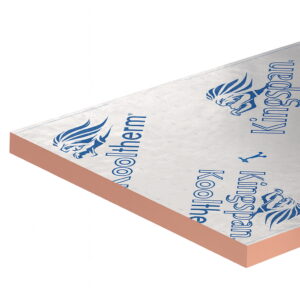
75mm Kingspan Kooltherm K103 Insulation Floorboard 2400mm x 1200mm Pack of 4 (11.52m2)
75mm Kooltherm K103 is a premium phenolic core floor insulation solution, designed to deliver exceptional performance with solid concrete or suspended timber floors.
£299.40£359.28 Ex VATInc VAT£25.99£31.19 Per M2 Add to cart -
75mm Kingspan Kooltherm K107 Pitched Roof Board 2400mm x 1200mm Pack of 4 (11.52m2)
75mm Kingspan Kooltherm K107 Pitched Roof Board is a premium performance insulation with a fibre-free rigid thermoset phenolic core. It is used to insulate pitched roofs and attic spaces, and has a thermal conductivity of just 0.019 W/m.K across all thicknesses.
£298.76£358.51 Ex VATInc VAT£25.93£31.12 Per M2 Add to cart -
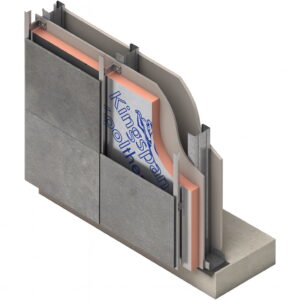
75mm Kingspan Kooltherm K108 Cavity Board Insulation 1200mm x 450mm Pack of 6 (3.24m2)
75mm Kingspan Kooltherm K108 partial fill cavity wall board is a premium performance lower lambda insulation with a rigid thermoset fibre-free phenolic core. It is faced on both sides with a low emissivity composite foil facing and is used in partially filled cavity walls.
£91.06£109.27 Ex VATInc VAT£28.10£33.72 Per M2 Add to cart -
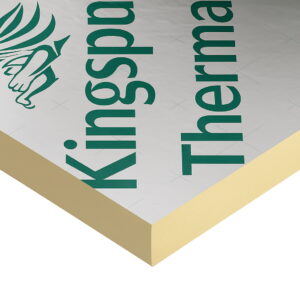
75mm Kingspan Therma TP10 / TF70 / TW55 PIR Insulation Board 2400mm x 1200mm (8′ x 4′) Pack of 4 (11.52m2)
All three models 75mm Kingspan Therma PIR Insulation Board:
- 75mm Thermapitch TP10
- 75mm Thermafloor TF70
- 75mm Thermawall TW55
share the same high-performance PIR core and low-emissivity foil facings, offering excellent thermal efficiency and easy installation. Although labeled differently, these boards share identical technical specifications.
£152.67£183.20 Ex VATInc VAT£13.25£15.90 Per M2 Add to cart -
75mm Kingspan Thermawall TW50 PIR Insulation Board 1200mm x 450mm Pack of 6 (3.24m2)
75mm Kingspan Thermawall TW50 is a high performance insulation with thermal conductivity of 0.022 W/mK. Therma is a range of PIR insulation available in a range of thicknesses.£48.74£58.49 Ex VATInc VAT£15.04£18.05 Per M2 Add to cart -
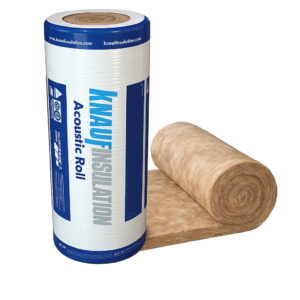
75mm Knauf Acoustic Insulation Roll – Glass Mineral Wool 17.4m2
75mm Acoustic Insulation Roll from Knauf is a Glass Mineral Wool roll, designed for use in internal wall and floor applications, to offer sound absorption and noise reduction properties.
£58.38£70.06 Ex VATInc VAT£3.36£4.03 Per m2 Add to cart -
75mm ODE Acoustic Roll Insulation 9.6m2 Roll
75mm ODE Insulation Acoustic Roll is designed to reduce sound transmission, making it an ideal solution for creating quieter indoor environments. Its flexible and simple-to-install design effectively absorbs sound, making it perfect for both residential and commercial spaces.
£26.43£31.72 Ex VATInc VAT£2.75£3.30 Per m2 Add to cart -
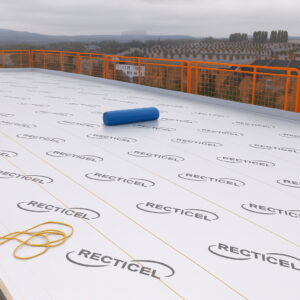
75mm Recticel Eurothane GP PIR Insulation Board 2400mm x 1200mm (8′ x 4′) 2.88m2
75mm Recticel Eurothane GP is a polyisocyanurate (PIR) insulation core with composite aluminium foil facings on both sides. Recticel is a multi-purpose insulation board suitable for use in pitched roofs, ceilings, floors and walls.
£25.60£30.72 Ex VATInc VAT£8.89£10.67 Per M2 Add to cart -
75mm Recticel Eurowall Partial Cavity Wall Insulation Board 1200mm x 450mm Pack of 12 (6.48m2)
75mm Recticel Eurowall offers rigid great performance insulation boards designed for partial cavity walls. They lock in warmth and boost energy efficiency with ease.
£80.96£97.15 Ex VATInc VAT£12.49£14.99 Per M2 Add to cart -
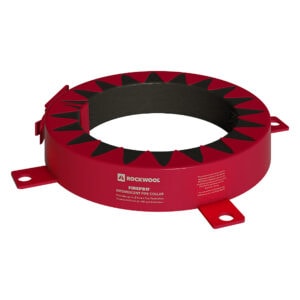
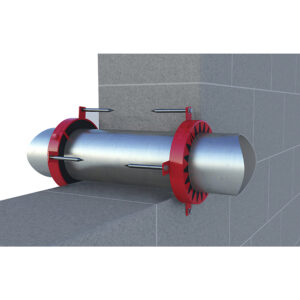
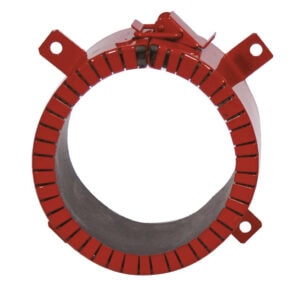
75mm Rockwool FirePro Pipe Collar CE
75mm FirePro Pipe Collar CE delivers powerful fire-activated expansion that seals plastic pipe penetrations from fire smoke and spread.
£13.88£16.66 Ex VATInc VAT Add to cart -
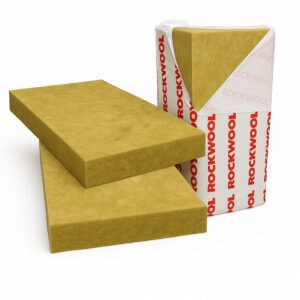
75mm Rockwool RWA45 Acoustic Insulation Slab 1200 x 600mm 4.32m2 Pack
75mm Rockwool RWA45 has been developed for thermal, acoustic and fire performance in a range of construction types. It is suitable for applications on partition walls, ceilings, floors and roofs.
£25.87£31.04 Ex VATInc VAT£5.99£7.19 Per m2 Add to cart -
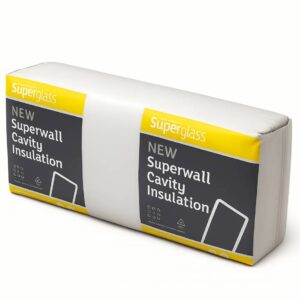
75mm Superglass Superwall 32 Cavity Wall Slab 4.37m2 Pack
75mm Superglass Superwall 32 is non-combustible and water repellent glass mineral wool insulation cavity wall batt. The flexible batt is supplied at 455mm wide to allow easy installation between standard vertical wall tie spacings and minimum on-site cutting and waste.
£36.63£43.96 Ex VATInc VAT£8.38£10.06 Per m2 Add to cart -
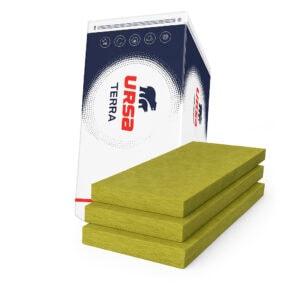
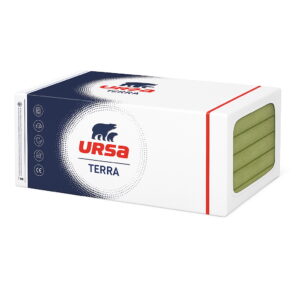
75mm URSA 32 Cavity Wall Insulation Slab 4.30m2
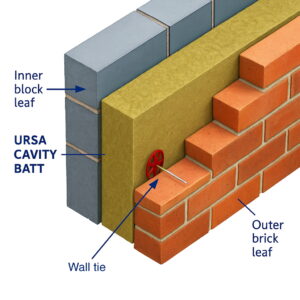
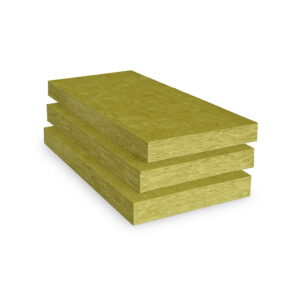
75mm URSA Cavity Batt is a lightweight, semi-rigid glass mineral wool slab treated with silicon-based water repellent. It is suitable for use in both fully and partially filled masonry cavity walls up to 25m high.
£33.23£39.88 Ex VATInc VAT£7.73£9.28 Per m2 Add to cart -
75mm URSA 35 Cavity Wall Insulation Slab 4.91m2 Pack
75mm URSA Cavity Batt is a lightweight, semi-rigid glass mineral wool slab treated with silicon-based water repellent. It is suitable for use in both fully and partially filled masonry cavity walls up to 25m high.
£29.68£35.62 Ex VATInc VAT£6.04£7.25 Per m2 Add to cart -
75mm URSA Acoustic Partition Roll Insulation 9.6m2 Roll
75mm URSA Acoustic Roll is a lightweight, non-combustible, unfaced glass mineral wool product for use as acoustic insulation in timber or metal framed internal partition walls, timber or metal framed separating walls and timber separating floors.
£39.69£47.63 Ex VATInc VAT£4.13£4.96 Per m2 Add to cart -
75mm Ecotherm Eco-Cavity Partial Fill Insulation Board 1200mm x 450mm Pack of 6 (3.24m2)
75mm Ecotherm Eco-Cavity wall insulation boards are ideal for masonry walls. They achieve high levels of thermal performance for thinner constructions whilst maintaining a clear residual air gap; effective protection against driving rain, particularly in coastal and exposed locations.
POA Get a quote -
75mm Expanded Polystyrene EPS70 Insulation Board 2400mm x 1200mm (8′ x 4′) 2.88m2 (Pack of 8)
75mm EPS70, often known as Expanded Polystyrene, is a lightweight foam product produced from tiny polystyrene beads. Due to its high thermal value and simplicity of usage, it is commonly used as one of the most favoured insulation materials in construction.
POA Get a quote -
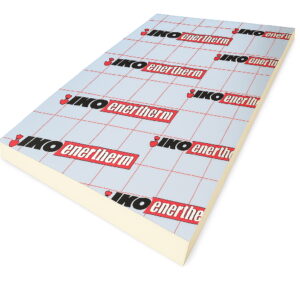
75mm IKO Enertherm ALU PIR Insulation Board 2400mm x 1200mm (8′ x 4′) 2.88m2
75mm IKO Enertherm ALU PIR (polyisocyanurate) insulation is a top-quality insulation board featuring a rigid PIR foam core and reflective aluminium foil facings. It delivers outstanding thermal performance and moisture resistance, making it suitable for various installations and an ideal choice for different energy-efficient projects.
POA Get a quote -
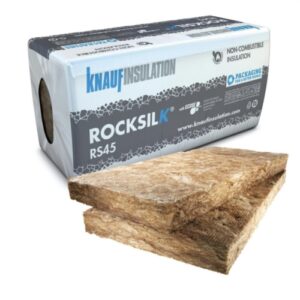
75mm Knauf Rocksilk RS45 Building Insulation Slab 1200mm x 600mm 4.32m2 Pack
75mm Knauf Insulation Rocksilk RS45 is a Rock Mineral Wool slab, designed for use in multiple thermal and acoustic applications. It is non-combustible with the best possible Euroclass A1 reaction to fire classification.
POA Get a quote -
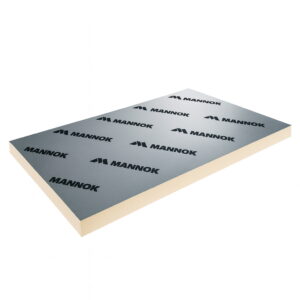
75mm Mannok PIR Insulation Board 2400mm x 1200mm (8′ x 4′) 2.88m2
75mm Mannok PIR Insulation Board is an excellent choice for anyone looking for a high-performance insulation solution that provides superior thermal efficiency. It is ideal for use in any construction project, such as commercial and residential, in wall applications as well as roofing and flooring applications.
POA Get a quote -
75mm Recticel Eurothane Eurodeck Insulation Board 2400mm x 1200mm Pack of 4 (11.52m2)
75mm Eurothane® Eurodeck is compatible with mechanically fixed single-ply systems, benefiting from high compressive strength and excellent dimensional stability that ensures the flat surface finish required for optimum performance in new build and refurbishment projects. It is faced on both sides with a multi-layer coated aluminum foil.
POA Get a quote