Products in PIR Insulated Plasterboard
-
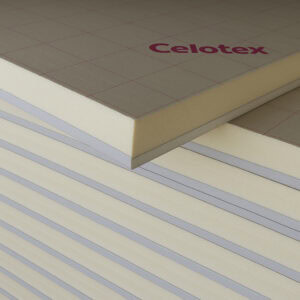

25mm Celotex PIR Insulated Plasterboard 1200mm x 2400mm + 12.5mm P/B 2.88m2
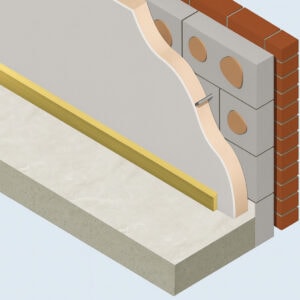
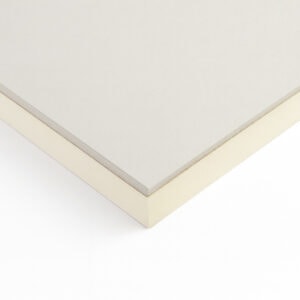
25mm + 12.5mm Celotex PL4025 PIR Insulated Plasterboard is it is suitable for use in roof and internal wall lining applications. Celotex Insulated Plasterboard is a high performance, easy to install PIR insulation board with a paper facing, laminated to a piece of 12.5mm tapered edge plasterboard.
£41.49£49.79 Ex VATInc VAT£14.41£17.29 Per M2 Add to cart -
Buy in Bulk & Save
1-34 35+ £42.66£51.19 £41.81£50.17 
25mm Mannok PIR Insulated Plasterboard 1200mm x 2400mm + 12.5mm P/B 2.88m2
Mannok Therm Laminate-Kraft / MLK PIR 25mm + 12.5mm PIR Insulated plasterboard is a high performance, fibre-free insulated board. Mannok Therm Laminate-Kraft / MLK PIR has a kraft paper facing on one side and plasterboard bonded to the other side.
£42.66£51.19 Ex VATInc VAT£14.81£17.77 Per M2 Add to cart -
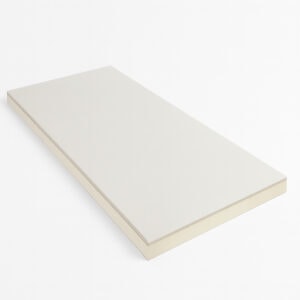
37.5mm Recticel Eurothane PL Insulated Plasterboard 2400mm x 1200mm (8′ x 4′) 2.88m2
37.5mm Recticel Eurothane PL pairs high-performance insulation with plasterboard, making homes warmer with a sleek, easy-fit design.
£42.78£51.34 Ex VATInc VAT£14.85£17.82 Per M2 Add to cart -
40mm Celotex PIR Insulated Plasterboard 1200mm x 2400mm + 12.5mm P/B 2.88m2
40mm Celotex PL4040 PIR Insulated Plasterboard is it is suitable for use in roof and internal wall lining applications. Celotex Insulated Plasterboard is a high performance, easy to install PIR insulation board with a paper facing, laminated to a piece of 12.5mm tapered edge plasterboard.
£49.10£58.92 Ex VATInc VAT£17.05£20.46 Per M2 Add to cart -
50mm Celotex PIR Insulated Plasterboard 1200mm x 2400mm + 12.5mm P/B 2.88m2
50mm + 12.5mm Celotex PL4050 PIR Insulated Plasterboard is it is suitable for use in roof and internal wall lining applications. Celotex Insulated Plasterboard is a high performance, easy to install PIR insulation board with a paper facing, laminated to a piece of 12.5mm tapered edge plasterboard.
£52.64£63.17 Ex VATInc VAT£18.28£21.94 Per M2 Add to cart -
Buy in Bulk & Save
1-20 21+ £58.03£69.64 £56.87£68.24 50mm Mannok PIR Insulated Plasterboard 1200mm x 2400mm + 12.5mm P/B 2.88m2
Mannok Therm Laminate-Kraft / MLK PIR 50mm + 12.5mm PIR Insulated plasterboard is a high performance, fibre-free insulated board. Mannok Therm Laminate-Kraft / MLK PIR has a kraft paper facing on one side and plasterboard bonded to the other side.
£58.03£69.64 Ex VATInc VAT£20.15£24.18 Per M2 Add to cart -
52.5mm Recticel Eurothane PL Insulated Plasterboard 2400mm x 1200mm (8′ x 4′) 2.88m2
52.5mm Recticel Eurothane PL pairs high-performance insulation with plasterboard, making homes warmer with a sleek, easy-fit design.
£50.52£60.62 Ex VATInc VAT£17.54£21.05 Per M2 Add to cart -
60mm Celotex PIR Insulated Plasterboard 1200mm x 2400mm + 12.5mm P/B 2.88m2
60mm + 12.5mm Celotex PL4060 PIR Insulated Plasterboard is it is suitable for use in roof and internal wall lining applications. Celotex Insulated Plasterboard is a high performance, easy to install PIR insulation board with a paper facing, laminated to a piece of 12.5mm tapered edge plasterboard.
£56.42£67.70 Ex VATInc VAT£19.59£23.51 Per M2 Add to cart -
Buy in Bulk & Save
1-16 17+ £65.06£78.07 £63.76£76.51 60mm Mannok PIR Insulated Plasterboard 1200mm x 2400mm + 12.5mm P/B 2.88m2
Mannok Therm Laminate-Kraft / MLK PIR 60mm + 12.5mm PIR Insulated plasterboard is a high performance, fibre-free insulated board. Mannok Therm Laminate-Kraft / MLK PIR has a kraft paper facing on one side and plasterboard bonded to the other side.
£65.06£78.07 Ex VATInc VAT£22.59£27.11 Per M2 Add to cart -
62.5mm Recticel Eurothane PL Insulated Plasterboard 2400mm x 1200mm (8′ x 4′) 2.88m2
62.5mm Recticel Eurothane PL pairs high-performance insulation with plasterboard, making homes warmer with a sleek, easy-fit design.
£57.24£68.69 Ex VATInc VAT£19.88£23.86 Per M2 Add to cart -
Buy in Bulk & Save
1-14 15+ £86.82£104.18 £85.08£102.10 70mm Mannok PIR Insulated Plasterboard 1200mm x 2400mm + 12.5mm P/B 2.88m2
Mannok Therm Laminate-Kraft / MLK PIR 70mm + 12.5mm PIR Insulated plasterboard is a high performance, fibre-free insulated board. Mannok Therm Laminate-Kraft / MLK PIR has a kraft paper facing on one side and plasterboard bonded to the other side.
£86.82£104.18 Ex VATInc VAT£30.15£36.18 Per M2 Add to cart -
72.5mm Recticel Eurothane PL Insulated Plasterboard 2400mm x 1200mm (8′ x 4′) 2.88m2
72.5mm Recticel Eurothane PL pairs high-performance insulation with plasterboard, making homes warmer with a sleek, easy-fit design.
£65.11£78.13 Ex VATInc VAT£22.61£27.13 Per M2 Add to cart -
Buy in Bulk & Save
1-13 14+ £98.16£117.79 £96.20£115.44 80mm Mannok PIR Insulated Plasterboard 1200mm x 2400mm + 12.5mm P/B 2.88m2
Mannok Therm Laminate-Kraft / MLK PIR 80mm + 12.5mm PIR Insulated plasterboard is a high performance, fibre-free insulated board. Mannok Therm Laminate-Kraft / MLK PIR has a kraft paper facing on one side and plasterboard bonded to the other side.
£98.16£117.79 Ex VATInc VAT£34.08£40.90 Per M2 Add to cart -
Buy in Bulk & Save
1-24 25+ £51.90£62.28 £50.86£61.03 38mm Mannok PIR Insulated Plasterboard 1200mm x 2400mm + 12.5mm P/B 2.88m2
Mannok Therm Laminate-Kraft / MLK PIR 38mm + 12.5mm PIR Insulated plasterboard is a high performance, fibre-free insulated board. Mannok Therm Laminate-Kraft / MLK PIR has a kraft paper facing on one side and plasterboard bonded to the other side.
£51.90£62.28 Ex VATInc VAT£18.02£21.62 Per M2 Add to cart -
82.5mm Recticel Eurothane PL Insulated Plasterboard 2400mm x 1200mm (8′ x 4′) 2.88m2
82.5mm Recticel Eurothane PL pairs high-performance insulation with plasterboard, making homes warmer with a sleek, easy-fit design.
£77.36£92.83 Ex VATInc VAT£26.86£32.23 Per M2 Get restock alert -
92.5mm Recticel Eurothane PL Insulated Plasterboard 2400mm x 1200mm (8′ x 4′) 2.88m2
92.5mm Recticel Eurothane PL pairs high-performance insulation with plasterboard, making homes warmer with a sleek, easy-fit design.
£87.61£105.13 Ex VATInc VAT£30.42£36.50 Per M2 Get restock alert